
Free Pre-Start Checklist (Jigsaw) Template
Download our free Pre-Start Checklist (Jigsaw) Template to formalise safety checks for your workshop equipment. Get your DOCX and PDF template now.
Free Pre-Start Checklist (Jigsaw) Template
DOCX • 125 KB + PDF
Updated Oct 2026
No signup required
Purpose of the Free Pre-Start Checklist (Jigsaw) Template
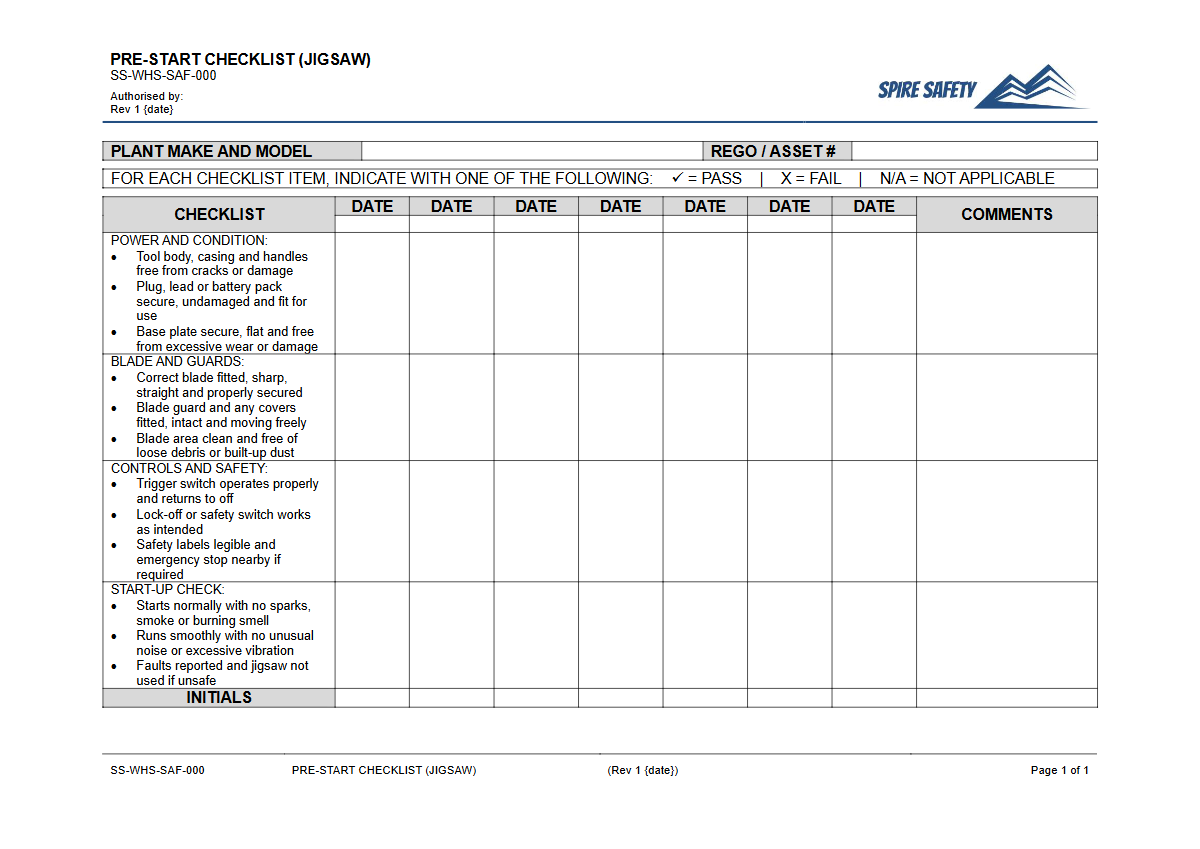
A jigsaw is a versatile but potentially dangerous power tool if not properly maintained and inspected. This free Pre-Start Checklist (Jigsaw) Template provides a structured framework for operators to conduct consistent, documented safety checks before each use.
Implementing this process helps in the early identification of faults, wear, or damage that could lead to injury, such as blade failure, electric shock, or lacerations. By formalising these inspections, organisations can better manage risks, promote a culture of safety, and maintain a clear record of equipment diligence.
This checklist is a foundational tool for any workplace aiming to meet its duties under Australian WHS regulations concerning plant and equipment safety.
Integrating simple checks like this across all workshop equipment is a key part of a proactive safety strategy. For instance, similar diligence should be applied by using a pre-start checklist for a bench grinder before its operation.
Video walkthrough
How to Use the Free Pre-Start Checklist (Jigsaw) Template
Using this template effectively involves more than just ticking boxes. Operators should be trained to physically inspect each item listed.
The checklist guides a methodical review of the jigsaw's critical components, including the power cord and plug, blade condition and security, guard functionality, and trigger switch operation. Any identified defects should be immediately reported, and the tool must be removed from service until repaired by a competent person.
These daily checks are not a substitute for scheduled maintenance but are a crucial first line of defence against equipment-related incidents.
Important: This document is a template and must be customised to your specific workplace. We recommend you conduct a risk assessment on the use of jigsaws in your environment, consult the manufacturer's instructions for your specific models, and adapt the checklist to include any unique hazards or operational requirements. This customisation ensures the checklist is relevant and effective for your business and forms part of your broader WHS management systems.
When to Use It
A jigsaw pre-start checklist should be completed before the first use of the tool on any given day or shift. For projects involving extended or heavy use, it may be prudent to conduct a brief re-inspection after breaks.
The goal is to make the check a non-negotiable habit for every operator, embedding it into the standard operating procedure for tool use. This routine ensures that the equipment's condition is verified before it is energised, minimising the chance of it failing during a critical task.
It's a small time investment that pays significant dividends in risk reduction.
Just as you would for other high-risk cutting equipment, these checks are vital. For larger machinery, a resource like our Pre-Start Checklist for Floor Saws demonstrates a similar systematic approach.
Who Should Use It
This checklist is designed for use by any person operating a jigsaw, regardless of their experience level. This includes carpenters, cabinet makers, maintenance staff, construction workers, and hobbyists in a professional workshop setting.
Supervisors and managers also have a key role in ensuring the checklists are being completed correctly and that any reported issues are addressed promptly. They are responsible for training workers on the process and for periodically reviewing completed checklists to identify trends or recurring equipment issues.
These records can be invaluable during a WHS compliance auditing process.
This template is just one of many resources designed to help your business manage WHS obligations effectively. You can browse our complete free WHS resources library for more checklists, templates, and guides.
Common mistakes
Common mistakes to avoid
- Using the incorrect blade for the material, leading to poor cuts and increased risk of blade breakage.
- Neglecting to inspect the power cord for fraying, cuts, or exposed wires, creating an electric shock hazard.
- Failing to ensure the blade guard is in place and functioning correctly before starting a cut.
- Not securely clamping the workpiece, allowing it to vibrate or move unexpectedly during the cut.
Legal references
Legal considerations
The following legal requirements may be relevant to this type of work.
- Work Health and Safety Act (Harmonised) — Provides the primary duties for protecting workers and other people from work health and safety risks.
- Work Health and Safety Regulations (Harmonised) — Sets out requirements supporting the management of workplace hazards and risks.
The following codes may be relevant to this type of work.
- Managing WHS Risks Code of Practice — Provides practical guidance on identifying hazards, assessing risks and applying effective controls.
- Work Health and Safety Consultation, Cooperation and Coordination Code of Practice — Provides practical guidance on consulting workers and coordinating with other duty holders.
- Managing the Work Environment and Facilities Code of Practice — Provides practical guidance on safe work environments, workplace facilities and related controls.
Did you know
Blade Choice Matters
Using the wrong type of blade for the material being cut (e.g., a wood blade on metal) is a leading cause of blade breakage, which can send sharp fragments flying at high speed.
Power Tool Injuries
According to Safe Work Australia, hands and fingers are the most frequently injured body parts in Australian workplaces, with power tools being a significant contributor to these serious incidents.
FAQ
Frequently asked questions
01What are the most common hazards when using a jigsaw?
02How often should a jigsaw be inspected?
03Is a pre-start checklist a legal requirement for jigsaws in Australia?
04What should I do if I find a fault during a jigsaw pre-start check?
Share this resource
Free Pre-Start Checklist (Jigsaw) Template
Browse Categories
How To Use It
- 1Download and open in Word or PDF.
- 2Replace the placeholders with your business details.
- 3Get it reviewed by a WHS specialist before rollout.
Need it customised?
Our WHS consultants can adapt this template to your site, run a gap analysis, or audit what you already have in place.
Book a Free Consultation WHS consulting servicesor call 1300 156 382