
Free Pre-Start Checklist (Kiln) Template
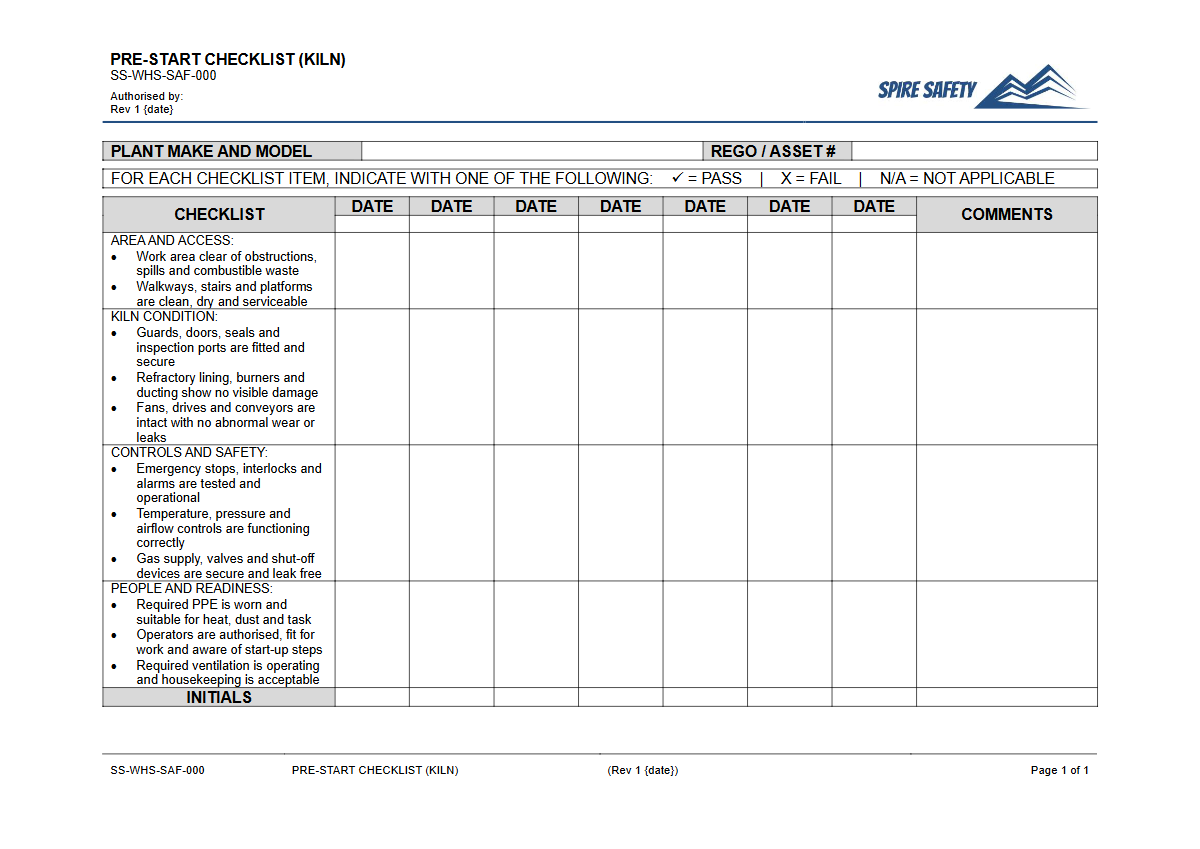
Download our free Pre-Start Checklist (Kiln) Template in Word (DOCX) and PDF. This structured document helps formalise equipment safety inspections before use.
Free Pre-Start Checklist (Kiln) Template
DOCX • 125 KB + PDF
Updated Oct 2026
No signup required
Purpose of the Free Pre-Start Checklist (Kiln) Template
Operating a kiln involves significant risks, including extreme heat, electrical hazards, and potential structural failures. A systematic pre-start inspection is a critical control measure to ensure the equipment is safe to operate before each use.
This Free Pre-Start Checklist (Kiln) Template provides a structured framework for operators to verify the condition of the kiln, identify potential defects, and prevent incidents before they occur. Regular use of a checklist helps formalise safety procedures, promotes a proactive safety culture, and creates a documented record of equipment inspections, which is a key component of demonstrating WHS due diligence.
Video walkthrough
How to use the Free Pre-Start Checklist (Kiln) Template
This template is designed as a starting point. It's crucial that you adapt it to the specific make, model, and configuration of the kilns used in your workplace, as well as the unique environmental and operational risks present. To effectively implement this checklist, follow these steps:
- Download: Get the template in your preferred format (DOCX for easy editing or PDF).
- Customise: Review the checklist items and add, remove, or modify them to match your specific kiln. Consider elements like the type of heating (electric, gas), door mechanisms, ventilation systems, and control panels. For complex operations, integrating this process into your broader safety framework is essential. A robust framework ensures all procedures work together, which is a core part of effective WHS management systems.
- Train: Ensure all operators are trained on how to properly conduct the checks. They must understand not just what to check, but why it's important and what constitutes a 'pass' or 'fail'.
- Implement: Integrate the checklist into your daily operational workflow. Make it a non-negotiable step before any kiln is powered on.
Note: We have provided this document as a general template. It is your responsibility to ensure it is customised to reflect the specific equipment and safety procedures in your workplace.
If you need assistance identifying specific hazards or adapting safety documents, consider engaging professional WHS consulting services.
When to use it
The Pre-Start Checklist for a kiln should be completed by a competent operator before the start of every shift or before the first use of the day. Consistency is key to effectiveness.
Conducting checks sporadically undermines their purpose and allows unsafe conditions to go unnoticed. Regular inspections help catch gradual wear and tear, such as deteriorating seals or malfunctioning controls, before they escalate into major failures. You can reinforce the importance of these daily checks through regular training sessions, such as by using a Pre-Start Checks and Plant Maintenance Toolbox Talk.
Who should use it
This checklist should be used by personnel who have been deemed competent to operate the specific kiln in question. This typically includes:
- Kiln Operators: The primary users responsible for the day-to-day operation of the equipment.
- Studio Technicians or Workshop Managers: Individuals overseeing the equipment and its use.
- Supervisors: To verify that checks are being completed correctly and to action any reported issues.
- Maintenance Personnel: As part of diagnostic or post-maintenance checks to confirm the kiln is ready for service.
The principles of pre-start inspections apply to a wide range of fixed and mobile plant. For example, similar diligence is required for other workshop machinery, as shown in our Free Pre-Start Checklist (CNC Router) Template.
Key Inspection Areas for Your Kiln Checklist
While your customised checklist will be more detailed, it should cover several core safety areas. A thorough inspection process verifies that all systems are functioning as intended. Key areas include:
- Structural Integrity: Checking the kiln body, stand, and lid/door for cracks, warping, or other damage.
- Electrical Systems: Inspecting cords, plugs, and control panels for signs of wear, fraying, or overheating. For equipment using high levels of energy, like that covered in a Free Pre-Start Checklist (Air Arc), electrical safety is paramount.
- Heating Elements: Visually checking for broken or sagging elements.
- Safety Features: Testing door interlocks, emergency stops, and any over-temperature protection mechanisms.
- Instrumentation: Ensuring temperature controllers, timers, and indicators are functioning correctly.
- Ventilation: Confirming that fans and flues are clear of obstructions and operating properly to manage fumes and heat.
Periodically reviewing the effectiveness of your checklists and overall safety procedures is a good practice. This can be supported by structured internal reviews or formal WHS compliance auditing to identify any gaps. For more templates and safety documents, browse our complete free WHS resources library.
Common mistakes
Common mistakes to avoid
- Using a generic checklist that isn't specific to the kiln's make and model.
- Completing the form without physically inspecting each item ('pencil-whipping').
- Failing to immediately report and quarantine a kiln with identified defects.
- Not providing adequate training to operators on how to properly conduct each check.
Legal references
Legal considerations
The following legal requirements may be relevant to this type of work.
- Work Health and Safety Act (Harmonised) — Provides the primary duties for protecting workers and other people from work health and safety risks.
- Work Health and Safety Regulations (Harmonised) — Sets out requirements supporting the management of workplace hazards and risks.
The following codes may be relevant to this type of work.
- Managing WHS Risks Code of Practice — Provides practical guidance on identifying hazards, assessing risks and applying effective controls.
- Work Health and Safety Consultation, Cooperation and Coordination Code of Practice — Provides practical guidance on consulting workers and coordinating with other duty holders.
- Managing the Work Environment and Facilities Code of Practice — Provides practical guidance on safe work environments, workplace facilities and related controls.
Did you know
Thermal Shock
Rapid temperature changes can cause 'thermal shock', leading to catastrophic failure of a kiln's refractory lining or the products inside. Consistent pre-start checks help monitor for early signs of stress fractures and deterioration.
FAQ
Frequently asked questions
01What is the main purpose of a kiln pre-start check?
02How often should a kiln pre-start checklist be completed?
03Is this template suitable for all types of kilns (e.g., pottery, glass, industrial)?
04Who is responsible for ensuring pre-start checks are done?
Share this resource
Free Pre-Start Checklist (Kiln) Template
Browse Categories
How To Use It
- 1Download and open in Word or PDF.
- 2Replace the placeholders with your business details.
- 3Get it reviewed by a WHS specialist before rollout.
Need it customised?
Our WHS consultants can adapt this template to your site, run a gap analysis, or audit what you already have in place.
Book a Free Consultation WHS consulting servicesor call 1300 156 382