
Free Pre-Start Checklist (Lab Mixer) Template
Download our Free Pre-Start Checklist (Lab Mixer) Template.
Free Pre-Start Checklist (Lab Mixer) Template
DOCX • 125 KB + PDF
Updated Oct 2026
No signup required
Purpose of the Free Pre-Start Checklist (Lab Mixer) Template
Operating machinery like laboratory mixers introduces significant workplace hazards if the equipment is not properly maintained and inspected. This Free Pre-Start Checklist (Lab Mixer) Template provides a structured framework for workers to systematically inspect equipment before use, identifying potential faults or damage that could lead to incidents.
Regular pre-start inspections are a fundamental part of proactive safety management, helping to control risks such as entanglement in moving parts, electrical shock, or exposure to hazardous substances.
By formalising this process, your organisation can maintain safer equipment and create a clear record of due diligence. This template is designed to be a solid starting point, aligned with Australian WHS principles for plant and equipment safety.
For similar rotating equipment, you may also find our Free Pre-Start Checklist (Agitator) Template a useful reference.
Video walkthrough
How to use the Free Pre-Start Checklist (Lab Mixer) Template
This resource is available for immediate download as a DOCX file, allowing for easy customisation, and also as a PDF for straightforward printing. The checklist format guides the user through key inspection points, from general cleanliness to the integrity of safety-critical components like guards and emergency stops.
Please note: This document is a template. We have designed it as a starting point, and you must customise it to reflect the specific lab mixers, tasks, chemicals, and control measures in your workplace.
Integrating such customised documents is a key function of robust WHS management systems, ensuring procedures are relevant and effective.
When to use it
A pre-start checklist for a lab mixer should be completed before the first use on every shift or before each distinct operation, depending on your organisation's risk assessment. The goal is to create a consistent and routine safety habit.
Frequent checks ensure that the equipment's condition has not changed or deteriorated since its last use. Discussing the importance of these routine inspections is an ideal topic for a Pre-Start Checks and Plant Maintenance Toolbox Talk with your team.
Who should use it
This checklist should be used by any person who is tasked with operating a laboratory mixer. This includes laboratory technicians, research assistants, production staff, and any other workers who interact with the equipment.
It is critical that these individuals are not only provided with the checklist but are also trained on how to conduct the inspection properly and understand the hazards associated with the mixer. Competency to operate equipment is crucial, which can be formally assessed using tools like a Verification of Competency (Mortar Mixer) Template for similar machinery.
What's Included in the Checklist
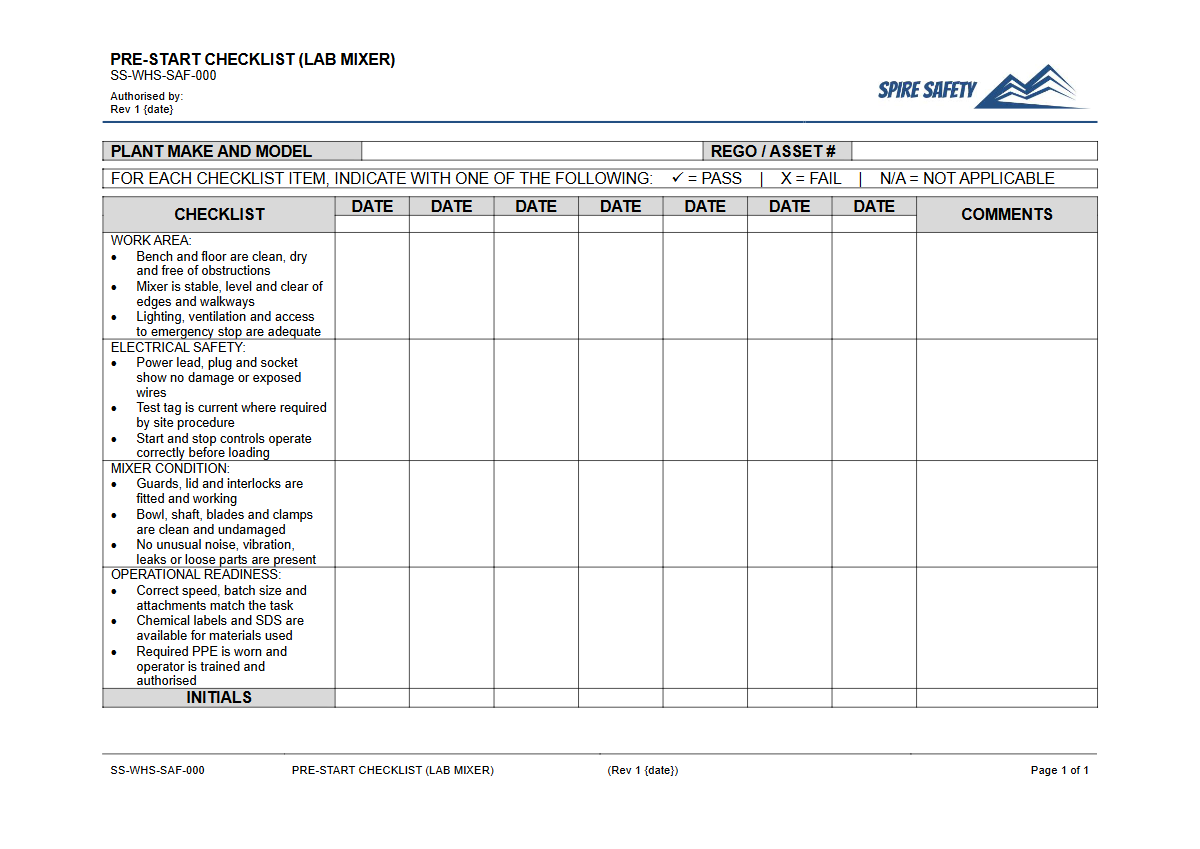
Our template provides a comprehensive starting point covering essential safety areas. The document is organised into logical sections to ensure nothing is missed:
- Administrative Details: Fields for plant ID, date, location, and the operator's name.
- Safety Checklist Items: A list of checks covering guards, emergency stops, electrical cords, cleanliness, signs of wear, and leak prevention.
- Corrective Actions: A section to document any identified defects and the actions taken to rectify them.
- Sign-off: A final declaration for the operator to confirm the equipment is safe for use or has been tagged out of service.
The findings from these checks can provide valuable data points during periodic WHS compliance auditing to verify that safety procedures are being followed.
Explore More Safety Resources
Effective WHS management relies on having the right tools and knowledge. This pre-start checklist is just one of many resources designed to support Australian businesses in managing workplace risks.
By implementing structured checks, training your staff, and fostering a strong safety culture, you create a more resilient and productive work environment. For more templates, guides, and toolbox talks, browse our complete free WHS resources library.
Common mistakes
Common mistakes to avoid
- Using a generic checklist that doesn't cover the specific model or hazards of the lab mixer.
- Signing off the checklist without performing a thorough physical and visual inspection ('pencil-whipping').
- Failing to report, document, or take corrective action when a defect is identified.
- Neglecting to train workers on how to properly conduct the pre-start check and what to look for.
Legal references
Legal considerations
The following legal requirements may be relevant to this type of work.
- Work Health and Safety Act (Harmonised) — Provides the primary duties for protecting workers and other people from work health and safety risks.
- Work Health and Safety Regulations (Harmonised) — Sets out requirements supporting the management of workplace hazards and risks.
The following codes may be relevant to this type of work.
- Managing WHS Risks Code of Practice — Provides practical guidance on identifying hazards, assessing risks and applying effective controls.
- Work Health and Safety Consultation, Cooperation and Coordination Code of Practice — Provides practical guidance on consulting workers and coordinating with other duty holders.
- Managing the Work Environment and Facilities Code of Practice — Provides practical guidance on safe work environments, workplace facilities and related controls.
Did you know
Entanglement Risk
Entanglement in rotating machinery, even small lab mixers, can happen in a fraction of a second. A key function of pre-start checks is to ensure all guards and safety interlocks are in place and functioning correctly.
FAQ
Frequently asked questions
01What is the purpose of a pre-start checklist for a lab mixer?
02What are the main hazards of a laboratory mixer?
03How often should a lab mixer pre-start check be completed?
04Is this template compliant with Australian WHS law?
Share this resource
Free Pre-Start Checklist (Lab Mixer) Template
Browse Categories
How To Use It
- 1Download and open in Word or PDF.
- 2Replace the placeholders with your business details.
- 3Get it reviewed by a WHS specialist before rollout.
Need it customised?
Our WHS consultants can adapt this template to your site, run a gap analysis, or audit what you already have in place.
Book a Free Consultation WHS consulting servicesor call 1300 156 382