
Free Pre-Start Checklist (Laminator) Template
Download our free Pre-Start Checklist (Laminator) Template in DOCX and PDF. A structured starting point for your workplace equipment safety inspections.
Free Pre-Start Checklist (Laminator) Template
DOCX • 125 KB + PDF
Updated Oct 2026
No signup required
Purpose of the Free Pre-Start Checklist (Laminator) Template
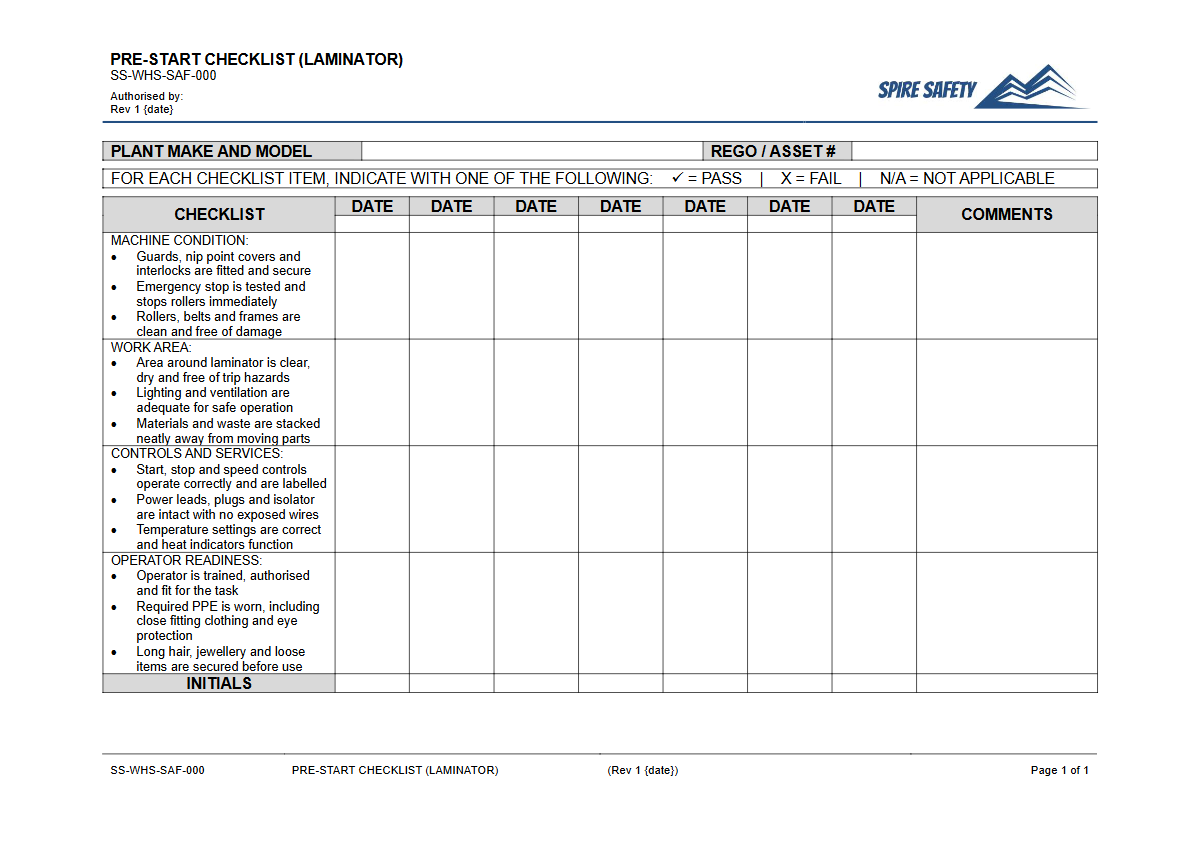
Integrating regular equipment inspections into your daily routine is a fundamental part of maintaining a safe workplace. This Free Pre-Start Checklist (Laminator) Template provides a structured framework for operators to conduct consistent, documented safety checks before using a laminator.
Using this template helps your organisation identify potential hazards like faulty wiring, missing guards, or incorrect temperature settings before they lead to an incident, such as burns, electric shock, or entanglement.
By formalising this process, you create a clear record of due diligence, demonstrating a commitment to proactive risk management. This checklist is not just a procedural tool; it's a practical way to manage risks associated with hot surfaces, moving rollers (nip points), and electrical components.
It helps embed safety-conscious behaviour and ensures that equipment is in a safe, operational state before any work begins. This structured approach is crucial for all types of machinery, as seen in our Free Pre-Start Checklist (CNC Router) Template for more complex equipment.
Video walkthrough
How to use the Free Pre-Start Checklist (Laminator) Template
This checklist is designed to be straightforward and easy to integrate into your existing safety procedures. The document is available in both DOCX and PDF formats, allowing for easy customisation and distribution.
- Download and Customise: Download the template in the format that suits you best. The DOCX file allows for full editing to align with your specific machinery and workplace risks.
- Train Operators: Ensure all workers who operate the laminator are trained on how to properly complete the checklist, what each item means, and what to do if they identify a fault.
- Implement Daily: Make the checklist a mandatory step before the first use of the laminator on any given shift. Keep the checklists in a visible, accessible location near the equipment.
- Report and Rectify: If a 'Fail' or 'No' is recorded for any check, the operator must immediately tag the equipment out of service and report the fault to a supervisor for rectification. The laminator must not be used until it is repaired and deemed safe.
- File and Review: Completed checklists should be filed and periodically reviewed by a supervisor or manager. This helps track recurring issues and informs maintenance schedules.
Please note: This document is a template and must be customised to your specific workplace. We have provided a structured starting point, but you must add, remove, or change items to reflect the exact make and model of your laminator(s), the materials used, and your unique operational risks.
This checklist should form one part of your overall WHS management systems, not replace them.
Key Inspection Points for a Laminator
While your customised checklist will be specific to your equipment, typical inspection points include:
- General Area: The surrounding area is clear of clutter, trip hazards, and flammable materials. Adequate lighting and ventilation are present.
- Electrical Safety: The power cord and plug are free from damage, cuts, or exposed wires. The machine is correctly plugged in, and if applicable, the RCD (safety switch) has been tested.
- Guards and Housings: All safety guards, especially around the rollers and heating elements, are in place, secure, and undamaged.
- Controls and Switches: The power switch, temperature controls, and emergency stop (if fitted) are functional and clearly labelled. Warning lights and indicators are working correctly.
- Operational Checks: The rollers are clean and turn smoothly without unusual noises. The machine heats to the correct temperature without signs of overheating or smoke.
When to use it
A pre-start check should be conducted before the first use of the laminator at the beginning of each workday or shift. It should also be completed if the machine has been idle for an extended period, has recently undergone maintenance or repair, or if a new operator is using it.
These checks can be discussed during daily team briefings, which can be documented using a Pre-Start Meeting Template, ensuring all team members are aware of equipment status.
Who should use it
This checklist should be completed by the person operating the laminator. It is essential that operators are trained and competent not only in the machine's use but also in the safety inspection process itself.
While this checklist assists in daily checks, verifying an operator's fundamental skill is also critical. Our Verification of Competency (Pipe Threader) Template provides a model for how operator skills can be formally assessed on other types of plant.
Supervisors and managers have a responsibility to ensure these checks are being completed correctly and to follow up on any reported faults. Periodically reviewing completed checklists helps verify that the safety system is working as intended. To ensure your processes remain effective and aligned with best practice, consider engaging external experts for periodic WHS compliance auditing.
Reinforcing the importance of these routine inspections is key to preventing complacency. Regular safety discussions can help keep this topic front of mind; for a relevant discussion guide, you can adapt our Pre-Start Checks and Plant Maintenance Toolbox Talk Template. For more tools to support your safety management system, explore our complete free WHS resources library.
Common mistakes
Common mistakes to avoid
- Skipping checks to save time, especially for 'quick jobs'.
- Failing to tag out and report faulty equipment, allowing someone else to use it.
- Using a generic checklist that doesn't match the specific laminator model.
- Not providing adequate ventilation, leading to an accumulation of fumes from heated plastic.
Legal references
Legal considerations
The following legal requirements may be relevant to this type of work.
- Work Health and Safety Act (Harmonised) — Provides the primary duties for protecting workers and other people from work health and safety risks.
- Work Health and Safety Regulations (Harmonised) — Sets out requirements supporting the management of workplace hazards and risks.
The following codes may be relevant to this type of work.
- Managing WHS Risks Code of Practice — Provides practical guidance on identifying hazards, assessing risks and applying effective controls.
- Work Health and Safety Consultation, Cooperation and Coordination Code of Practice — Provides practical guidance on consulting workers and coordinating with other duty holders.
- Managing the Work Environment and Facilities Code of Practice — Provides practical guidance on safe work environments, workplace facilities and related controls.
Did you know
Nip Point Dangers
The rollers in a laminator create 'nip points' where fingers, hair, or clothing can be caught and drawn into the machine. This is one of the most common mechanical hazards on this type of equipment.
Temperature Hazards
Laminators can reach temperatures well over 100°C to melt the adhesive in laminating pouches. Even after being turned off, they can remain a significant burn hazard for some time.
FAQ
Frequently asked questions
01Is a pre-start check legally required for a laminator in Australia?
02What are the main hazards of an office laminator?
03How often should a laminator be checked?
04What should I do if a fault is found during a pre-start check?
Share this resource
Free Pre-Start Checklist (Laminator) Template
Browse Categories
How To Use It
- 1Download and open in Word or PDF.
- 2Replace the placeholders with your business details.
- 3Get it reviewed by a WHS specialist before rollout.
Need it customised?
Our WHS consultants can adapt this template to your site, run a gap analysis, or audit what you already have in place.
Book a Free Consultation WHS consulting servicesor call 1300 156 382