
Free Pre-Start Checklist (Lift Station) Template
Formalise equipment checks with our free Pre-Start Checklist for Lift Stations.
Free Pre-Start Checklist (Lift Station) Template
DOCX • 125 KB + PDF
Updated Oct 2026
No signup required
Purpose of the Free Pre-Start Checklist (Lift Station) Template
A lift station, whether for wastewater, materials, or personnel, is a critical piece of infrastructure. Ensuring it is safe and fully operational before each use is non-negotiable.
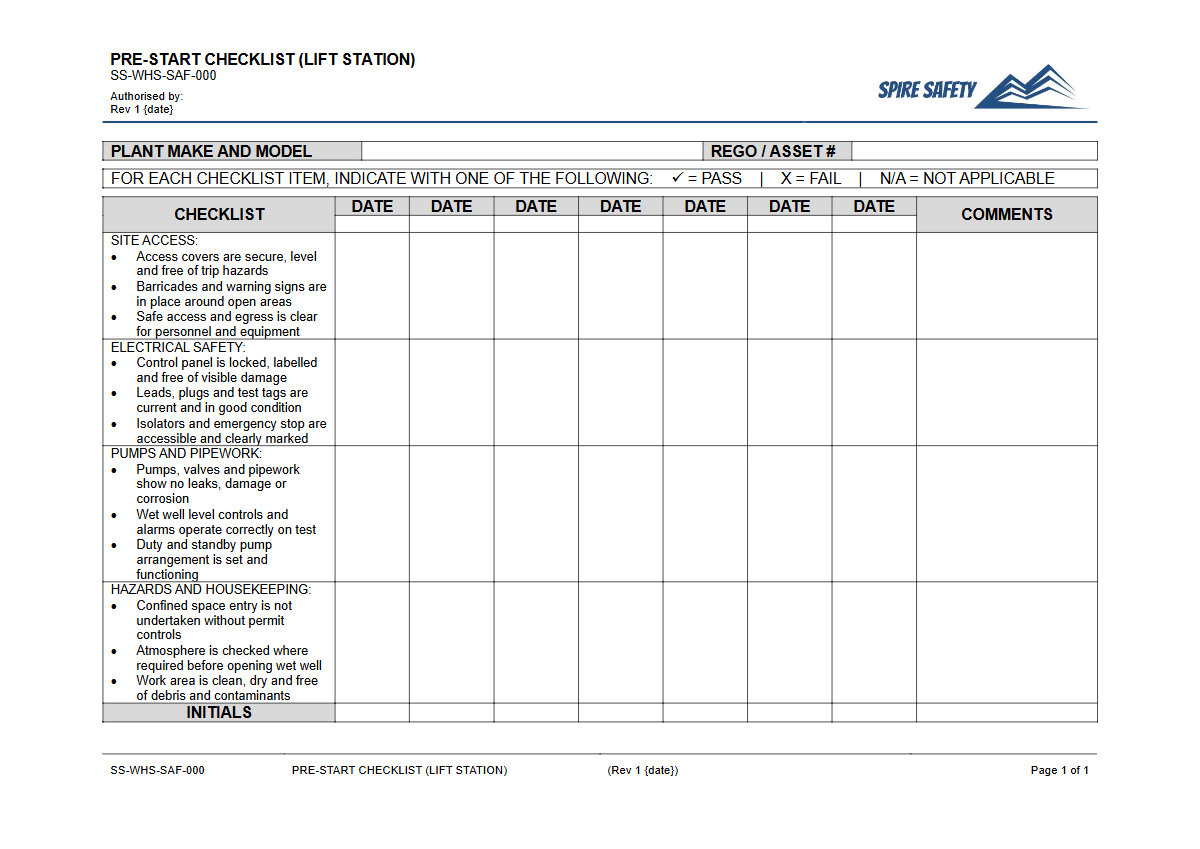
Our Free Pre-Start Checklist (Lift Station) Template provides a structured framework to formalise these essential safety inspections. Integrating this checklist into your daily routine helps identify potential faults, mechanical issues, or environmental hazards before they can cause equipment failure, injury, or operational downtime.
Regular checks are a cornerstone of proactive safety management, helping your organisation meet its duty of care under Australian WHS laws.
This template guides operators through a logical inspection sequence, covering key components from structural integrity to control systems and safety features. By documenting these checks, you create a clear record of equipment condition, which is invaluable for maintenance scheduling, incident investigation, and demonstrating due diligence.
Consistent use of pre-start checklists is a fundamental aspect of effective pre-start checks and plant maintenance, fostering a stronger safety culture where every team member is responsible for hazard identification.
Video walkthrough
How to use the Free Pre-Start Checklist (Lift Station) Template
This resource is available as a fully editable DOCX file and a print-ready PDF. The checklist is designed as a comprehensive starting point, aligned with Australian WHS principles for plant and machinery inspection.
It includes sections for checking structural components, pumps, motors, control panels, alarms, safety guards, and the surrounding work area. Using the template is straightforward: download the file, and integrate it into your operational procedures.
Important: This is a template, not a finished document. You must customise it to reflect the specific make, model, and configuration of the lift station(s) at your workplace, as well as the unique environmental and operational risks.
We have provided a solid foundation, but you need to add or remove items to ensure it is perfectly suited to your site. A generic checklist is not sufficient; customisation is key to effectiveness.
A well-tailored checklist should form a vital part of your comprehensive WHS management system, ensuring all relevant risks are controlled.
When to conduct a lift station pre-start check
A pre-start inspection must be completed before the lift station is used at the beginning of each shift or day of operation. This frequency ensures that any issues that may have developed overnight, such as fluid leaks, vandalism, pest ingress, or component damage, are identified before the system is energised.
It also helps catch faults that may have occurred during the previous shift but were not reported. For continuously operating lift stations, regular inspections should be scheduled at intervals determined by a risk assessment, such as daily or weekly checks by designated personnel.
Who should use this checklist
This pre-start checklist should be used by trained and competent personnel who are authorised to operate the lift station. This includes plant operators, maintenance staff, and site supervisors.
The person completing the checklist must have a thorough understanding of the equipment's functions, potential hazards, and the correct emergency procedures. Competency is not just about knowing how to operate the machinery; it's about being able to recognise when something is wrong.
This practical inspection process complements formal procedures like a Safe Work Method Statement for scissor lift operations, ensuring both planning and operational checks are robust.
Supervisors and managers have a responsibility to ensure these checks are being completed correctly and that any reported faults are addressed promptly. The completed checklists should be reviewed as part of routine site monitoring and can provide valuable data for WHS compliance audits. For organisations managing multiple types of machinery, consider using specific templates for each, such as a pre-start checklist for an agitator, to ensure detailed and relevant inspections.
You can find more templates in our free WHS resources library to build out your safety documentation.
Common mistakes
Common mistakes to avoid
- "Pencil-whipping" the checklist without physically inspecting the equipment.
- Failing to report minor faults, which can escalate into major failures.
- Not isolating and tagging out faulty equipment, leaving it in a dangerous state for the next user.
- Using a generic checklist that doesn't cover the specific features and risks of the lift station model.
Legal references
Legal considerations
The following legal requirements may be relevant to this type of work.
- Work Health and Safety Act (Harmonised) — Provides the primary duties for protecting workers and other people from work health and safety risks.
- Work Health and Safety Regulations (Harmonised) — Sets out requirements supporting the management of workplace hazards and risks.
The following codes may be relevant to this type of work.
- Managing WHS Risks Code of Practice — Provides practical guidance on identifying hazards, assessing risks and applying effective controls.
- Work Health and Safety Consultation, Cooperation and Coordination Code of Practice — Provides practical guidance on consulting workers and coordinating with other duty holders.
- Managing the Work Environment and Facilities Code of Practice — Provides practical guidance on safe work environments, workplace facilities and related controls.
Did you know
Preventative Maintenance
Studies have shown that a significant number of machinery-related incidents in the workplace are linked to inadequate inspection and maintenance. Regular pre-start checks are one of the most effective preventative measures available.
FAQ
Frequently asked questions
01What should be included in a lift station pre-start checklist?
02How often should a lift station pre-start check be performed?
03Who is responsible for completing a pre-start checklist?
04Is a digital pre-start checklist better than a paper one?
Share this resource
Free Pre-Start Checklist (Lift Station) Template
Browse Categories
How To Use It
- 1Download and open in Word or PDF.
- 2Replace the placeholders with your business details.
- 3Get it reviewed by a WHS specialist before rollout.
Need it customised?
Our WHS consultants can adapt this template to your site, run a gap analysis, or audit what you already have in place.
Book a Free Consultation WHS consulting servicesor call 1300 156 382