
Free Pre-Start Checklist (Mail Opener) Template
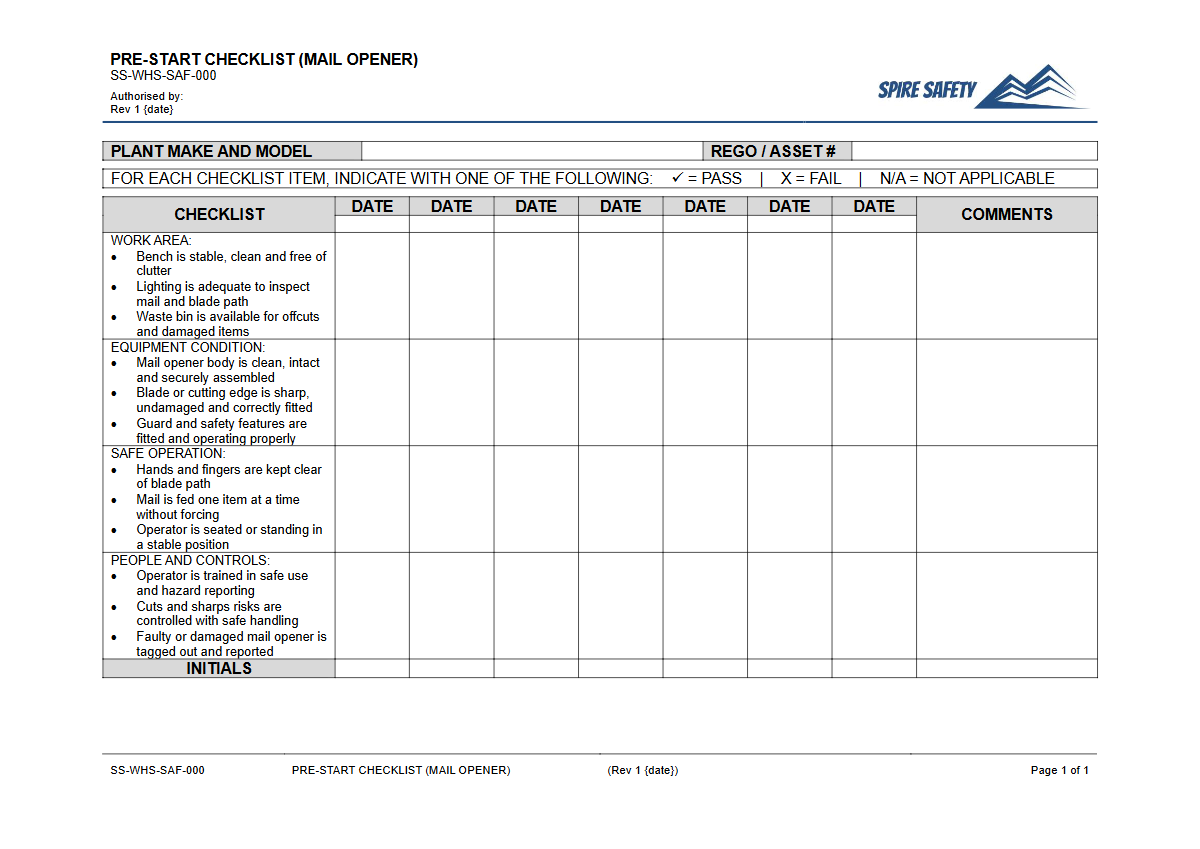
Download our free Pre-Start Checklist (Mail Opener) Template. This structured DOCX and PDF resource helps formalise safety checks for mail opening equipment.
Free Pre-Start Checklist (Mail Opener) Template
DOCX • 125 KB + PDF
Updated Oct 2026
No signup required
Purpose of the Free Pre-Start Checklist (Mail Opener) Template
Even seemingly simple office equipment like an automatic mail opener carries potential risks, including sharp moving parts, electrical hazards, and ergonomic strains from repetitive use. Our Free Pre-Start Checklist (Mail Opener) Template provides a structured starting point for formalising daily safety inspections.
Using this checklist helps your organisation identify and control hazards before they cause an incident, ensuring the equipment is safe for operation at the beginning of each shift.
Regular pre-start inspections are a fundamental component of proactive workplace safety. They demonstrate a commitment to risk management and help build a positive safety culture where workers are actively involved in maintaining a safe environment.
Integrating these quick checks into your daily routine is a simple yet effective way to manage your WHS duties. To further embed this practice, consider discussing the importance of equipment inspections using our Pre-Start Checks and Plant Maintenance Toolbox Talk Template.
Video walkthrough
How to use the Free Pre-Start Checklist (Mail Opener) Template
This resource is available as a user-friendly DOCX file and a print-ready PDF. To use it, simply download the file and integrate it into your operational procedures.
The checklist format is designed for quick completion, allowing operators to systematically verify the condition of the mail opener before use.
Important: This template is a general guide. You must customise it to suit the specific make and model of your mail opener, your workplace environment, and your operational risks.
We recommend a competent person reviews and adapts the document to align with your specific machinery and legal obligations. An effective checklist is one that is tailored to its purpose.
Proper documentation is a key part of effective WHS management systems, helping to ensure safety procedures are consistently followed.
When to use it
The pre-start checklist should be completed before the mail opener is used for the first time each day or at the beginning of each new shift. This ensures that the equipment's condition is verified before any work commences.
Establishing this as a non-negotiable first step helps prevent the use of faulty or unsafe machinery.
Findings from the checklist can also be a valuable discussion point during team safety meetings. Regularly reviewing common faults or near misses identified during pre-starts helps reinforce safety awareness among all staff.
These discussions can be documented using a Free Pre-Start Meeting Template to maintain records of safety communications.
Who should use it
This checklist is designed for use by the primary operators of the mail opening equipment. They are in the best position to notice subtle changes or developing faults.
Supervisors and WHS officers should also be familiar with the checklist to conduct spot-checks, verify completion, and ensure any reported issues are addressed promptly.
Training should be provided to all operators on how to properly conduct the inspection and what actions to take if a fault is found. While this tool focuses on pre-start checks, it complements a range of other equipment-specific safety documents.
For example, offices with fabrication or prototyping equipment might also benefit from our Free Pre-Start Checklist (3D Printer) Template to manage risks associated with other small machinery.
Key Checks for Mail Opening Equipment
While your customised checklist will be more specific, general inspection points for a mail opener should include:
- Guards and Housings: Ensure all safety guards are in place, secure, and free from damage.
- Blades/Cutting Mechanism: Check for sharpness, signs of damage, and ensure the area is clear of foreign objects.
- Power Cords and Connections: Inspect for any fraying, exposed wires, or damage to the plug.
- Emergency Stop: If equipped, test the emergency stop button to ensure it functions correctly and immediately halts operation.
- Work Area: Confirm the surrounding area is clean, dry, and free from clutter that could interfere with safe operation.
Thorough and consistent record-keeping of these checks helps create a defensible paper trail, which can be invaluable during WHS compliance auditing. This is just one of many ways you can systematically improve safety, and you can find more templates in our free WHS resources library to assist with other tasks and equipment.
Common mistakes
Common mistakes to avoid
- Using a generic checklist without customising it for the specific make and model of the mail opener.
- Skipping checks because the equipment seems simple or low-risk.
- Failing to immediately remove a faulty machine from service and clearly tag it.
- 'Pencil-whipping' the form by ticking boxes without physically performing each inspection point.
Legal references
Legal considerations
The following legal requirements may be relevant to this type of work.
- Work Health and Safety Act (Harmonised) — Provides the primary duties for protecting workers and other people from work health and safety risks.
- Work Health and Safety Regulations (Harmonised) — Sets out requirements supporting the management of workplace hazards and risks.
The following codes may be relevant to this type of work.
- Managing WHS Risks Code of Practice — Provides practical guidance on identifying hazards, assessing risks and applying effective controls.
- Work Health and Safety Consultation, Cooperation and Coordination Code of Practice — Provides practical guidance on consulting workers and coordinating with other duty holders.
- Managing the Work Environment and Facilities Code of Practice — Provides practical guidance on safe work environments, workplace facilities and related controls.
Did you know
Hidden Office Dangers
Cuts and lacerations are among the most common office injuries. Simple equipment like mail openers, paper cutters, and box knives contribute significantly to these statistics if not handled or maintained with care.
FAQ
Frequently asked questions
01Why is a pre-start check needed for a simple mail opener?
02How often should a mail opener pre-start check be performed?
03Who is responsible for customising the mail opener checklist?
04What should happen if a fault is found during the check?
Share this resource
Free Pre-Start Checklist (Mail Opener) Template
Browse Categories
How To Use It
- 1Download and open in Word or PDF.
- 2Replace the placeholders with your business details.
- 3Get it reviewed by a WHS specialist before rollout.
Need it customised?
Our WHS consultants can adapt this template to your site, run a gap analysis, or audit what you already have in place.
Book a Free Consultation WHS consulting servicesor call 1300 156 382