
Free Pre-Start Checklist (Milkshake Mix) Template
Download our free Pre-Start Checklist for milkshake mixers. This DOCX & PDF template helps formalise safety checks for food service equipment. Get yours.
Free Pre-Start Checklist (Milkshake Mix) Template
DOCX • 125 KB + PDF
Updated Oct 2026
No signup required
Purpose of the Free Pre-Start Checklist (Milkshake Mix) Template
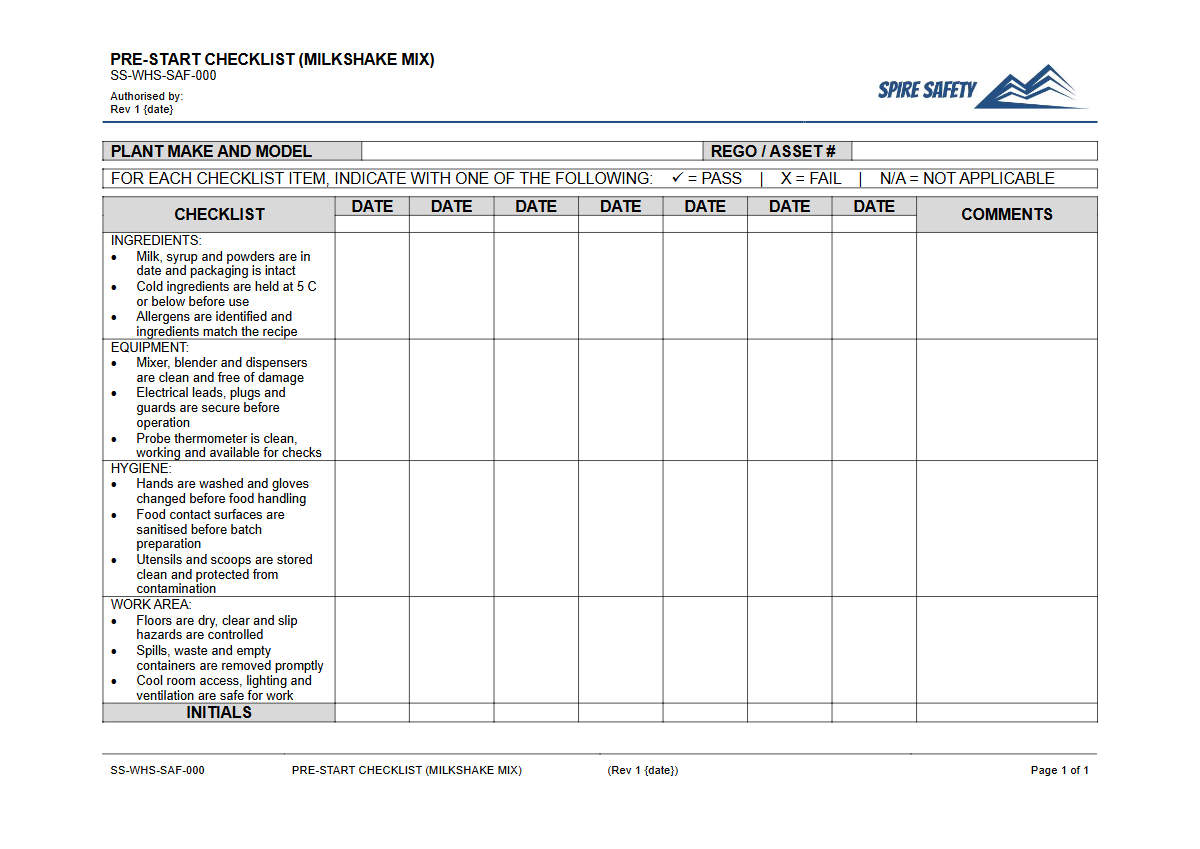
In any food service environment, ensuring equipment is safe and hygienic before use is fundamental to workplace health and safety. This Free Pre-Start Checklist (Milkshake Mix) Template provides a structured starting point for operators to conduct routine inspections on commercial milkshake mixers.
Systematically checking the equipment helps identify potential hazards such as electrical faults, damaged moving parts, or inadequate cleanliness before they can cause injury or illness. A documented check demonstrates due diligence and contributes to a proactive safety culture within your organisation.
This checklist formalises the process of inspecting key components, from the power cord and plug to the spindle and guards. By identifying and addressing minor issues early, you can prevent equipment failure, reduce the risk of incidents, and ensure the machine operates as the manufacturer intended.
The structured approach is similar to that found in our Free Pre-Start Checklist (Agitator) Template, focusing on isolating hazards before work commences.
Video walkthrough
How to use the Free Pre-Start Checklist (Milkshake Mix) Template
This resource is available as both a DOCX file for easy customisation and a PDF for immediate printing and use. Download the template and adapt it to the specific requirements of your workplace.
It is crucial to modify the checklist to reflect the make and model of your milkshake mixer, its operating environment, and your business's specific WHS policies and procedures.
Important: This is a template, not a finished document. We provide this resource as a starting point.
It is your responsibility to ensure it is customised and implemented appropriately for your specific workplace needs. Spire Safety assumes no liability for the use or misuse of this document.
Key Inspection Points
When customising your checklist, ensure it covers all critical safety and hygiene aspects of the milkshake mixer. Key areas for inspection should include:
- Electrical Safety: Check the power cord for any cuts, abrasions, or damage. Inspect the plug for bent pins or cracks. Confirm the electrical test and tag is current.
- Mechanical Integrity: Examine the spindle to ensure it is straight, secure, and free from damage. Check that any guards or safety shields are in place and functioning correctly.
- Operational Checks: Test the on/off switch and any speed controls to ensure they work properly. The machine should start and stop without delay.
- Stability: Confirm the machine is stable on the benchtop and does not wobble or move during operation. Check that rubber feet are intact.
- Hygiene: Ensure all components, particularly the spindle, cup rest, and splash areas, are thoroughly clean and sanitised before the first use of the day.
When to use it
A pre-start check should be completed by the operator at the beginning of each day or shift before the milkshake mixer is used for the first time. It should also be performed after the unit has undergone cleaning, maintenance, or has been moved.
Establishing this as a non-negotiable daily routine is key to its effectiveness. To embed this practice, consider regular safety discussions using our Pre-Start Checks and Plant Maintenance Toolbox Talk Template to reinforce the importance of equipment inspections.
Who should use it
This checklist is designed for anyone who operates a commercial milkshake mixer, including cafe workers, baristas, kitchen hands, and food truck operators. Supervisors and managers should also use the checklist to verify that safety procedures are being followed and to oversee the maintenance and condition of the equipment.
It serves as both an operational tool for workers and an assurance tool for management.
Integrating Pre-Start Checks into Your Safety System
A single checklist is most effective when it's part of a broader safety framework. Integrating this pre-start check into your organisation's WHS management system ensures that it is supported by clear procedures, training, and supervision.
Completed checklists should be filed as a record of your safety activities, providing valuable data for maintenance scheduling and risk assessments.
To ensure consistent application, teams can briefly discuss equipment status and any reported faults during daily huddles or pre-start meetings. Using a Free Pre-Start Meeting Template can help formalise this communication.
These records are vital for demonstrating compliance and a commitment to safety.
Regular WHS compliance auditing can verify that these checks are being completed correctly and consistently across all shifts and locations. Audits help identify gaps in your process and opportunities for improvement, ensuring your safety system remains effective over time.
By adopting this checklist, you take a positive step towards managing risks associated with food service equipment. For more tools to support your safety processes, browse our complete free WHS resources library for templates, forms, and guides.
Common mistakes
Common mistakes to avoid
- Using the mixer despite noticing a frayed or damaged power cord.
- Skipping the daily check because the machine 'worked fine yesterday'.
- Failing to properly clean and sanitise the spindle between different drink orders, risking cross-contamination.
- Not ensuring the mixing cup is seated correctly before activating the machine, leading to spills and potential slips.
Legal references
Legal considerations
The following legal requirements may be relevant to this type of work.
- Work Health and Safety Act (Harmonised) — Provides the primary duties for protecting workers and other people from work health and safety risks.
- Work Health and Safety Regulations (Harmonised) — Sets out requirements supporting the management of workplace hazards and risks.
The following codes may be relevant to this type of work.
- Managing WHS Risks Code of Practice — Provides practical guidance on identifying hazards, assessing risks and applying effective controls.
- Work Health and Safety Consultation, Cooperation and Coordination Code of Practice — Provides practical guidance on consulting workers and coordinating with other duty holders.
- Managing the Work Environment and Facilities Code of Practice — Provides practical guidance on safe work environments, workplace facilities and related controls.
Did you know
Invention of the Mixer
The first electric drink mixer, the ancestor of modern milkshake machines, was invented in 1922 by Stephen Poplawski for the sole purpose of making malted milkshakes for soda fountains.
Hygiene is Key
According to food safety authorities, inadequately cleaned food contact surfaces are a significant contributing factor to foodborne illness outbreaks in commercial food businesses.
FAQ
Frequently asked questions
01What are the main hazards of a commercial milkshake mixer?
02How often should a milkshake mixer pre-start check be performed?
03Is this template suitable for all brands of milkshake mixers?
04Why is it important to document pre-start checks?
Share this resource
Free Pre-Start Checklist (Milkshake Mix) Template
Browse Categories
How To Use It
- 1Download and open in Word or PDF.
- 2Replace the placeholders with your business details.
- 3Get it reviewed by a WHS specialist before rollout.
Need it customised?
Our WHS consultants can adapt this template to your site, run a gap analysis, or audit what you already have in place.
Book a Free Consultation WHS consulting servicesor call 1300 156 382