
Free Pre-Start Checklist (Mini Bus) Template
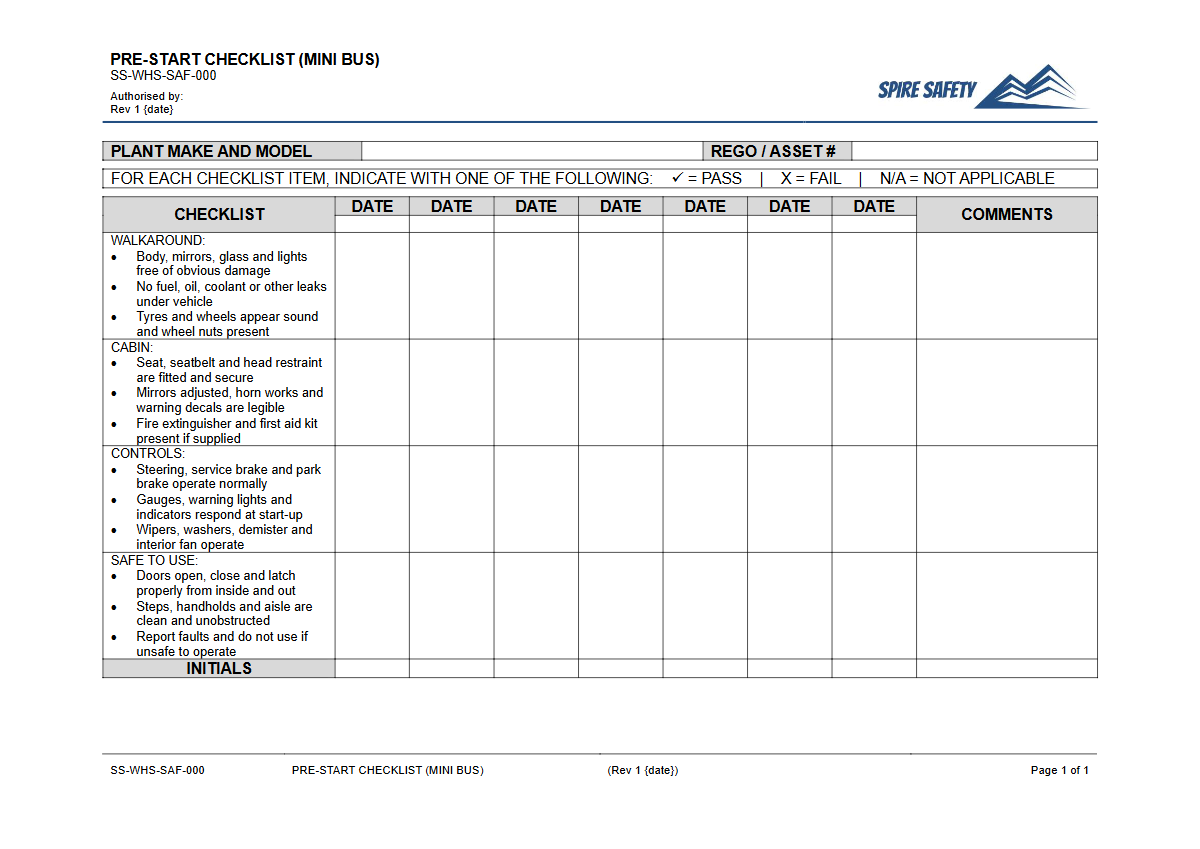
Download our Free Pre-Start Checklist (Mini Bus) Template. This structured DOCX & PDF resource helps formalise daily vehicle safety checks and manage WHS risks.
Free Pre-Start Checklist (Mini Bus) Template
DOCX • 125 KB + PDF
Updated Oct 2026
No signup required
Purpose of the Free Pre-Start Checklist (Mini Bus) Template
A mini bus is a common piece of plant in many industries, from transport and tourism to healthcare and education. Ensuring it is safe to operate before every journey is a fundamental WHS requirement.
This Free Pre-Start Checklist (Mini Bus) Template provides a structured starting point for formalising daily operator checks. Systematically inspecting the vehicle helps identify mechanical faults, damage, or safety system failures before they can cause an incident on the road, protecting drivers, passengers, and other road users.
Consistent use of a pre-start checklist is a key operational control for managing plant-related hazards. It serves as evidence that an organisation is taking practicable steps to meet its primary duty of care under WHS legislation.
Integrating these checks into daily procedures supports a broader, comprehensive WHS management system, fostering a proactive safety culture where potential issues are reported and rectified promptly.
Video walkthrough
How to use the Free Pre-Start Checklist (Mini Bus) Template
This document is a general template designed to be adapted to your specific operational needs. To use it effectively, download the DOCX file and begin the customisation process.
Add your company branding, specific site details, and the make and model of the mini bus it will be used for. It is critical to adjust the checklist items to reflect the actual features and potential hazards of your vehicle, such as wheelchair lifts, specific emergency equipment, or communication systems.
Once customised, operators must be trained on how to complete the checklist correctly and what to do if a defect is identified. The process should be clear: inspect the item, tick the corresponding box, and immediately report any 'No' or 'Fail' items to a supervisor according to your organisation's fault-reporting procedure.
For expert assistance in tailoring safety documents to your specific workplace, consider engaging specialist WHS consulting services.
Note: We provide this template as a starting point. It is your responsibility to ensure it is customised to suit the specific plant, tasks, and risks in your workplace.
You must conduct your own risk assessment and implement controls that are relevant to your business operations.
When to use the Pre-Start Checklist
A pre-start check should be completed by the operator at the beginning of each shift or before using the mini bus for the first time on any given day. This ensures a consistent baseline of safety is established before the vehicle enters service.
Additional checks may be warranted if a different driver takes over mid-shift, after the vehicle has undergone maintenance, or if there is reason to believe it may have sustained damage (e.g., after driving on rough or unsealed roads).
This process is not limited to mini buses; a similar inspection routine applies to a wide range of mobile plant and equipment. For example, operators of heavy machinery should use a specific Pre-Start Checklist for Forwarders to ensure safe operation in forestry environments.
The principle of pre-use inspection is a universal element of safe work practice.
Who should use it
The primary user of the mini bus pre-start checklist is the driver or operator assigned to the vehicle for that shift. They have the hands-on responsibility for conducting the physical inspection and documenting its condition.
This task should not be delegated to another person who is not about to operate the vehicle.
Supervisors and managers also have a role. They are responsible for ensuring operators are trained and are completing the checks diligently.
They must also review the completed forms, acknowledge any reported defects, and initiate the necessary actions for repair or maintenance. Regular WHS compliance audits can help verify that these procedures are being consistently followed across the organisation.
This systematic approach extends to other types of equipment. For instance, an operator using landscaping machinery would use a specific checklist for lawn tractors, while a worker in waste management would conduct pre-start checks for bin lifters. Each role has a part to play in the chain of safety responsibility.
Common mistakes
Common mistakes to avoid
- Operator 'pencil-whipping' the form without physically inspecting the items.
- Ignoring seemingly minor issues like worn wiper blades or a cracked mirror.
- Failing to have a clear process for reporting and rectifying defects.
- Using a generic checklist that hasn't been customised for the specific mini bus model and its features (e.g., wheelchair lift).
Legal references
Legal considerations
The following legal requirements may be relevant to this type of work.
- Work Health and Safety Act (Harmonised) — Provides the primary duties for protecting workers and other people from work health and safety risks.
- Work Health and Safety Regulations (Harmonised) — Sets out requirements supporting the management of workplace hazards and risks.
The following codes may be relevant to this type of work.
- Managing WHS Risks Code of Practice — Provides practical guidance on identifying hazards, assessing risks and applying effective controls.
- Work Health and Safety Consultation, Cooperation and Coordination Code of Practice — Provides practical guidance on consulting workers and coordinating with other duty holders.
- Managing the Work Environment and Facilities Code of Practice — Provides practical guidance on safe work environments, workplace facilities and related controls.
Did you know
Tyre Pressure Matters
According to transport authorities, under-inflated tyres are a significant cause of vehicle accidents. They can overheat, affect handling and braking, and lead to blowouts, making tyre pressure checks a critical part of any pre-start inspection.
Record Keeping
Completed pre-start checklists are important WHS records. They can be used during safety audits or incident investigations to demonstrate that an organisation has a system in place for inspecting and maintaining its vehicles.
FAQ
Frequently asked questions
01What is the main purpose of a mini bus pre-start check?
02How often should mini bus pre-start checks be performed?
03Who is responsible for completing the mini bus pre-start checklist?
04What should happen if a fault is found during a pre-start check?
Share this resource
Free Pre-Start Checklist (Mini Bus) Template
Browse Categories
How To Use It
- 1Download and open in Word or PDF.
- 2Replace the placeholders with your business details.
- 3Get it reviewed by a WHS specialist before rollout.
Need it customised?
Our WHS consultants can adapt this template to your site, run a gap analysis, or audit what you already have in place.
Book a Free Consultation WHS consulting servicesor call 1300 156 382