
Free Pre-Start Checklist (Mill Machine) Template
Download our free Pre-Start Checklist (Mill Machine) Template. This DOCX and PDF resource provides a structured starting point for daily equipment checks.
Free Pre-Start Checklist (Mill Machine) Template
DOCX • 125 KB + PDF
Updated Oct 2026
No signup required
Purpose of the Free Pre-Start Checklist (Mill Machine) Template
Milling machines are powerful and versatile pieces of equipment, but their moving parts, sharp tooling, and high-speed operation present significant safety risks. Implementing a routine inspection before use is a fundamental control measure to ensure the machine is safe to operate.
This Free Pre-Start Checklist (Mill Machine) Template provides a structured framework to guide operators through a systematic check, helping to identify potential faults, damage, or missing guards before work commences. By formalising this process, you create a documented record of safety checks, which is a key component of effective WHS management systems and demonstrates a proactive approach to risk management in your workshop.
Using this Pre-Start Checklist helps your organisation meet its duty of care to provide safe plant and equipment. It encourages a safety-first mindset among operators, reduces the likelihood of unexpected breakdowns, and most importantly, helps prevent serious incidents and injuries caused by mechanical failure or missing safety features.
Video walkthrough
How to use the Free Pre-Start Checklist (Mill Machine) Template
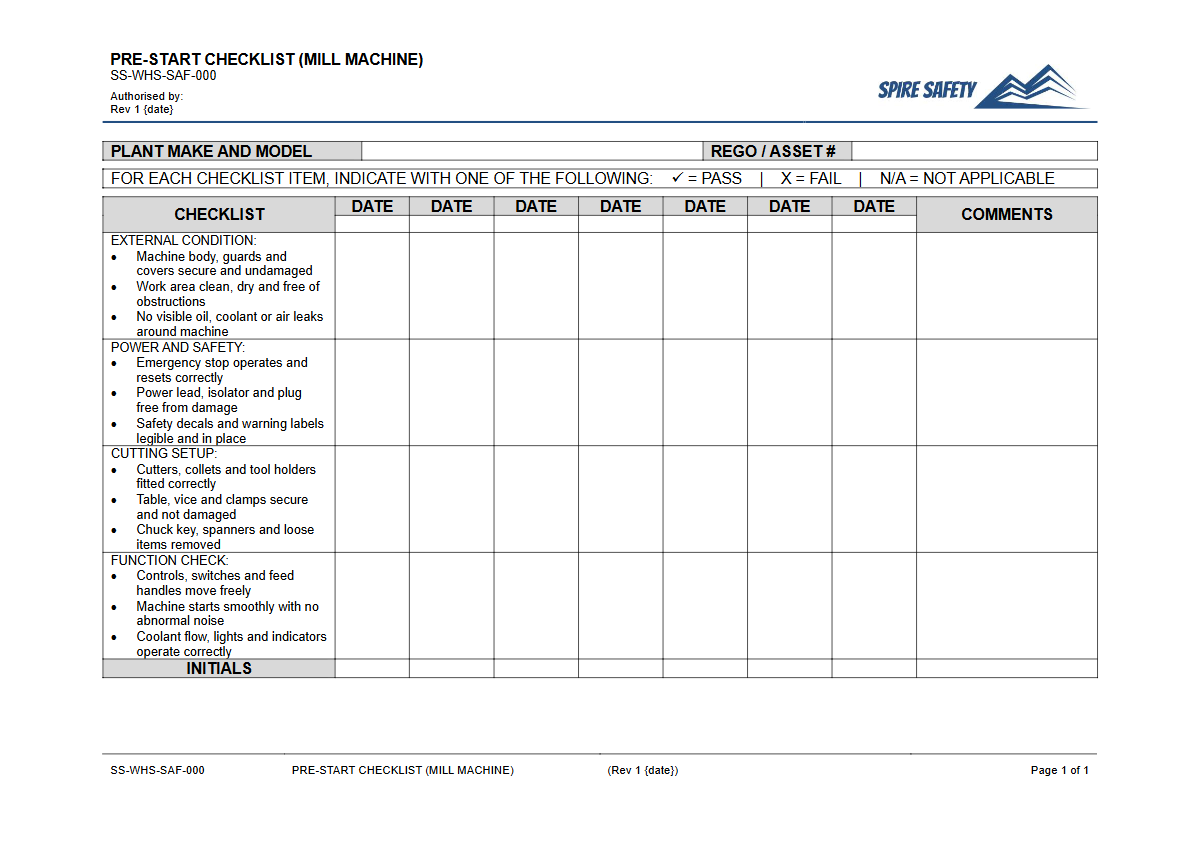
This resource is provided as a fully editable DOCX file and a print-ready PDF. The checklist is designed to be straightforward and practical for operators to complete at the start of each shift or before first use.
It includes sections for recording machine details, a list of essential safety and operational checks, a space to note any defects found, and a sign-off area for the operator and supervisor.
Please note: This document is a template and serves as a starting point. We strongly recommend you customise it to reflect the specific make, model, and configuration of your milling machine, as well as your unique site conditions, safe work procedures, and operational risks.
Different machines have different features, and your checklist must be specific to be effective. For example, the checks for a small manual mill will differ from those for a large CNC machining centre. Similar principles apply to other specialised machinery, as seen in our Free Pre-Start Checklist (Feed Mill) Template.
Key Sections to Customise:
- Machine-Specific Checks: Add, remove, or modify items to match your exact equipment. This could include checks for coolant levels, specific interlock switches, or automated tool changers.
- Emergency Procedures: Ensure contact details and reporting procedures align with your organisation's established safety protocols.
- Company Branding: Add your company logo and details to formalise the document as part of your internal safety system.
When to use a Mill Machine Pre-Start Checklist
A pre-start check should be conducted at the beginning of every shift before the milling machine is used for the first time that day. It should also be performed if a new operator takes over the machine mid-shift.
This consistent routine ensures that the machine's condition is verified before any work begins, preventing an operator from unknowingly using a machine that was damaged or became unsafe during a previous operation.
These completed checklists should be reviewed by a supervisor and kept on file. These records are invaluable during safety investigations and can be a key point of review during a WHS compliance auditing process to verify that safety procedures are being consistently followed.
Who should use this Pre-Start Checklist
The checklist should be completed by the person operating the milling machine. This must be a worker who has been properly trained and deemed competent in the safe use of that specific piece of equipment.
The operator has the most hands-on interaction with the machine and is best placed to notice subtle changes, unusual noises, or minor faults that could signal a developing problem. It is not a task to be delegated to an untrained assistant or labourer.
Supervisors and managers also have a critical role. They are responsible for ensuring that operators are trained on how to properly conduct the pre-start inspection and understand its importance.
They must also review the completed checklists, ensure any reported defects are addressed promptly, and confirm that unsafe equipment is properly isolated and tagged out of service until it can be repaired. This same division of responsibility applies to other high-risk plant, such as those covered in our granulator pre-start checklist.
Key items to inspect include:
- Guarding: Ensure all guards, especially chuck guards and swarf guards, are in place, secure, and free from damage. Check that any interlock switches on guards are functioning correctly.
- Emergency Stops: Physically test all emergency stop buttons to confirm they immediately cut power to the machine.
- Work-Holding Devices: Inspect vices, clamps, and fixtures for any signs of wear, cracks, or damage that could compromise their ability to hold the workpiece securely.
- Tooling: Check that the cutting tool is sharp, free from damage, and correctly installed in the spindle. Similar checks are vital for other woodworking and metalworking equipment, like those detailed in our dovetail machine pre-start checklist.
- Housekeeping: Ensure the area around the machine is clear of trip hazards, oil spills, and unnecessary clutter. Confirm swarf and chip removal systems are functional.
By integrating this checklist into your daily operations, you build a stronger safety culture and a more robust WHS framework. For more templates and safety documentation, browse our complete free WHS resources library.
Common mistakes
Common mistakes to avoid
- Completing the checklist from memory without physically inspecting the machine.
- Ignoring minor issues like oil leaks or unusual noises that could indicate a larger problem.
- Failing to 'tag out' and report faulty equipment, allowing someone else to use it.
- Using a generic checklist that doesn't cover the specific safety features and hazards of the machine in use.
Legal references
Legal considerations
The following legal requirements may be relevant to this type of work.
- Work Health and Safety Act (Harmonised) — Provides the primary duties for protecting workers and other people from work health and safety risks.
- Work Health and Safety Regulations (Harmonised) — Sets out requirements supporting the management of workplace hazards and risks.
The following codes may be relevant to this type of work.
- Managing WHS Risks Code of Practice — Provides practical guidance on identifying hazards, assessing risks and applying effective controls.
- Work Health and Safety Consultation, Cooperation and Coordination Code of Practice — Provides practical guidance on consulting workers and coordinating with other duty holders.
- Managing the Work Environment and Facilities Code of Practice — Provides practical guidance on safe work environments, workplace facilities and related controls.
Did you know
Entanglement Hazard
Mill machines are a leading source of entanglement incidents in workshops. A loose piece of clothing, hair, or even a rag can be caught by the rotating spindle in a fraction of a second, leading to severe injury.
Record Keeping Value
Pre-start checklists create a legal record demonstrating that an organisation is proactively managing plant safety. This documentation is vital during safety audits and incident investigations.
FAQ
Frequently asked questions
01What is a pre-start checklist for a mill machine?
02Why are daily checks on a milling machine so important?
03Who is responsible for ensuring the pre-start check is done?
04What should happen if a fault is found during a pre-start check?
Share this resource
Free Pre-Start Checklist (Mill Machine) Template
Browse Categories
How To Use It
- 1Download and open in Word or PDF.
- 2Replace the placeholders with your business details.
- 3Get it reviewed by a WHS specialist before rollout.
Need it customised?
Our WHS consultants can adapt this template to your site, run a gap analysis, or audit what you already have in place.
Book a Free Consultation WHS consulting servicesor call 1300 156 382