
Free Pre-Start Checklist (Panel Saw) Template
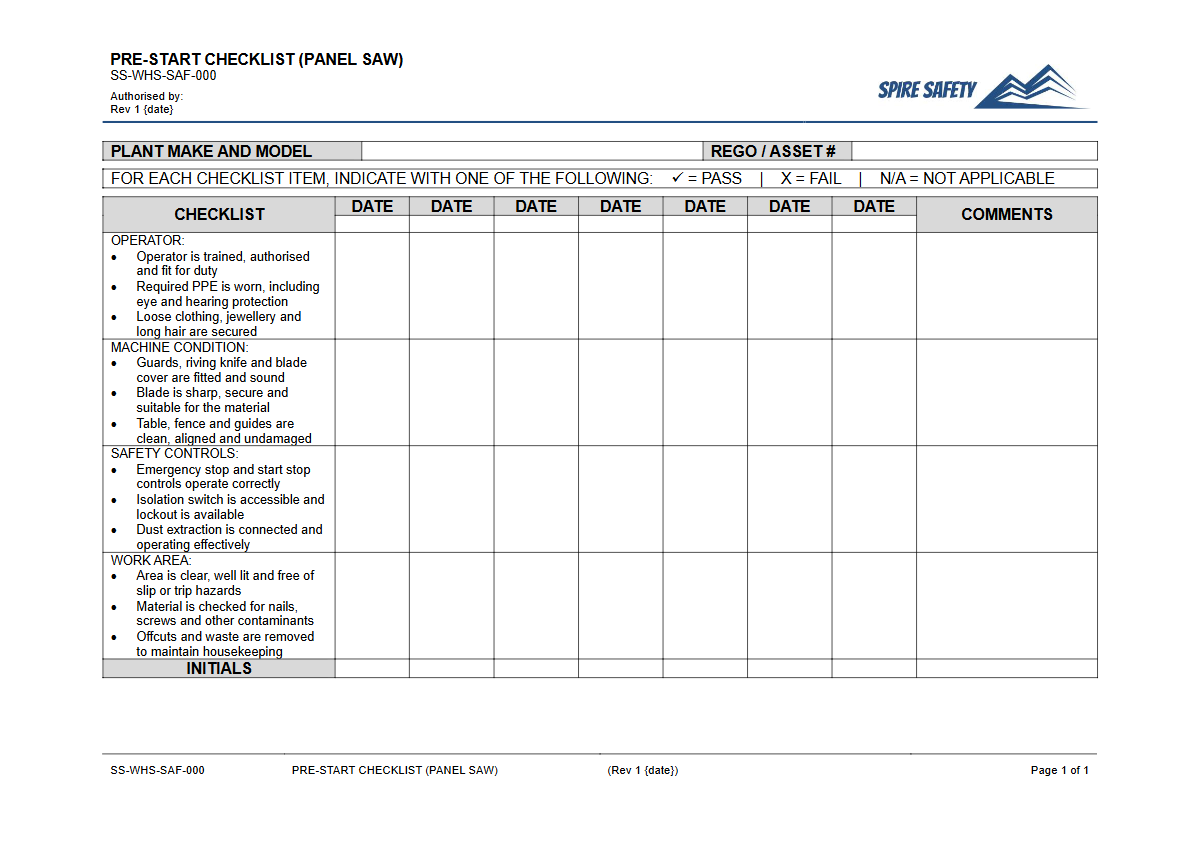
Download our Free Pre-Start Checklist (Panel Saw) Template. This structured DOCX and PDF helps identify hazards before operation.
Free Pre-Start Checklist (Panel Saw) Template
DOCX • 125 KB + PDF
Updated Oct 2026
No signup required
Purpose of the Free Pre-Start Checklist (Panel Saw) Template
Panel saws are powerful and essential tools in many workshops, but they also present significant risks if not maintained and operated correctly. This Free Pre-Start Checklist (Panel Saw) Template provides a structured framework for operators to conduct consistent, thorough safety inspections before each use.
The primary purpose is to identify and control hazards before they can cause injury or damage, formalising a critical step in your safety procedures. By documenting these daily checks, you create a clear record of due diligence and demonstrate a commitment to proactive risk management.
Integrating regular equipment inspections is a fundamental component of effective WHS management systems. This checklist helps ensure that safety features like guards, riving knives, and emergency stops are functional, and that the work area is clear of trip hazards or debris. Using it consistently helps reduce the likelihood of incidents, promotes a positive safety culture, and assists in the early detection of maintenance needs, preventing costly downtime and equipment failure.
Video walkthrough
How to Use the Free Pre-Start Checklist (Panel Saw) Template
Using this template effectively involves more than just downloading and printing it. Follow these steps to integrate it properly into your operations:
- Download and Customise: Download the template in your preferred format (DOCX for easy editing or PDF). The provided checklist covers common inspection points for panel saws, but it must be adapted to your specific circumstances.
- Train Your Workers: Ensure all operators are trained not only on the safe use of the panel saw but also on the purpose and procedure for completing this pre-start checklist. They must understand what each checkpoint means and the process for reporting any faults.
- Implement and Monitor: Make the checklist readily available at the machine. Supervisors should periodically observe the process to ensure checks are being completed correctly and not just 'pencil-whipped'.
- Review and Update: The checklist should be a living document. Review it after any incident, near miss, or when new information about potential hazards becomes available.
Important: This document is a template designed as a starting point. It is your responsibility to customise it to reflect the specific make and model of your panel saw, the tasks it is used for, your workplace environment, and the relevant WHS regulations in your state or territory.
For instance, the safety checks for a large industrial machine will differ from those for a smaller workshop model, just as you would require a specific Free Pre-Start Checklist for CNC Routers for that type of equipment.
When to Use It
A pre-start checklist for a panel saw should be completed before the first use on every shift or every day the machine is operated. If the saw is used by multiple operators throughout a single shift, it is good practice for each new operator to conduct their own brief check to verify its condition.
The goal is to catch any issues that may have developed overnight, during previous use, or due to environmental changes. Consistency is key; performing the check sporadically undermines its entire purpose.
This process can be tied into daily team briefings or pre-shift meetings. Using a Pre-Start Checks and Plant Maintenance Toolbox Talk can help reinforce the importance of these inspections across your entire team, ensuring everyone understands the 'why' behind the 'what'.
Who Should Use It
The pre-start checklist must be completed by a worker who is trained, competent, and authorised to operate the specific panel saw. Competency includes not just the ability to operate the machine for production but also the knowledge to identify faults, defects, and potential hazards associated with its components.
Supervisors also have a role in verifying that the checks are being completed and that any reported issues are addressed promptly and effectively, ensuring the operator does not use faulty equipment.
Integrating Pre-Starts into Your Safety System
A pre-start checklist is not a standalone solution; it is one part of a comprehensive safety management system. It works alongside other critical WHS documents and processes.
For example, while this checklist confirms the machine's immediate safety, a Safe Work Method Statement (SWMS) is required for the high-risk construction work associated with its operation, detailing the step-by-step process for managing risks during the task itself. You can facilitate this broader safety conversation by using a free Pre-Start Meeting Template to structure daily safety discussions with your team.
Auditing and Review
To ensure your safety processes remain effective, you should periodically review their application and outcomes. This includes reviewing completed panel saw checklists to identify recurring faults that may signal a need for scheduled preventative maintenance.
These internal checks are a vital part of continuous improvement and can be complemented by formal third-party WHS compliance auditing to get an external perspective on the health of your safety systems. If an incident or near miss occurs involving the panel saw, the completed checklists can serve as a valuable part of the investigation.
By implementing this checklist, you take a significant step towards creating a safer work environment. For more templates and safety tools, browse our complete free WHS resources library.
Common mistakes
Common mistakes to avoid
- "Pencil-whipping" the checklist without physically inspecting each item.
- Failing to customise the template for the specific make and model of the panel saw.
- Not taking immediate action (e.g., applying a 'lockout-tagout') when a fault is found.
- Allowing untrained workers to complete the checklist or operate the machinery.
Legal references
Legal considerations
The following legal requirements may be relevant to this type of work.
- Work Health and Safety Act (Harmonised) — Provides the primary duties for protecting workers and other people from work health and safety risks.
- Work Health and Safety Regulations (Harmonised) — Sets out requirements supporting the management of workplace hazards and risks.
The following codes may be relevant to this type of work.
- Managing WHS Risks Code of Practice — Provides practical guidance on identifying hazards, assessing risks and applying effective controls.
- Work Health and Safety Consultation, Cooperation and Coordination Code of Practice — Provides practical guidance on consulting workers and coordinating with other duty holders.
- Managing the Work Environment and Facilities Code of Practice — Provides practical guidance on safe work environments, workplace facilities and related controls.
Did you know
Kickback Risk
Panel saws are a leading source of woodworking injuries, often due to kickback where the material is violently thrown back at the operator. A key pre-start check is ensuring the riving knife is correctly positioned and the anti-kickback pawls are functional.
FAQ
Frequently asked questions
01What is the difference between a pre-start checklist and a SWMS?
02How often should a panel saw pre-start inspection be done?
03Is this panel saw checklist template WHS-aligned?
04What should an operator do if a check fails on the checklist?
Share this resource
Free Pre-Start Checklist (Panel Saw) Template
Browse Categories
How To Use It
- 1Download and open in Word or PDF.
- 2Replace the placeholders with your business details.
- 3Get it reviewed by a WHS specialist before rollout.
Need it customised?
Our WHS consultants can adapt this template to your site, run a gap analysis, or audit what you already have in place.
Book a Free Consultation WHS consulting servicesor call 1300 156 382