
Free Pre-Start Checklist (Pipe Camera) Template
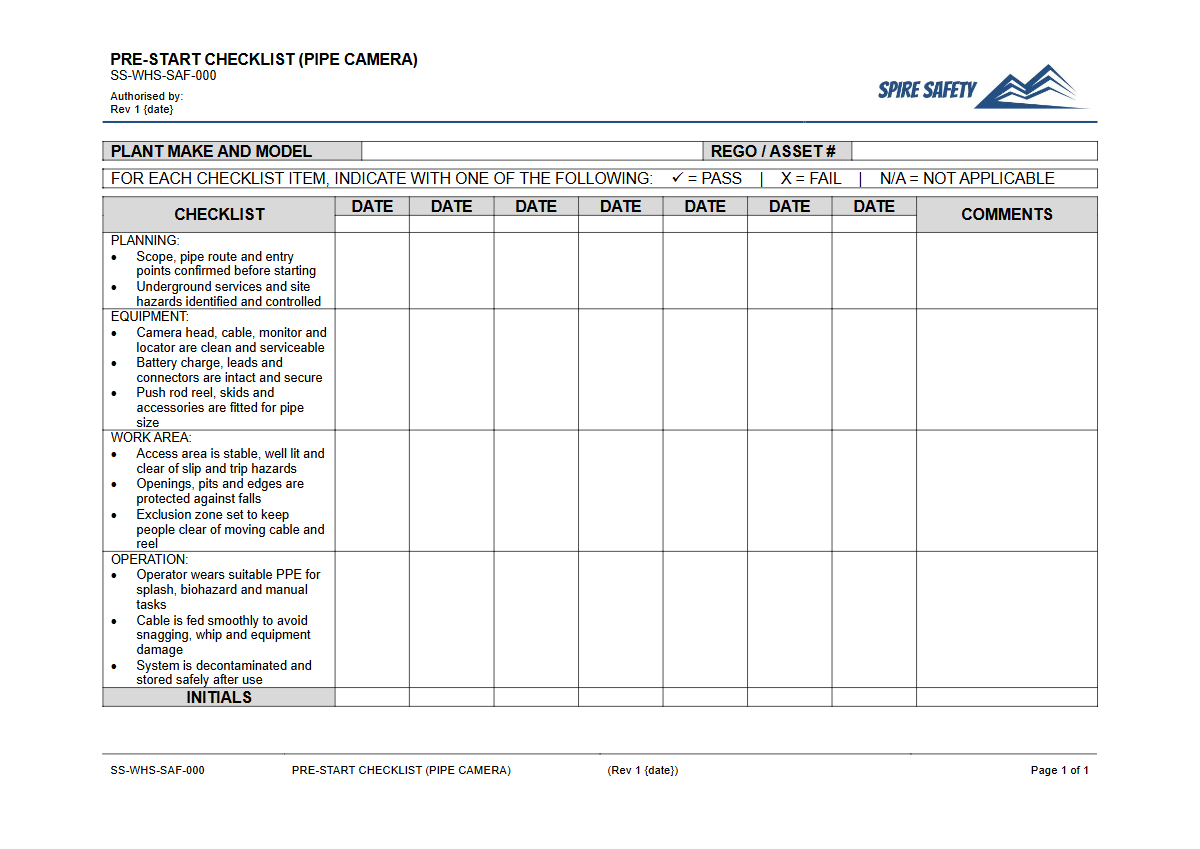
Download our free Pre-Start Checklist (Pipe Camera) Template. This structured Word (DOCX) and PDF resource helps formalise daily equipment checks.
Free Pre-Start Checklist (Pipe Camera) Template
DOCX • 125 KB + PDF
Updated Oct 2026
No signup required
Purpose of the Free Pre-Start Checklist (Pipe Camera) Template
A pipe inspection camera is a specialised piece of equipment used in plumbing, construction, and asset maintenance. Ensuring it is safe and operational before use is critical.
Our Free Pre-Start Checklist (Pipe Camera) Template provides a structured framework for operators to conduct thorough pre-operational inspections, helping to identify potential faults, damage, or wear and tear before they lead to an incident, equipment failure, or costly project delays. Using this checklist helps formalise safety procedures and demonstrates a commitment to proactive risk management.
Integrating regular, documented checks is a cornerstone of an effective WHS management system. This checklist helps ensure that equipment meets safety standards before every use, protecting both the operator and the integrity of the work being performed. It serves as a record that due diligence was performed, which can be invaluable for maintenance planning and incident investigations.
Video walkthrough
How to use the Free Pre-Start Checklist (Pipe Camera) Template
This template is designed to be straightforward and user-friendly. Operators should work through each item on the checklist before their shift begins, physically and visually inspecting each component of the pipe camera system.
This includes the camera head, push rod, monitor, control unit, and any associated cables or batteries. The operator marks each item as satisfactory or identifies any defects.
Any issues found must be recorded in the comments section, and the equipment should be reported to a supervisor immediately. If a fault poses a safety risk, the pipe camera must be tagged out of service and not used until it has been repaired by a competent person.
Documenting these steps creates a clear paper trail for maintenance and safety compliance.
Important: This document is a template and not a complete safety solution. For it to be effective, you must customise it to suit the specific make and model of your pipe camera, your operational environment, and your organisation's unique safety procedures.
While this checklist confirms equipment condition, it's also vital to ensure operators are skilled in its use. Worker capabilities for related tasks can be formally assessed using documents like our Verification of Competency (Pipe Threader) Template.
When to use this Pre-Start Checklist
The Pre-Start Checklist for a pipe camera should be completed before the first use of the equipment on any given day or shift. It is a routine check that takes only a few minutes but can prevent significant safety incidents or operational downtime.
A check should also be performed if the equipment has been transported to a new site, after it has undergone maintenance, or if there is any reason to suspect its condition has changed since its last use.
This regular cadence of inspection helps foster a consistent safety-first mindset among workers. Integrating these checks into the daily workflow is a key topic covered in resources like our Pre-Start Checks and Plant Maintenance Toolbox Talk, which helps reinforce the importance of the task.
Who should use it
This checklist is primarily for the equipment operator—the person who will be physically using the pipe camera. They have the most immediate responsibility for ensuring the tool is safe for their own use and for the task at hand.
By completing the checklist, they are confirming they have inspected the equipment and found it to be in a safe working condition.
Supervisors and managers also have a role. They are responsible for ensuring operators are trained and competent in conducting pre-start checks, that the system is being used correctly, and that any reported faults are addressed promptly and effectively.
Completed checklists should be collected and reviewed periodically as part of routine safety monitoring. These records are valuable evidence of procedural adherence and can be examined during a WHS compliance audit.
Common mistakes
Common mistakes to avoid
- Skipping checks for 'minor' issues like frayed cables or dirty camera lenses.
- Failing to check the condition of the push rod for splinters, kinks, or damage.
- Not removing faulty equipment from service immediately after a failed check.
- Treating the checklist as a 'tick-and-flick' exercise without proper visual and physical inspection.
Legal references
Legal considerations
The following legal requirements may be relevant to this type of work.
- Work Health and Safety Act (Harmonised) — Provides the primary duties for protecting workers and other people from work health and safety risks.
- Work Health and Safety Regulations (Harmonised) — Sets out requirements supporting the management of workplace hazards and risks.
The following codes may be relevant to this type of work.
- Managing WHS Risks Code of Practice — Provides practical guidance on identifying hazards, assessing risks and applying effective controls.
- Work Health and Safety Consultation, Cooperation and Coordination Code of Practice — Provides practical guidance on consulting workers and coordinating with other duty holders.
- Managing the Work Environment and Facilities Code of Practice — Provides practical guidance on safe work environments, workplace facilities and related controls.
Did you know
Hidden Dangers
Pipe inspection cameras often use high-strength, flexible push rods. A frayed or damaged rod can splinter, posing a serious hand injury risk to the operator if not identified during a pre-start check.
Battery Safety
Many modern pipe cameras use lithium-ion batteries. These can pose a significant fire risk if damaged or stored incorrectly, making battery inspection a critical part of the checklist.
FAQ
Frequently asked questions
01What is a pipe camera pre-start checklist for?
02Is it a legal requirement to use a pre-start checklist for a pipe camera in Australia?
03How often should a pipe camera pre-start check be performed?
04Who is responsible for completing the pipe camera pre-start?
Share this resource
Free Pre-Start Checklist (Pipe Camera) Template
Browse Categories
How To Use It
- 1Download and open in Word or PDF.
- 2Replace the placeholders with your business details.
- 3Get it reviewed by a WHS specialist before rollout.
Need it customised?
Our WHS consultants can adapt this template to your site, run a gap analysis, or audit what you already have in place.
Book a Free Consultation WHS consulting servicesor call 1300 156 382