
Free Pre-Start Checklist (Pizza Oven) Template
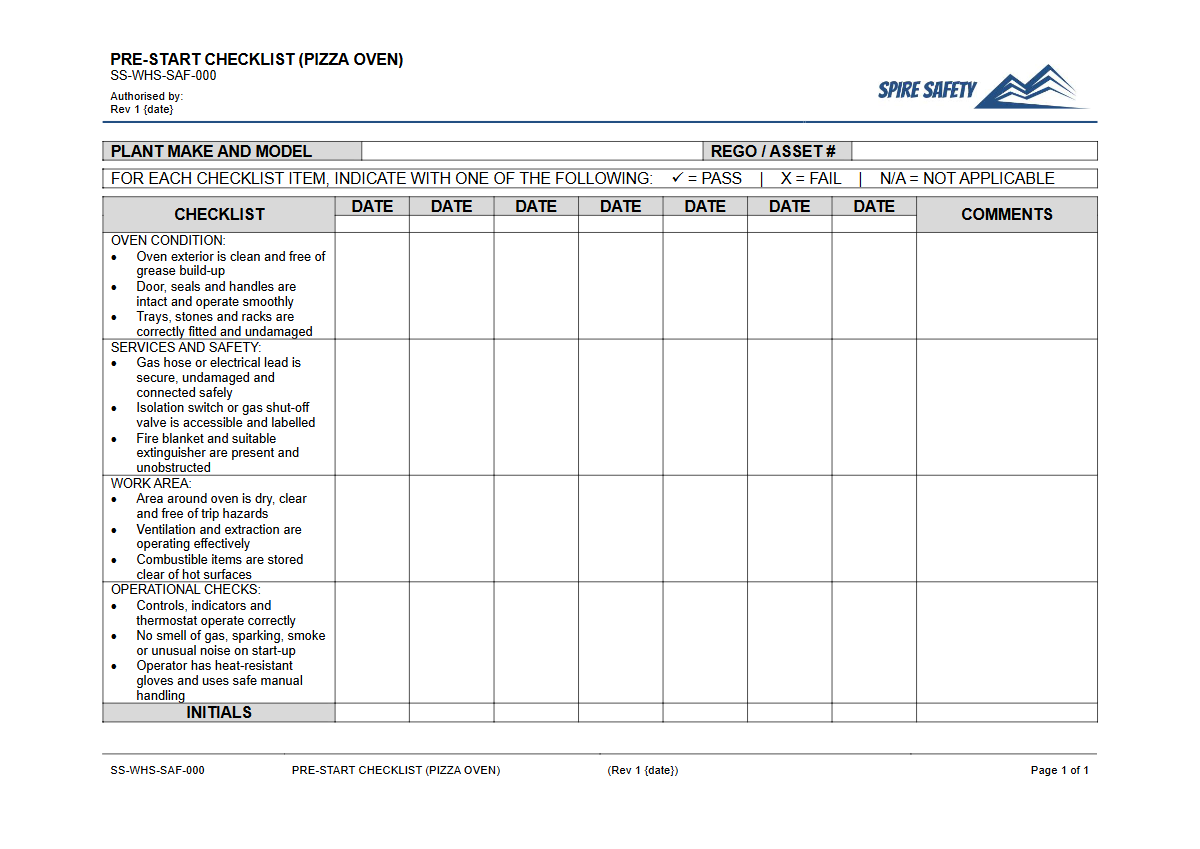
Download our free Pre-Start Checklist (Pizza Oven) Template. This structured Word & PDF resource helps formalise daily equipment checks and identify hazards.
Free Pre-Start Checklist (Pizza Oven) Template
DOCX • 125 KB + PDF
Updated Oct 2026
No signup required
Purpose of the Free Pre-Start Checklist (Pizza Oven) Template
Operating a commercial pizza oven, whether gas, wood-fired, or electric, involves significant risks, primarily from extreme heat, gas leaks, and electrical faults. A systematic pre-start check is a fundamental safety control measure.
This Free Pre-Start Checklist (Pizza Oven) Template provides a structured framework for operators to inspect the equipment for potential hazards before commencing work. Using it helps formalise safety procedures, document due diligence, and prevent incidents like burns, fires, or equipment failure.
Integrating this checklist into your daily operations promotes a proactive safety culture where potential issues are identified and rectified early. It serves as a practical tool within broader WHS management systems, ensuring that safety is a consistent and verifiable part of your kitchen's routine.
Consistent use helps protect your workers and demonstrates a commitment to maintaining a safe work environment.
Video walkthrough
How to use the Free Pre-Start Checklist (Pizza Oven) Template
This template is provided in both DOCX and PDF formats for your convenience. The DOCX file is fully editable, allowing you to tailor it to your specific workplace needs.
The first step is to customise the checklist to reflect the exact make, model, and type of pizza oven(s) you use. Different models have unique components and risks that must be addressed.
Involve experienced operators and supervisors in the customisation process to ensure all relevant checks are included. Once finalised, train all relevant personnel on how to use the checklist correctly, what each check entails, and the procedure for reporting faults.
The checklist should be completed, signed, and dated by the operator at the start of each shift. If you require assistance adapting this template to your specific operational context, our WHS consulting services can provide expert guidance.
Please note: This is a template document. We have designed it as a starting point, and it must be customised to suit the specific pizza oven models, workplace environment, and operational procedures at your site.
Key Checks to Include
When customising your checklist, consider including inspections for the following areas:
- General Condition: Check for any visible damage, instability, or obstructions around the oven.
- Guards & Insulation: Ensure all heat guards, door seals, and insulation are intact and functional to prevent burns.
- Gas Components (if applicable): Inspect gas lines, connections, and regulators for leaks (using a soapy water test if trained to do so), damage, or wear.
- Electrical Components (if applicable): Check that power cords, plugs, and switches are in good condition with no exposed wiring.
- Ventilation & Flues: Confirm that exhaust hoods, fans, and flues are clear, operational, and free from excessive grease or creosote build-up.
- Controls & Gauges: Verify that temperature gauges, timers, and control knobs are working correctly.
- Safety Features: Test emergency stops, gas shut-off valves, and any interlocking systems.
- Cleanliness: Ensure the oven and surrounding area are free from flammable debris and excessive food residue.
The findings from these checks provide critical information for maintaining equipment safety. They can be a valuable discussion point in safety meetings, which can be documented effectively using our Free Pre-Start Meeting Template to track actions and responsibilities.
When to use it
The pre-start checklist should be completed before the pizza oven is used for the first time each day or at the beginning of each shift. It should also be used after any period of shutdown, maintenance, or cleaning to ensure it has been returned to a safe operational state.
Establishing a non-negotiable routine for these checks is key to their effectiveness.
Regularly using and archiving these checklists also creates a documented history of inspections. This record is invaluable for tracking equipment condition over time, identifying recurring issues, and demonstrating due diligence during an internal review or a formal WHS compliance audit.
Who should use it
This Pre-Start Checklist should be used by any worker who is trained and authorised to operate the pizza oven. This may include chefs, kitchen hands, or supervisors.
It is crucial that users are not only given the checklist but are also provided with adequate instruction on how to perform each check safely and competently. They must understand the risks associated with the equipment and know the exact procedure to follow if a defect or hazard is identified, which includes immediately taking the oven out of service and reporting the issue.
To reinforce the importance of these checks, you can incorporate the topic into your safety communications. A practical way to do this is by facilitating a session with our Pre-Start Checks and Plant Maintenance Toolbox Talk to standardise understanding across the team.
By implementing this checklist, you equip your team with a simple yet powerful tool for risk management. For more templates to support your safety processes, you can browse our complete free WHS resources library.
Common mistakes
Common mistakes to avoid
- Using a generic checklist without customising it for the specific make and model of the pizza oven.
- Workers 'pencil-whipping' the form without physically performing each inspection.
- Failing to take immediate corrective action, such as tagging out faulty equipment.
- Neglecting to provide adequate training to staff on how to conduct the checks properly.
Legal references
Legal considerations
The following legal requirements may be relevant to this type of work.
- Work Health and Safety Act (Harmonised) — Provides the primary duties for protecting workers and other people from work health and safety risks.
- Work Health and Safety Regulations (Harmonised) — Sets out requirements supporting the management of workplace hazards and risks.
The following codes may be relevant to this type of work.
- Managing WHS Risks Code of Practice — Provides practical guidance on identifying hazards, assessing risks and applying effective controls.
- Work Health and Safety Consultation, Cooperation and Coordination Code of Practice — Provides practical guidance on consulting workers and coordinating with other duty holders.
- Managing the Work Environment and Facilities Code of Practice — Provides practical guidance on safe work environments, workplace facilities and related controls.
Did you know
Extreme Temperatures
Commercial pizza ovens can operate at temperatures exceeding 480°C. Regular pre-start checks of door seals, insulation, and guards are critical controls for preventing severe contact burns.
Gas Safety
For gas-fired ovens, even a minor leak in a hose or connection can lead to a significant fire or explosion risk. A daily pre-start inspection is one of the most effective ways to detect such faults before they escalate.
FAQ
Frequently asked questions
01Is a pre-start checklist legally required for a pizza oven in Australia?
02What are the key differences for a wood-fired vs. a gas pizza oven checklist?
03What should an operator do if a fault is found during a pre-start check?
04How often should our pizza oven checklist be reviewed?
Share this resource
Free Pre-Start Checklist (Pizza Oven) Template
Browse Categories
How To Use It
- 1Download and open in Word or PDF.
- 2Replace the placeholders with your business details.
- 3Get it reviewed by a WHS specialist before rollout.
Need it customised?
Our WHS consultants can adapt this template to your site, run a gap analysis, or audit what you already have in place.
Book a Free Consultation WHS consulting servicesor call 1300 156 382