
Free Pre-Start Checklist (Plasma Table) Template
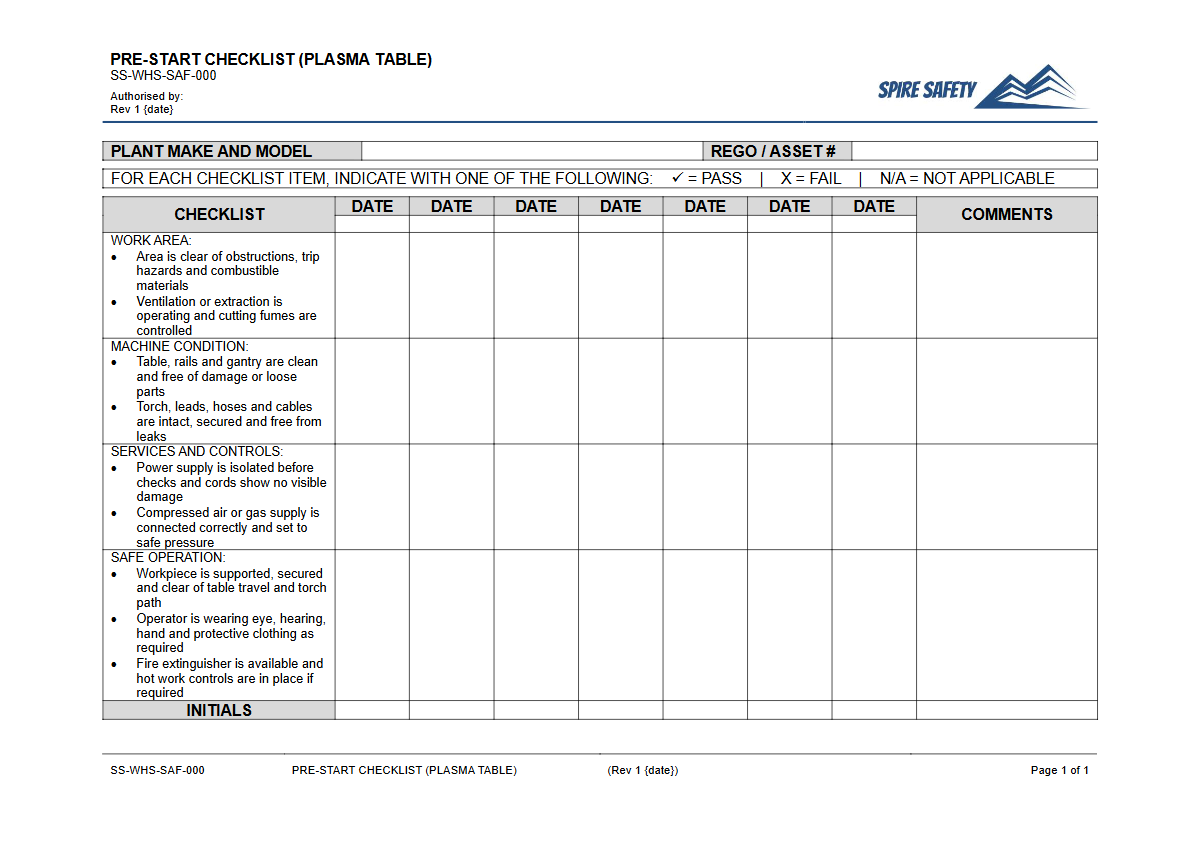
Download our Free Pre-Start Checklist (Plasma Table) Template. This structured DOCX & PDF resource helps formalise safety inspections before use.
Free Pre-Start Checklist (Plasma Table) Template
DOCX • 125 KB + PDF
Updated Oct 2026
No signup required
Purpose of the Free Pre-Start Checklist (Plasma Table) Template
A plasma cutting table combines high-voltage electricity, compressed gases, and intense heat, creating a high-risk work environment. This Free Pre-Start Checklist (Plasma Table) Template provides a structured framework for operators to inspect the equipment before use, helping to identify and control hazards before they cause an incident.
Consistent checks are fundamental to any effective safety protocol, helping to systematically spot issues like damaged cables, leaking gas lines, malfunctioning emergency stops, or inadequate ventilation. Using this checklist helps formalise the inspection process, ensuring no critical safety component is overlooked.
Integrating regular, documented equipment checks is a key component of a robust safety framework. These routine inspections provide leading indicators of potential failures, allowing for proactive maintenance rather than reactive repairs after a breakdown or injury. Formalising this process demonstrates a commitment to safety and helps build a thorough record of equipment condition over time, which is essential for effective WHS management systems.
Video walkthrough
How to use the Free Pre-Start Checklist (Plasma Table) Template
To implement this pre-start checklist effectively, follow these steps:
- Download: Select the DOCX file for easy customisation or the PDF for immediate printing.
- Review and Customise: This template is a starting point. You must adapt it to reflect the specific make, model, and configuration of your plasma table, as well as the unique risks present in your workshop.
- Train Operators: Ensure all operators are trained on not just how to use the plasma table, but also how to properly complete the pre-start checklist and what actions to take if a fault is found.
- Implement: Integrate the checklist into your daily operational procedures, making it a mandatory step before any operator begins work on the machine.
Important: This is a template only. We are not WHS consultants and cannot guarantee this document will meet your specific needs.
It is your responsibility to customise it to your workplace, plant, equipment, and unique operational risks. For guidance on communicating these checks, our Pre-Start Checks and Plant Maintenance Toolbox Talk Template is a useful resource.
When to use it
The pre-start checklist should be completed by the operator before every shift or before the first use of the plasma table each day. For equipment that is used infrequently, a check should be performed before each use.
The goal is to establish a consistent, non-negotiable routine where the machine’s safety status is verified before it is energised and put into operation. This regular cadence ensures that gradual wear and tear or sudden damage does not go unnoticed.
This pre-start check is the first step in a safe system of work. Once the check is complete and the machine is deemed safe, the operator should then proceed according to your organisation's specific safe operating procedure for the task.
For other types of cutting machinery, you might also require a FREE Table Saw SOP (Safe Operating Procedure) Template to guide operators.
Who should use it
This checklist is designed to be used by trained and authorised operators who have been deemed competent in the safe use of the specific plasma table. The person operating the equipment is best placed to conduct the pre-start check, as they are most familiar with its normal operating conditions.
Supervisors or managers also have a role in periodically reviewing completed checklists to ensure they are being filled out correctly and to follow up on any reported faults or required maintenance actions.
Supervisors should ensure that operators are not just completing the checklist as a tick-and-flick exercise but are actively engaging with the inspection process. The effectiveness of these checks can be a focus during WHS compliance auditing to verify that safety procedures are being practically applied. This process is similar for other computer-controlled machinery, as shown in our Free Pre-Start Checklist (CNC Router) Template.
Proper documentation and follow-up on identified issues are critical. A completed checklist showing a fault should trigger a clear process, such as locking out the machine and notifying a maintenance supervisor.
The same principles apply to related thermal processes, and you can adapt similar tools like our Free Pre-Start Checklist (Air Arc) Template for other equipment in your workshop. This template is one of many available in our free WHS resources library, designed to help you build a safer workplace.
Common mistakes
Common mistakes to avoid
- Skipping the pre-start check to save time, especially on busy days.
- Failing to properly customise the generic template for the specific plasma table model and its unique features.
- Not wearing the correct personal protective equipment (PPE), particularly UV-rated face shields, respirators, and non-flammable clothing.
- Ignoring minor faults or 'nuisance' alarms, which can be early indicators of a more serious failure.
Legal references
Legal considerations
The following legal requirements may be relevant to this type of work.
- Work Health and Safety Act (Harmonised) — Provides the primary duties for protecting workers and other people from work health and safety risks.
- Work Health and Safety Regulations (Harmonised) — Sets out requirements supporting the management of workplace hazards and risks.
The following codes may be relevant to this type of work.
- Managing WHS Risks Code of Practice — Provides practical guidance on identifying hazards, assessing risks and applying effective controls.
- Work Health and Safety Consultation, Cooperation and Coordination Code of Practice — Provides practical guidance on consulting workers and coordinating with other duty holders.
- Managing the Work Environment and Facilities Code of Practice — Provides practical guidance on safe work environments, workplace facilities and related controls.
Did you know
Extreme Heat
The plasma arc in a cutting torch can reach temperatures of up to 25,000°C, which is hotter than the surface of the sun. This extreme heat instantly melts and vaporises the workpiece metal.
Fume Hazards
Cutting stainless steel or coated metals with a plasma torch can release hazardous fumes, including hexavalent chromium, which is a known carcinogen. Effective ventilation and respiratory protection are critical.
FAQ
Frequently asked questions
01What are the main hazards of a plasma table?
02How often should a plasma table pre-start check be performed?
03Is specific training required to operate a plasma table?
04What happens if a fault is found during a pre-start check?
Share this resource
Free Pre-Start Checklist (Plasma Table) Template
Browse Categories
How To Use It
- 1Download and open in Word or PDF.
- 2Replace the placeholders with your business details.
- 3Get it reviewed by a WHS specialist before rollout.
Need it customised?
Our WHS consultants can adapt this template to your site, run a gap analysis, or audit what you already have in place.
Book a Free Consultation WHS consulting servicesor call 1300 156 382