
Free Pre-Start Checklist (Polisher) Template
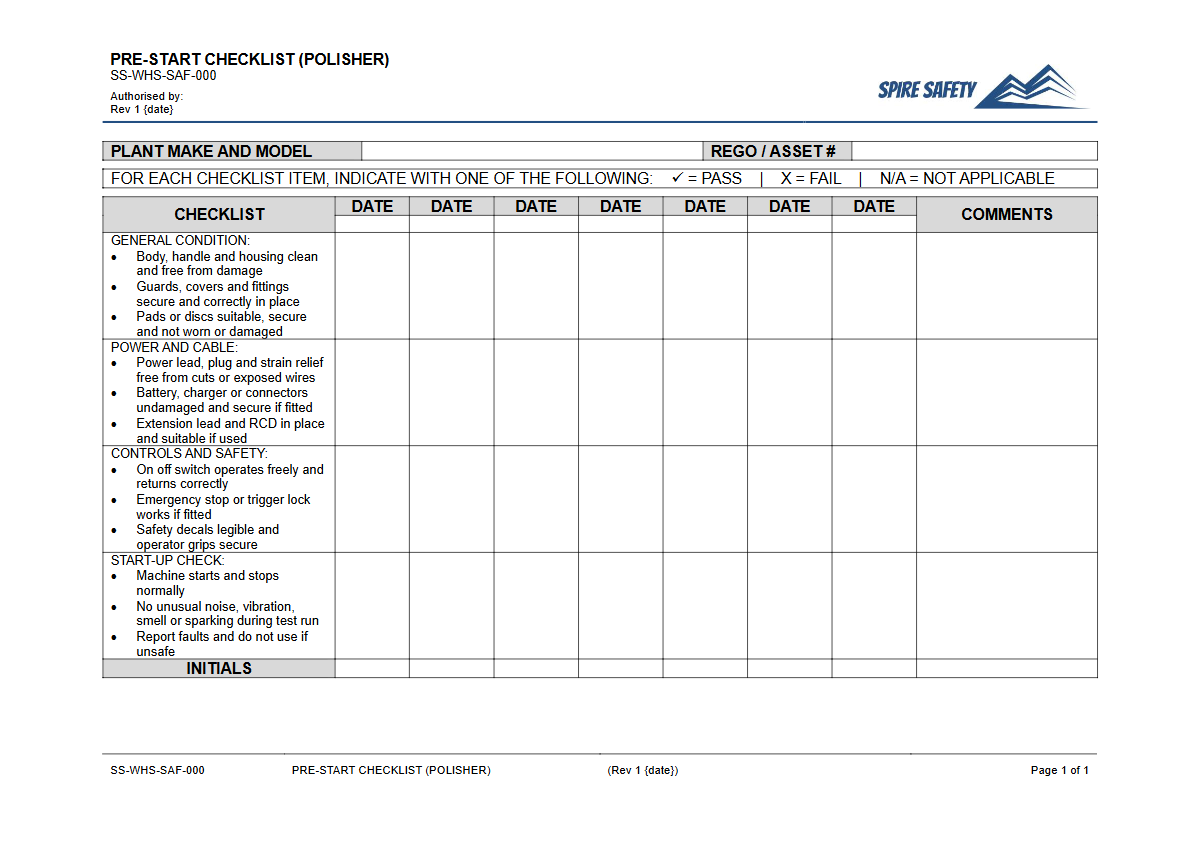
Download our free Pre-Start Checklist (Polisher) Template (DOCX/PDF). A structured starting point for formalising daily safety inspections on polishers.
Free Pre-Start Checklist (Polisher) Template
DOCX • 125 KB + PDF
Updated Oct 2026
No signup required
Purpose of the Free Pre-Start Checklist (Polisher) Template
Using power tools like polishers introduces significant workplace hazards, including electrical shock, entanglement, ergonomic strain, and exposure to harmful dust. This Free Pre-Start Checklist (Polisher) Template provides a structured starting point for operators to verify that the equipment is safe to use before commencing work.
Formalising this process helps organisations meet their duty of care, promotes a consistent safety standard, and creates a clear record of equipment checks. By identifying faults or damage early, you can prevent incidents, reduce equipment downtime, and demonstrate a proactive approach to safety management.
This template is aligned with Australian WHS principles for managing risks associated with plant and equipment. It serves as a practical tool for implementing safety procedures on the ground.
For other workshop equipment, you might find our free Pre-Start Checklist (Bench Grinder) Template a useful resource to standardise your inspection processes further.
Video walkthrough
How to use the Free Pre-Start Checklist (Polisher) Template
This resource is available for immediate download in both DOCX and PDF formats. The DOCX file is fully editable, allowing you to tailor the checklist to your specific operational needs.
Effective safety management requires documentation that reflects your actual work environment and the specific models of equipment in use.
IMPORTANT: This is a template, not a finished document. We cannot know the specific models of polishers, tasks, materials, or unique hazards present in your workplace.
You MUST customise this checklist to suit your specific operational environment and legal obligations. This includes adding checks for brand-specific safety features, referencing your internal procedures, and specifying the required personal protective equipment (PPE).
A customised pre-start checklist should be a key component of a broader safety framework. Integrating tools like this into a comprehensive WHS management system ensures that safety checks are not just a tick-box exercise, but a meaningful part of your organisation's risk control strategy.
Once customised, train all operators on how to complete the checklist correctly and what actions to take if a fault is identified.
When to use a Polisher Pre-Start Checklist
A pre-start checklist for a polisher should be completed by the operator before each use or, at a minimum, at the beginning of each shift where the tool will be used. Equipment condition can change quickly due to damage during use, storage, or transport.
A daily check ensures that any new faults, such as a frayed cord or a damaged guard, are identified before the tool becomes a direct threat to the operator or others nearby.
Regular checks are fundamental to preventative maintenance. Consistency is key; making the pre-start check a non-negotiable first step reinforces safe work habits.
This is just as critical for polishers as it is for larger machinery, which is why we also provide resources like our Pre-Start Checklist for Floor Saws to cover a range of equipment.
Who should use it
The primary user of this Pre-Start Checklist is the worker or operator tasked with using the polisher. They are in the best position to physically inspect the tool and identify any issues.
Empowering operators to take ownership of equipment safety is a cornerstone of a positive safety culture. They must be deemed competent to both operate the equipment and perform the checks detailed in the list.
Supervisors and managers also have a role. They are responsible for ensuring the checks are being completed consistently and correctly, reviewing completed checklists to identify recurring faults, and taking action to repair or replace unsafe equipment.
These records can be a valuable input for regular WHS compliance auditing, providing evidence of your safety processes in action. Similar principles apply to other machinery that processes materials, as seen in our Pre-Start Checklist for a Granulator.
Ultimately, this checklist is a tool for anyone in the workplace responsible for ensuring plant and equipment is safe for use. If you need other templates or safety documents, feel free to browse our extensive free WHS resources library for more downloads.
Common mistakes
Common mistakes to avoid
- Using the polisher without checking if the emergency stop or trigger lock functions correctly.
- Failing to wear appropriate PPE, especially safety glasses and respiratory protection when polishing materials that create hazardous dust.
- Using incorrect or damaged polishing pads or bonnets, which can fly off at high speed.
- Neglecting to check that guards are in place and securely fastened before starting work.
Legal references
Legal considerations
The following legal requirements may be relevant to this type of work.
- Work Health and Safety Act (Harmonised) — Provides the primary duties for protecting workers and other people from work health and safety risks.
- Work Health and Safety Regulations (Harmonised) — Sets out requirements supporting the management of workplace hazards and risks.
The following codes may be relevant to this type of work.
- Managing WHS Risks Code of Practice — Provides practical guidance on identifying hazards, assessing risks and applying effective controls.
- Work Health and Safety Consultation, Cooperation and Coordination Code of Practice — Provides practical guidance on consulting workers and coordinating with other duty holders.
- Managing the Work Environment and Facilities Code of Practice — Provides practical guidance on safe work environments, workplace facilities and related controls.
Did you know
Hand-Arm Vibration
Prolonged use of power tools like polishers can lead to Hand-Arm Vibration Syndrome (HAVS), a permanent and debilitating condition affecting nerves and blood vessels. Daily checks help ensure anti-vibration features are functional.
Hidden Electrical Danger
Internal damage to a power cord is not always visible. The checklist prompt to inspect the cord encourages flexing it slightly (while unplugged) to feel for inconsistencies that could indicate a broken conductor inside.
FAQ
Frequently asked questions
01What are the main hazards of using a polisher?
02How often should a polisher be professionally tested and tagged?
03Is a pre-start checklist a legal requirement in Australia?
04What should an operator do if they find a fault during the pre-start check?
Share this resource
Free Pre-Start Checklist (Polisher) Template
Browse Categories
How To Use It
- 1Download and open in Word or PDF.
- 2Replace the placeholders with your business details.
- 3Get it reviewed by a WHS specialist before rollout.
Need it customised?
Our WHS consultants can adapt this template to your site, run a gap analysis, or audit what you already have in place.
Book a Free Consultation WHS consulting servicesor call 1300 156 382