
Free Pre-Start Checklist (Rice Cooker) Template
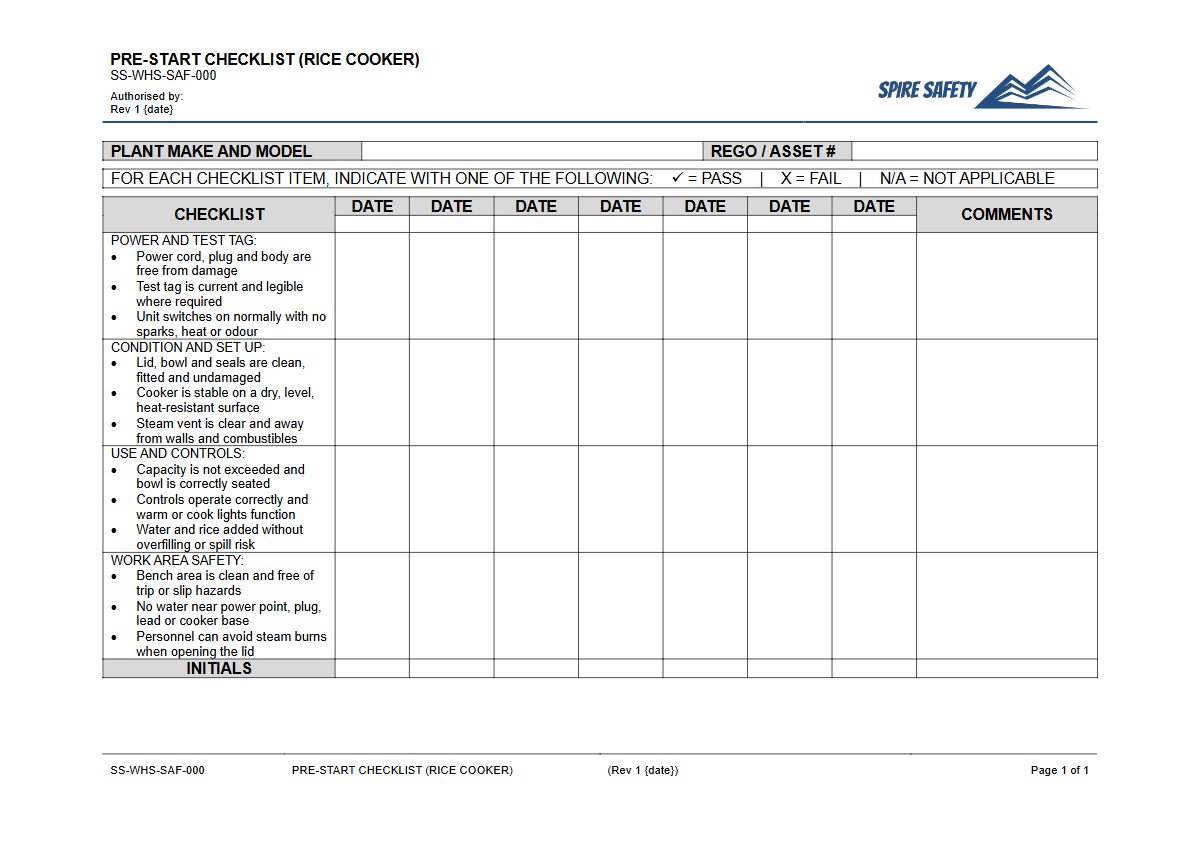
Download our Free Pre-Start Checklist (Rice Cooker) Template to formalise safety inspections for this common kitchen appliance.
Free Pre-Start Checklist (Rice Cooker) Template
DOCX • 125 KB + PDF
Updated Oct 2026
No signup required
Purpose of the Free Pre-Start Checklist (Rice Cooker) Template
Even simple, everyday appliances like rice cookers carry inherent risks in a workplace setting. Our Free Pre-Start Checklist (Rice Cooker) Template provides a structured way to identify and control these hazards before they cause harm.
Using this checklist helps formalise the inspection process, ensuring every operator systematically checks for electrical faults, physical damage, and hygiene issues prior to use. It creates a documented record of due diligence and helps maintain the appliance in a safe, operational state.
Integrating simple checks like this into your daily operations is a cornerstone of effective safety management. This process supports the broader framework of your site's safety protocols, which can be managed through comprehensive WHS management systems. Consistently applied, this checklist helps prevent electrical shocks, burns, and food safety breaches, contributing to a safer kitchen or staff room environment.
Video walkthrough
How to use the Free Pre-Start Checklist (Rice Cooker) Template
Using this template is straightforward and designed to be integrated into your pre-shift or pre-task routine. The document outlines key checks for the appliance's electrical components, physical structure, and cleanliness.
Workers should be trained to follow the checklist, physically verify each item, and sign off on the inspection. Any identified faults or concerns must be reported immediately to a supervisor, and the appliance should be taken out of service until it is repaired or replaced.
You can reinforce the importance of these checks by incorporating them into your safety briefings. Our Pre-Start Checks and Plant Maintenance Toolbox Talk Template is an excellent resource for training staff on the 'why' behind equipment inspections.
Important Note: This document is a template and provides a structured starting point. It is not a complete or universal solution.
To be effective, you must customise it to reflect the specific model of rice cooker you use, your workplace environment, and your organisation's internal safety procedures. We provide this template as a guide; the responsibility for ensuring its suitability and achieving compliance rests with the end user.
When to use it
A pre-start check for a rice cooker should be completed before its first use each day or at the beginning of a shift in a commercial setting. This frequency ensures that any damage or faults that may have occurred overnight or between shifts are identified before the appliance is energised.
It is a quick but essential task that should become a non-negotiable part of the daily routine. Integrating this into daily safety briefings using a tool like a Free Pre-Start Meeting Template can help embed it as a standard practice.
Who should use it
This checklist is designed for any worker tasked with operating a rice cooker. This includes kitchen hands, chefs, caterers, and staff in environments like aged care facilities, childcare centres, and construction site lunchrooms.
All operators must be trained not only on how to use the appliance safely but also on the importance of conducting the pre-start check. In settings like aged care, this is part of a wider duty of care that includes other risk areas; our Aged Care Manual Handling Toolbox Talk Template covers another common hazard in this industry.
Supervisors and managers should use the completed checklists to verify that inspections are taking place and to monitor the condition of workplace equipment. The principles of specific equipment checks can be applied more broadly; for example, the same methodical approach underpins our Free Pre-Start Checklist (3D Printer) Template for a different type of tabletop appliance.
Periodically reviewing completed checklists is a useful activity during safety reviews. This data can provide valuable insights when undertaking WHS compliance auditing, highlighting recurring issues or gaps in training. You can find more tools like this in our complete free WHS resources library, which offers a wide range of templates to support your safety goals.
Common mistakes
Common mistakes to avoid
- Ignoring minor damage to power cords or plugs, which can lead to electrical shock or fire.
- Failing to clean the appliance thoroughly, leading to hygiene risks and potential pest issues.
- Using the appliance on an unstable or cluttered surface, increasing the risk of it being knocked over.
- "Pencil whipping" the checklist without actually performing the visual and physical checks.
Legal references
Legal considerations
The following legal requirements may be relevant to this type of work.
- Work Health and Safety Act (Harmonised) — Provides the primary duties for protecting workers and other people from work health and safety risks.
- Work Health and Safety Regulations (Harmonised) — Sets out requirements supporting the management of workplace hazards and risks.
The following codes may be relevant to this type of work.
- Managing WHS Risks Code of Practice — Provides practical guidance on identifying hazards, assessing risks and applying effective controls.
- Work Health and Safety Consultation, Cooperation and Coordination Code of Practice — Provides practical guidance on consulting workers and coordinating with other duty holders.
- Managing the Work Environment and Facilities Code of Practice — Provides practical guidance on safe work environments, workplace facilities and related controls.
Did you know
Burn and Scald Risks
Hot surfaces and steam from rice cookers are common causes of thermal burns in commercial kitchens. A pre-start check helps verify that safety features and user awareness are in place.
Electrical Safety Standard
In Australia, electrical equipment used in a workplace context should be inspected and tested according to AS/NZS 3760, which complements daily pre-start visual inspections.
FAQ
Frequently asked questions
01What should a rice cooker pre-start checklist include?
02Why are pre-start checks for kitchen appliances important?
03How often should I perform a rice cooker pre-start check?
04Can I use this template for other kitchen equipment?
Share this resource
Free Pre-Start Checklist (Rice Cooker) Template
Browse Categories
How To Use It
- 1Download and open in Word or PDF.
- 2Replace the placeholders with your business details.
- 3Get it reviewed by a WHS specialist before rollout.
Need it customised?
Our WHS consultants can adapt this template to your site, run a gap analysis, or audit what you already have in place.
Book a Free Consultation WHS consulting servicesor call 1300 156 382