
Free Pre-Start Checklist (Trencher Attachment) Template
Download our free Pre-Start Checklist for Trencher Attachments. This template (DOCX & PDF) helps operators formalise equipment safety checks. Download now.
Free Pre-Start Checklist (Trencher Attachment) Template
DOCX • 125 KB + PDF
Updated Oct 2026
No signup required
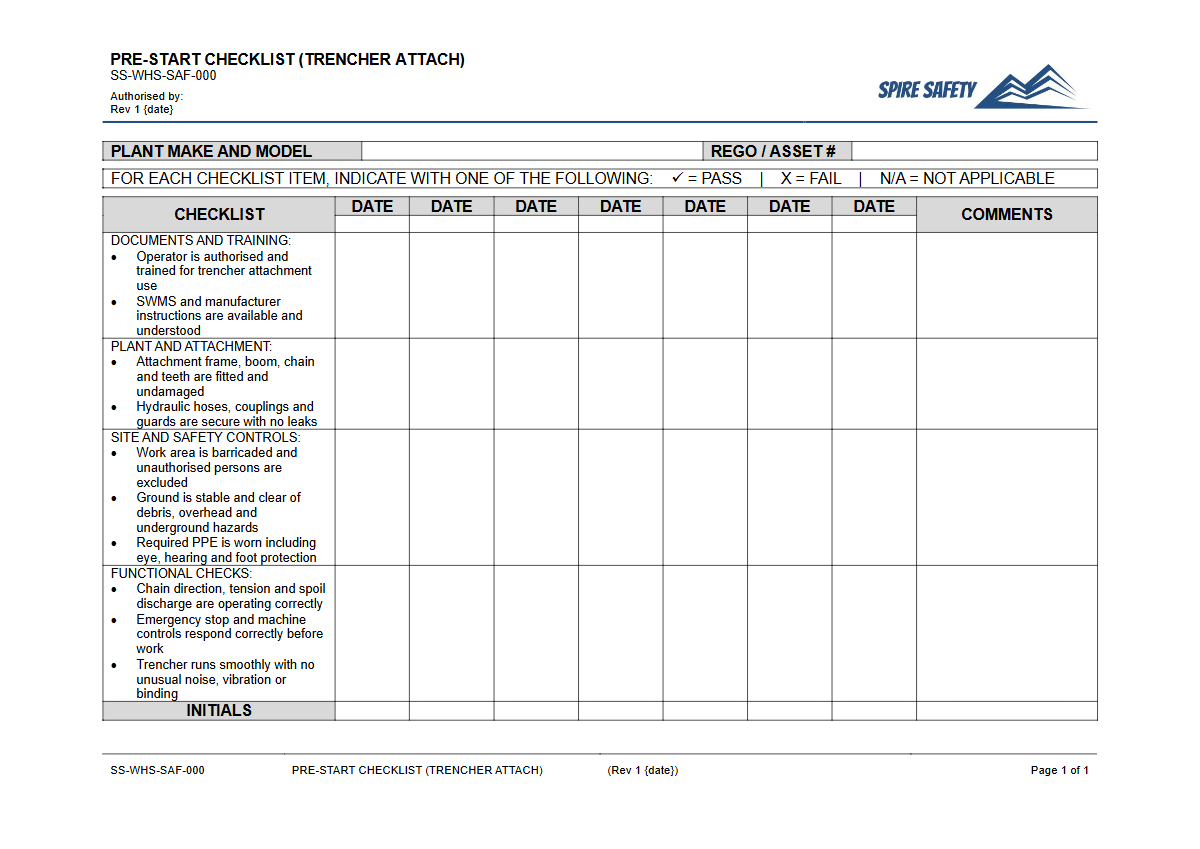
Purpose of the Free Pre-Start Checklist (Trencher Attachment) Template
Operating machinery with a trencher attachment involves significant risks, including mechanical failure, hydraulic system faults, and unexpected contact with underground services. This Free Pre-Start Checklist (Trencher Attachment) Template provides a structured framework for operators to conduct thorough, documented inspections before each use.
Its primary purpose is to systematically identify potential hazards, defects, or damage that could lead to an incident. Formalising this process helps organisations demonstrate due diligence, prevent costly breakdowns, and most importantly, protect workers and the public from harm.
Using a consistent checklist ensures that no critical safety component is overlooked. It forms a key part of a safe system of work, complementing other essential safety documents.
For a comprehensive approach to operational safety, this checklist should be used alongside a detailed Trencher SOP (Safe Operating Procedure) template, which outlines the step-by-step process for using the equipment correctly and safely.
Video walkthrough
How to use the Free Pre-Start Checklist (Trencher Attachment) Template
This document is a starting point designed for easy adoption into your workplace's safety management system. After downloading the DOCX or PDF file, the first step is to tailor it to your specific needs.
This involves adding your company branding, site-specific details, and adjusting the checklist items to match the exact make and model of the trencher attachment and the host machine (e.g., skid steer, excavator) it is fitted to. It is crucial to ensure the checks are relevant and comprehensive for your particular equipment.
Once customised, operators must be trained on how to use the checklist effectively. This isn't just a paperwork exercise; it's a practical safety inspection.
Operators should physically check each item listed and accurately record its condition. Ensuring operators are competent to both use the machinery and conduct these checks is fundamental, which can be formally documented using a Verification of Competency (Trencher) template. Any identified faults must be immediately reported through your organisation's reporting process, and the equipment should be tagged out of service until it is repaired by a qualified person.
A Note on Customisation
This template provides a solid foundation based on common Australian WHS principles. However, every piece of plant and every worksite is unique.
We have not been to your workplace, so you MUST customise this document to reflect the specific hazards, risks, and equipment present in your operational environment. This customisation is a critical step in fulfilling your safety duties.
When to use it
A pre-start checklist for a trencher attachment should be completed at the beginning of every shift or before the equipment's first use each day. A new check should also be performed if a new operator takes over the machinery mid-shift.
Additionally, it is good practice to conduct an inspection after the attachment has been re-fitted to the host machine, or following any significant maintenance or repair work, to verify its safe operational status.
Who should use it
The pre-start checklist should be completed by a person who is competent to operate the trencher. This is typically the machine operator assigned to the task.
They have hands-on control of the equipment and are best placed to notice any changes in its condition or performance. Supervisors or maintenance personnel may also use the checklist to conduct periodic spot-checks or safety verifications, ensuring the process is being followed correctly. These checks can be reinforced through regular safety meetings, such as those guided by a Pre-Start Checks and Plant Maintenance Toolbox Talk.
Integrating the Checklist into Your Safety System
A pre-start checklist is most effective when it's part of a broader safety framework. It should not be treated as a standalone document.
The information gathered from these checks provides valuable data that feeds into your maintenance schedule, risk assessments, and training programs. Consistently finding hydraulic leaks, for example, might indicate a need for a preventative maintenance review.
Integrating these records into your overall WHS management systems creates a closed-loop system where hazards are identified, controlled, and monitored.
Completed checklists serve as important legal and safety records. They should be stored securely and be accessible for review during incident investigations or safety audits.
Regular reviews of these records can help identify trends, operator training gaps, or recurring equipment issues that need addressing. For organisations looking to verify the effectiveness of their procedures, engaging an external party for WHS compliance auditing can provide valuable, impartial insights into how well safety processes are being implemented on the ground.
By embedding this process into your daily operations, you move from a reactive to a proactive safety culture. For more templates and tools to build out your safety system, explore our complete free WHS resources library, which covers a wide range of topics from toolbox talks to safe work method statements.
Common mistakes
Common mistakes to avoid
- Using a generic checklist that doesn't match the specific trencher model.
- "Pencil-whipping" the form without performing a genuine physical inspection of each item.
- Failing to immediately tag out and report faulty or damaged equipment for repair.
- Inadequate record-keeping of completed checklists, making it difficult to track trends or prove due diligence.
Legal references
Legal considerations
The following legal requirements may be relevant to this type of work.
- Work Health and Safety Act (Harmonised) — Provides the primary duties for protecting workers and other people from work health and safety risks.
- Work Health and Safety Regulations (Harmonised) — Sets out requirements supporting the management of workplace hazards and risks.
The following codes may be relevant to this type of work.
- Managing WHS Risks Code of Practice — Provides practical guidance on identifying hazards, assessing risks and applying effective controls.
- Work Health and Safety Consultation, Cooperation and Coordination Code of Practice — Provides practical guidance on consulting workers and coordinating with other duty holders.
- Managing the Work Environment and Facilities Code of Practice — Provides practical guidance on safe work environments, workplace facilities and related controls.
Did you know
Underground Services
One of the greatest risks in trenching is striking underground services like electrical cables, gas lines, or water mains. A thorough site assessment and use of service locators before breaking ground is a non-negotiable safety step.
Hydraulic Pressure
The hydraulic systems that power trencher attachments operate under extremely high pressure, often exceeding 2,000 PSI. A pinhole leak in a hydraulic hose can inject fluid into the skin, causing severe and potentially fatal injuries.
FAQ
Frequently asked questions
01What is the purpose of a pre-start check for a trencher attachment?
02Can I use this template for any brand of trencher attachment?
03Who is responsible for completing the trencher pre-start checklist?
04How often should a trencher attachment pre-start check be performed?
Share this resource
Free Pre-Start Checklist (Trencher Attachment) Template
Browse Categories
How To Use It
- 1Download and open in Word or PDF.
- 2Replace the placeholders with your business details.
- 3Get it reviewed by a WHS specialist before rollout.
Need it customised?
Our WHS consultants can adapt this template to your site, run a gap analysis, or audit what you already have in place.
Book a Free Consultation WHS consulting servicesor call 1300 156 382