
Free Pre-Start Checklist (Trencher) Template
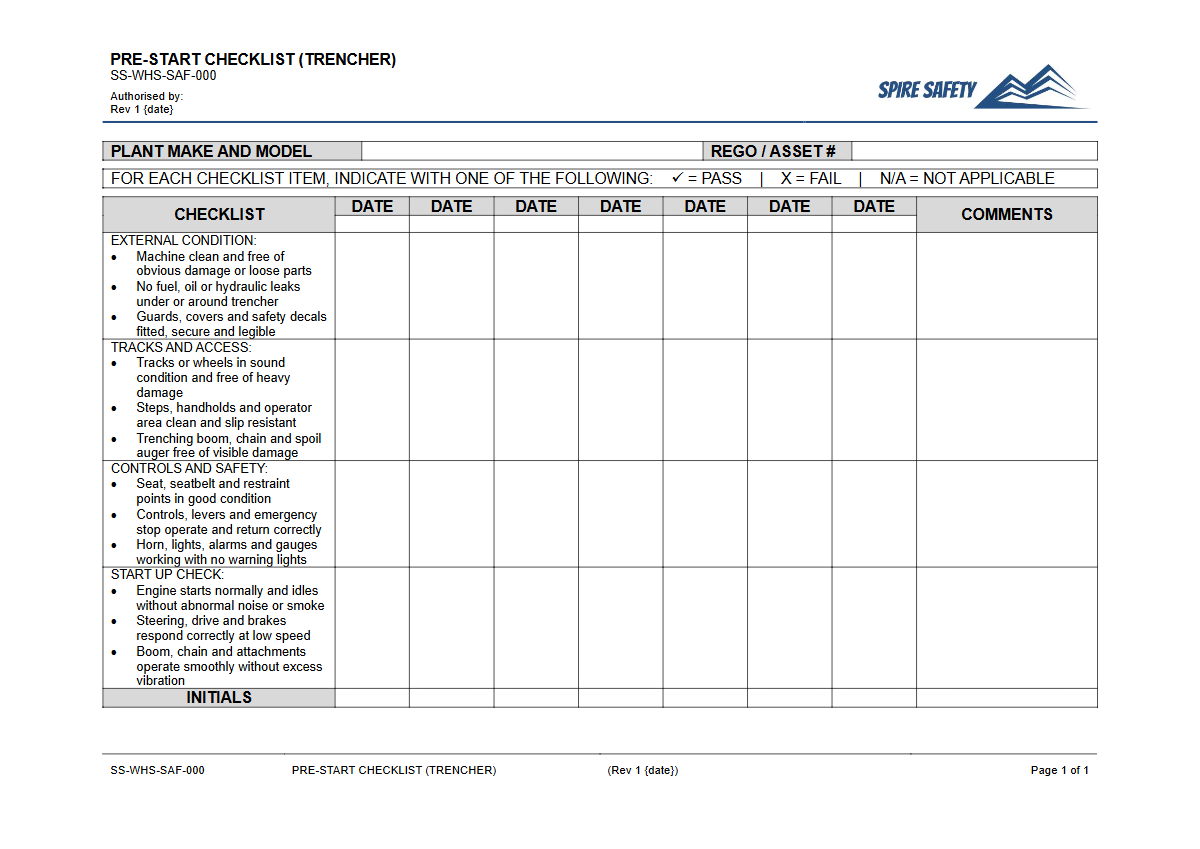
Download our free Pre-Start Checklist (Trencher) Template (DOCX & PDF). This structured checklist helps formalise equipment safety checks and manage WHS risks.
Free Pre-Start Checklist (Trencher) Template
DOCX • 125 KB + PDF
Updated Oct 2026
No signup required
Purpose of the Free Pre-Start Checklist (Trencher) Template
Using a trencher involves significant risks, from contact with the moving digging chain to striking underground services or dealing with hydraulic system failures. This Free Pre-Start Checklist (Trencher) Template provides a structured framework for operators to conduct thorough, documented inspections before each use.
Its primary purpose is to systematically identify mechanical faults, damage, or missing safety features that could compromise the safe operation of the equipment. Formalising this process helps organisations demonstrate due diligence in managing plant-related risks, forming a critical part of a proactive safety culture.
By catching potential issues early, you can prevent incidents, protect workers from harm, and avoid costly equipment downtime and repairs. This checklist is aligned with Australian WHS principles for plant and equipment safety, encouraging a consistent approach to hazard identification. Similar principles apply to other construction equipment, as detailed in our Free Pre-Start Checklist for Floor Saws.
Video walkthrough
How to use the Free Pre-Start Checklist (Trencher) Template
This template is available for download in both DOCX and PDF formats. The DOCX version is fully editable, allowing you to add, remove, or modify checklist items to suit the specific models of trenchers used in your operations.
The PDF is ideal for printing and immediate use or for digital records on a tablet.
Important: This document is a starting point. We strongly recommend you customise this template to align with your specific machinery, site conditions, unique operational risks, and the manufacturer’s instructions.
It should be integrated into your broader WHS management systems to ensure it is used effectively and that records are maintained correctly. This customisation is essential for ensuring the checklist is relevant and effective for your workplace.
Key Inspection Areas Covered
While you should adapt the list for your specific equipment, a comprehensive trencher pre-start check typically includes:
- General Condition: Checking for cleanliness, structural damage, and loose or missing parts.
- Digging Assembly: Inspecting the boom, digging chain, and teeth for excessive wear, damage, or secure fitment.
- Hydraulic Systems: Looking for leaks in hoses, cylinders, and fittings, and ensuring hydraulic fluid levels are correct. The principles for checking hydraulic systems are similar to those for equipment covered in our Pre-Start Checklist for Bin Lifters.
- Operator's Station: Verifying that controls are clearly labelled, functional, and that safety features like the operator presence system or 'dead man's switch' are working.
- Guards and Shields: Ensuring all protective guards for the chain, engine, and other moving parts are in place and secure.
- Wheels and Tracks: Checking tyre pressure and condition or track tension and integrity.
- Safety and Warning Decals: Confirming all safety labels are present, legible, and understood.
When to use it
A pre-start checklist should be completed by the operator at the beginning of every shift or before using the trencher for the first time that day. It should also be used whenever a different operator takes over the machine.
Completing a check is also wise after the equipment has been transported to a new site, returned from maintenance, or if there is any reason to suspect its condition has changed. This routine is fundamental for maintaining operational safety for all heavy machinery, including items like those in our Pre-Start Checklist (Forwarder) Template.
Who should use it
The pre-start check must be carried out by a person who is competent to operate the trencher. This means they have received the necessary training, instruction, and information to understand the machine's functions and associated hazards.
Supervisors should also use the completed checklists to verify that inspections are being performed correctly and to monitor the overall condition of their equipment fleet. The records generated are valuable inputs for maintenance scheduling and for periodic WHS compliance auditing to ensure safety procedures are being followed. For expert guidance on implementing such procedures, consider our general WHS consulting services. You can also explore hundreds of other documents in our free WHS resources library.
Common mistakes
Common mistakes to avoid
- "Pencil-whipping" the checklist without physically inspecting the items.
- Failing to tag out and report faulty or damaged equipment immediately.
- Overlooking checks of the digging chain and teeth for wear, damage, and security.
- Not checking for hydraulic fluid leaks, which can pose serious slip, environmental, and fire hazards.
Legal references
Legal considerations
The following legal requirements may be relevant to this type of work.
- Work Health and Safety Act (Harmonised) — Provides the primary duties for protecting workers and other people from work health and safety risks.
- Work Health and Safety Regulations (Harmonised) — Sets out requirements supporting the management of workplace hazards and risks.
The following codes may be relevant to this type of work.
- Managing WHS Risks Code of Practice — Provides practical guidance on identifying hazards, assessing risks and applying effective controls.
- Work Health and Safety Consultation, Cooperation and Coordination Code of Practice — Provides practical guidance on consulting workers and coordinating with other duty holders.
- Managing the Work Environment and Facilities Code of Practice — Provides practical guidance on safe work environments, workplace facilities and related controls.
Did you know
Underground Dangers
A significant risk in trenching is striking underground utilities like electrical cables, gas lines, or water mains. Always use the 'Dial Before You Dig' service to obtain service plans before starting any excavation.
FAQ
Frequently asked questions
01What is the purpose of a trencher pre-start check?
02How often should a trencher pre-start inspection be completed?
03Is this template a substitute for a Safe Work Method Statement (SWMS)?
04Who is responsible for ensuring the pre-start check is done?
Share this resource
Free Pre-Start Checklist (Trencher) Template
Browse Categories
How To Use It
- 1Download and open in Word or PDF.
- 2Replace the placeholders with your business details.
- 3Get it reviewed by a WHS specialist before rollout.
Need it customised?
Our WHS consultants can adapt this template to your site, run a gap analysis, or audit what you already have in place.
Book a Free Consultation WHS consulting servicesor call 1300 156 382