
Free Pre-Start Checklist (Wide Belt Sand) Template
Formalise daily equipment inspections for wide belt sanders with our free template. Aligned with Australian WHS standards. Download the DOCX and PDF now.
Free Pre-Start Checklist (Wide Belt Sand) Template
DOCX • 125 KB + PDF
Updated Oct 2026
No signup required
Purpose of the Free Pre-Start Checklist (Wide Belt Sand) Template
Operating a wide belt sander introduces significant workplace hazards, including exposure to fast-moving parts, airborne wood dust, and potential for material kickback. A systematic pre-start inspection is a critical control measure to ensure the machine is safe to use before any work commences.
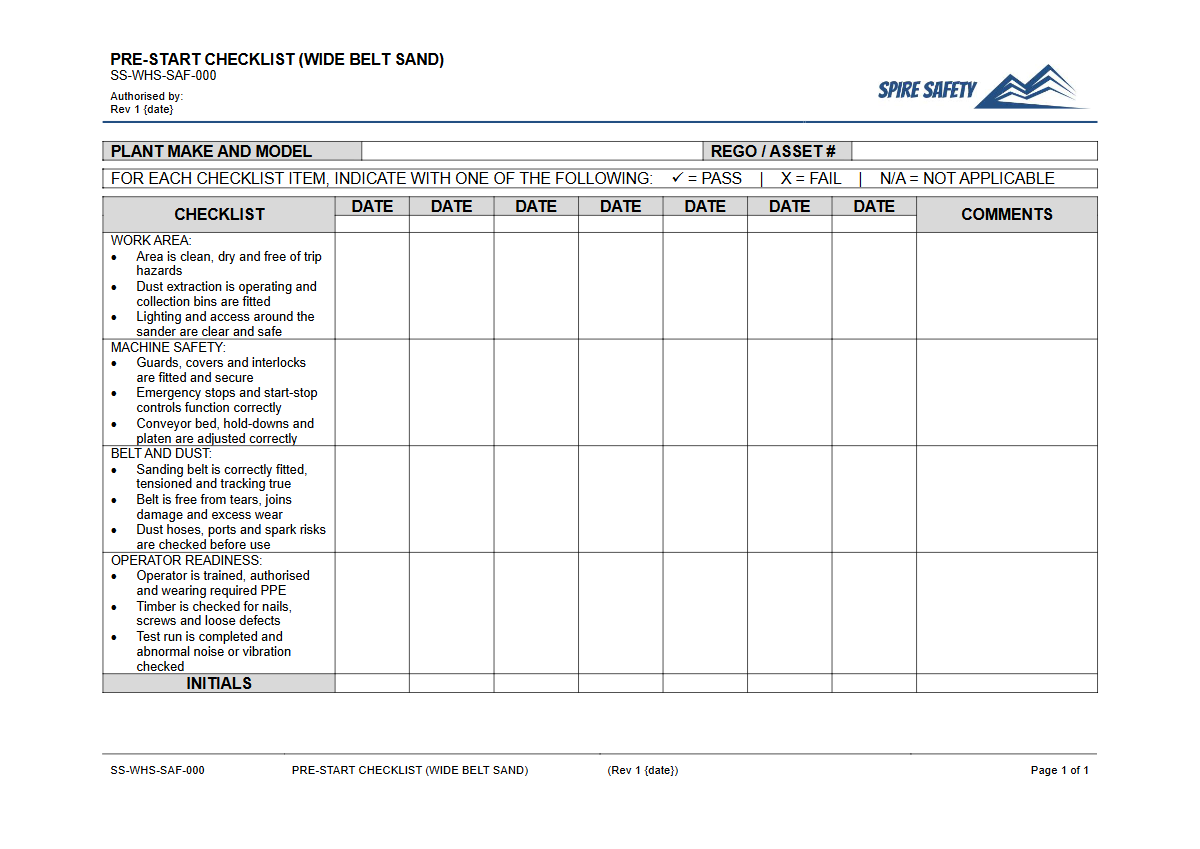
This Free Pre-Start Checklist (Wide Belt Sand) Template provides a structured framework for operators to verify the safety and integrity of the equipment before each shift.
Using this checklist helps an organisation demonstrate its commitment to proactively managing WHS risks associated with machinery. It prompts operators to inspect key components such as emergency stops, guarding, dust extraction systems, and the condition of the sanding belt itself.
Documenting these checks creates a record of due diligence and helps identify potential maintenance issues before they lead to equipment failure or a serious incident. Integrating such procedures is a key component of creating robust WHS management systems.
Video walkthrough
How to use the Free Pre-Start Checklist (Wide Belt Sand) Template
This resource is available for immediate download in both DOCX and PDF formats. The DOCX version is fully editable, allowing you to tailor it to the specific make and model of the wide belt sanders used in your facility.
The PDF is ideal for quick printing and immediate use.
To effectively implement the checklist, follow these steps:
- Customise the Template: Review and modify the checklist items to reflect the specific features and hazards of your machine. Add your company branding and any site-specific safety rules. A generic checklist is less effective than one tailored to your context.
- Train Your Team: Ensure all operators are trained not only on how to use the sander safely but also on the importance and procedure of completing the pre-start check. They must understand what each checkpoint means and what constitutes a 'pass' or 'fail'.
- Integrate into Workflow: Make the pre-start check a mandatory first step before any operator uses the wide belt sander at the start of their shift.
- Establish a Reporting Process: Create a clear procedure for what an operator must do if they identify a fault. This must include immediately taking the equipment out of service, applying a 'Do Not Operate' tag, and reporting the fault to a supervisor or maintenance personnel.
Important: This document is a template that provides a starting point. To be effective, we recommend you customise it to your specific workplace, machinery, and operational risks.
Spire Safety is not liable for any incidents arising from the use or misuse of this template. Similar structured checks are vital for other workshop equipment, and you may find our pre-start checklist for a bench grinder a useful related resource.
When to use it
The Wide Belt Sander Pre-Start Checklist should be completed at the beginning of every shift or before the first use of the machine on any given day. If multiple operators use the same machine during a single shift, it is good practice for the incoming operator to conduct their own check to verify its condition.
Frequent checks are essential because a machine's safety status can change quickly due to component wear, damage, or malfunction.
Regularly completing these checks is a practical way to fulfil duties under WHS law. The process can be reviewed and verified during WHS compliance auditing to ensure procedures are being consistently followed.
If your workplace uses other equipment with significant dust or fume hazards, you may also need structured checks for a fume cabinet to ensure extraction systems are functional.
Who should use it
This checklist is designed to be used by trained and competent operators who have been authorised to use the wide belt sander. Competency involves more than just knowing how to operate the machine; it includes the ability to identify the hazards associated with its use and the knowledge to perform the safety checks detailed in the document.
Supervisors or safety officers should also be familiar with the checklist to oversee its correct implementation and to review completed records as part of routine safety monitoring.
For other types of powerful machinery, specific checks are equally important. For instance, workers using cutting equipment in different contexts should use a tailored document like our pre-start checklist for a floor saw. You can find many other equipment-specific templates in our free WHS resources library to support your safety programs.
Common mistakes
Common mistakes to avoid
- Using a generic checklist that doesn't match the specific model of sander.
- Operators 'pencil-whipping' the form without physically performing the checks.
- Failing to tag out and report faulty equipment, allowing the next person to use an unsafe machine.
- Not providing adequate training on what to look for during the inspection.
Legal references
Legal considerations
The following legal requirements may be relevant to this type of work.
- Work Health and Safety Act (Harmonised) — Provides the primary duties for protecting workers and other people from work health and safety risks.
- Work Health and Safety Regulations (Harmonised) — Sets out requirements supporting the management of workplace hazards and risks.
The following codes may be relevant to this type of work.
- Managing WHS Risks Code of Practice — Provides practical guidance on identifying hazards, assessing risks and applying effective controls.
- Work Health and Safety Consultation, Cooperation and Coordination Code of Practice — Provides practical guidance on consulting workers and coordinating with other duty holders.
- Managing the Work Environment and Facilities Code of Practice — Provides practical guidance on safe work environments, workplace facilities and related controls.
Did you know
Hazardous Dust
Wood dust is classified as a carcinogen. Effective dust extraction, verified during a pre-start check, is not just for housekeeping but is a critical health control to protect workers from long-term respiratory diseases.
Belt Speed
The abrasive belt on an industrial wide belt sander can travel at speeds exceeding 20 metres per second. This high speed is why ensuring all guards are in place and secure is a non-negotiable safety check.
FAQ
Frequently asked questions
01What are the primary hazards associated with a wide belt sander?
02How often should a wide belt sander be inspected?
03Is using a pre-start checklist a legal requirement in Australia?
04What should an operator do if a fault is found during a pre-start check?
Share this resource
Free Pre-Start Checklist (Wide Belt Sand) Template
Browse Categories
How To Use It
- 1Download and open in Word or PDF.
- 2Replace the placeholders with your business details.
- 3Get it reviewed by a WHS specialist before rollout.
Need it customised?
Our WHS consultants can adapt this template to your site, run a gap analysis, or audit what you already have in place.
Book a Free Consultation WHS consulting servicesor call 1300 156 382