
Free Pre-Start Checklist (Winch) Template
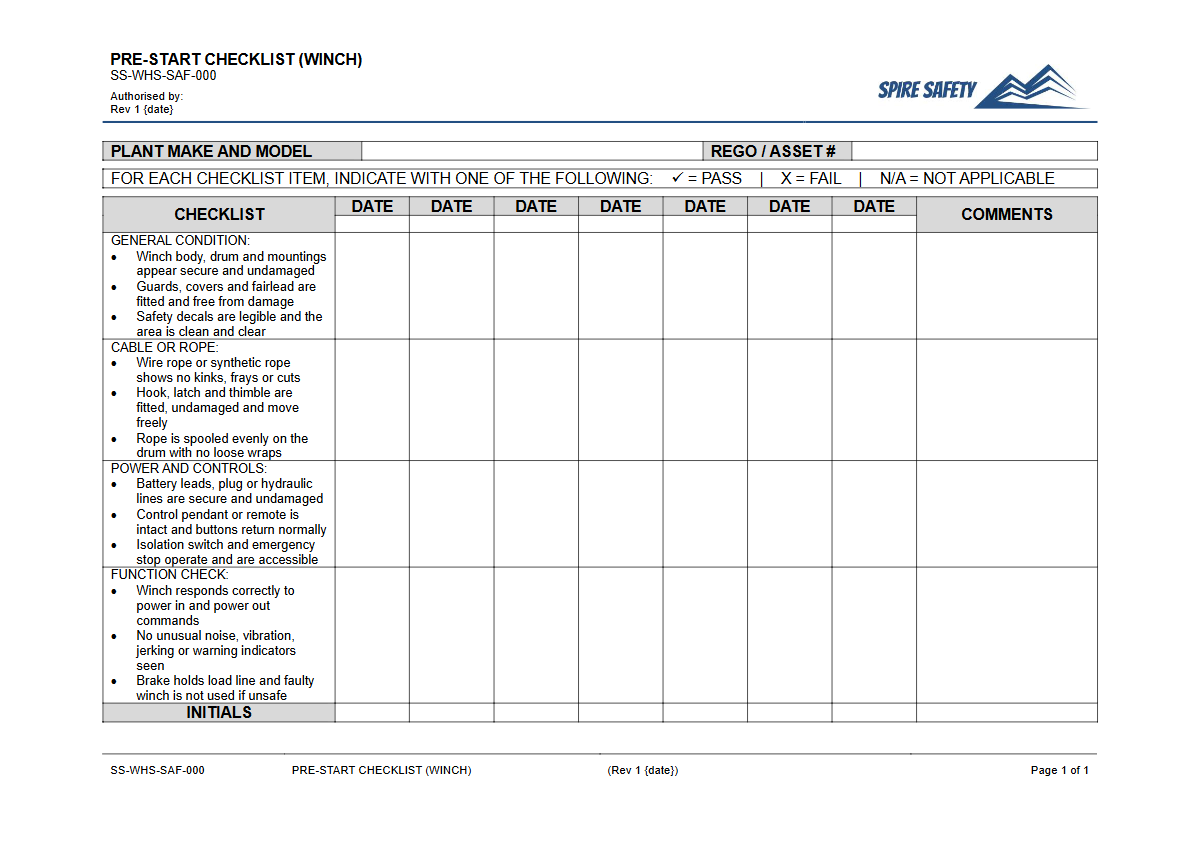
Download our Free Pre-Start Checklist (Winch) Template to formalise daily equipment inspections. This structured DOCX & PDF helps manage WHS risks.
Free Pre-Start Checklist (Winch) Template
DOCX • 125 KB + PDF
Updated Oct 2026
No signup required
Purpose of the Free Pre-Start Checklist (Winch) Template
Winches are powerful tools used across industries like construction, forestry, and transport for pulling heavy loads. However, they also introduce significant risks, including wire rope failure, anchor point failure, and entanglement.
Using a structured checklist before operation is a critical control measure. This Free Pre-Start Checklist (Winch) Template provides a systematic way to inspect a winch before use, helping to identify potential faults before they lead to an incident.
It helps your organisation formalise safety procedures, reduce the risk of equipment failure, and demonstrate a proactive approach to workplace health and safety.
By documenting these daily checks, you create a clear record of your equipment's condition and the due diligence performed by operators. This process is a fundamental part of a safe system of work, ensuring that the machinery is fit for purpose at the start of every shift.
A robust inspection regime is a cornerstone of any effective WHS management system, helping to prevent injuries and equipment damage.
Video walkthrough
How to use the Free Pre-Start Checklist (Winch) Template
Our template provides a structured starting point for developing a workplace-specific checklist. Download the DOCX file to add your company branding and customise the inspection points, or use the PDF for immediate implementation.
To effectively integrate this checklist, follow these steps:
- Customise: It is essential that you adapt this template to your specific needs. We've provided a general framework, but you must modify it to reflect the make, model (e.g., electric, hydraulic, manual, vehicle-mounted), and capacity of the winches used in your operations. Consider the specific tasks it will perform and the environment it operates in.
- Train: Ensure all operators are trained not only on how to operate the winch safely but also on how to conduct a thorough pre-start inspection using the finalised checklist. They must understand what each checkpoint means and what constitutes a pass or fail.
- Implement: Make the pre-start check a mandatory, non-negotiable step before any winching operation begins. Store the checklists in a location that is easily accessible to operators.
- Report and Rectify: Establish a clear procedure for what an operator must do if a defect is found. This should include tagging the equipment out of service and reporting the issue to a supervisor or maintenance team immediately. A faulty winch must not be used until it is repaired by a competent person and cleared for service.
The principles of pre-use inspection apply to a wide range of machinery. For example, similar diligence is required when completing a bench grinder pre-start check to ensure guards and wheels are in safe condition before use.
When to use a Winch Pre-Start Checklist
A pre-start inspection should be completed at the beginning of each day or shift before the winch is used for the first time. It should also be conducted after any significant break in operation or if there is reason to believe the equipment's condition may have changed, such as after a modification, repair, or potential shock loading event.
Regular, consistent checks are key to identifying gradual wear and tear before it results in a catastrophic failure.
Developing a consistent inspection habit across all equipment is best practice. The routine for a winch is just as important as the one outlined in our bin lifter pre-start checklist for waste management equipment.
Who should use it
The primary person responsible for completing the Winch Pre-Start Checklist is the trained and authorised operator of the equipment. They have the hands-on responsibility to ensure the machine is safe before they begin their work.
Supervisors and managers also have a duty to ensure these checks are being completed correctly and that any identified faults are addressed promptly. Completed checklists should be reviewed periodically to identify recurring issues or patterns of wear that may indicate a need for changes in maintenance schedules or operator training.
An external safety consultant can provide valuable oversight by reviewing your processes and records as part of a formal safety audit. Spire Safety offers expert WHS compliance auditing to help verify that your safe work procedures are being effectively implemented and maintained.
This document is one of many tools designed to help you manage WHS risks. For more templates and guides, browse our complete free WHS resources library.
Common mistakes
Common mistakes to avoid
- Skipping checks on the rope's anchor point to the drum.
- Failing to inspect the hook's safety latch for proper function.
- Using the winch after a fault has been identified but not yet rectified.
- Neglecting to keep records of the completed pre-start checklists.
Legal references
Legal considerations
The following legal requirements may be relevant to this type of work.
- Work Health and Safety Act (Harmonised) — Provides the primary duties for protecting workers and other people from work health and safety risks.
- Work Health and Safety Regulations (Harmonised) — Sets out requirements supporting the management of workplace hazards and risks.
The following codes may be relevant to this type of work.
- Managing WHS Risks Code of Practice — Provides practical guidance on identifying hazards, assessing risks and applying effective controls.
- Work Health and Safety Consultation, Cooperation and Coordination Code of Practice — Provides practical guidance on consulting workers and coordinating with other duty holders.
- Managing the Work Environment and Facilities Code of Practice — Provides practical guidance on safe work environments, workplace facilities and related controls.
Did you know
Stored Energy
A winch rope under tension stores a massive amount of kinetic energy. If the rope or an anchor point fails, the rope can whip back with enough force to cause fatal injuries or destroy property, a phenomenon known as 'snap-back'.
Hand Protection
One of the most common injuries associated with winching is hand injuries from 'fish hooks'—small, sharp broken wires protruding from a steel rope. Always wear appropriate leather gloves when handling wire rope.
FAQ
Frequently asked questions
01What is the most critical check on a winch pre-start?
02What happens if a fault is found during a winch pre-start check?
03Do I need a separate checklist for electric and manual winches?
04How long should a winch pre-start inspection take?
Share this resource
Free Pre-Start Checklist (Winch) Template
Browse Categories
How To Use It
- 1Download and open in Word or PDF.
- 2Replace the placeholders with your business details.
- 3Get it reviewed by a WHS specialist before rollout.
Need it customised?
Our WHS consultants can adapt this template to your site, run a gap analysis, or audit what you already have in place.
Book a Free Consultation WHS consulting servicesor call 1300 156 382