
Free Safe Operating Procedure (Aircraft Washing) Template
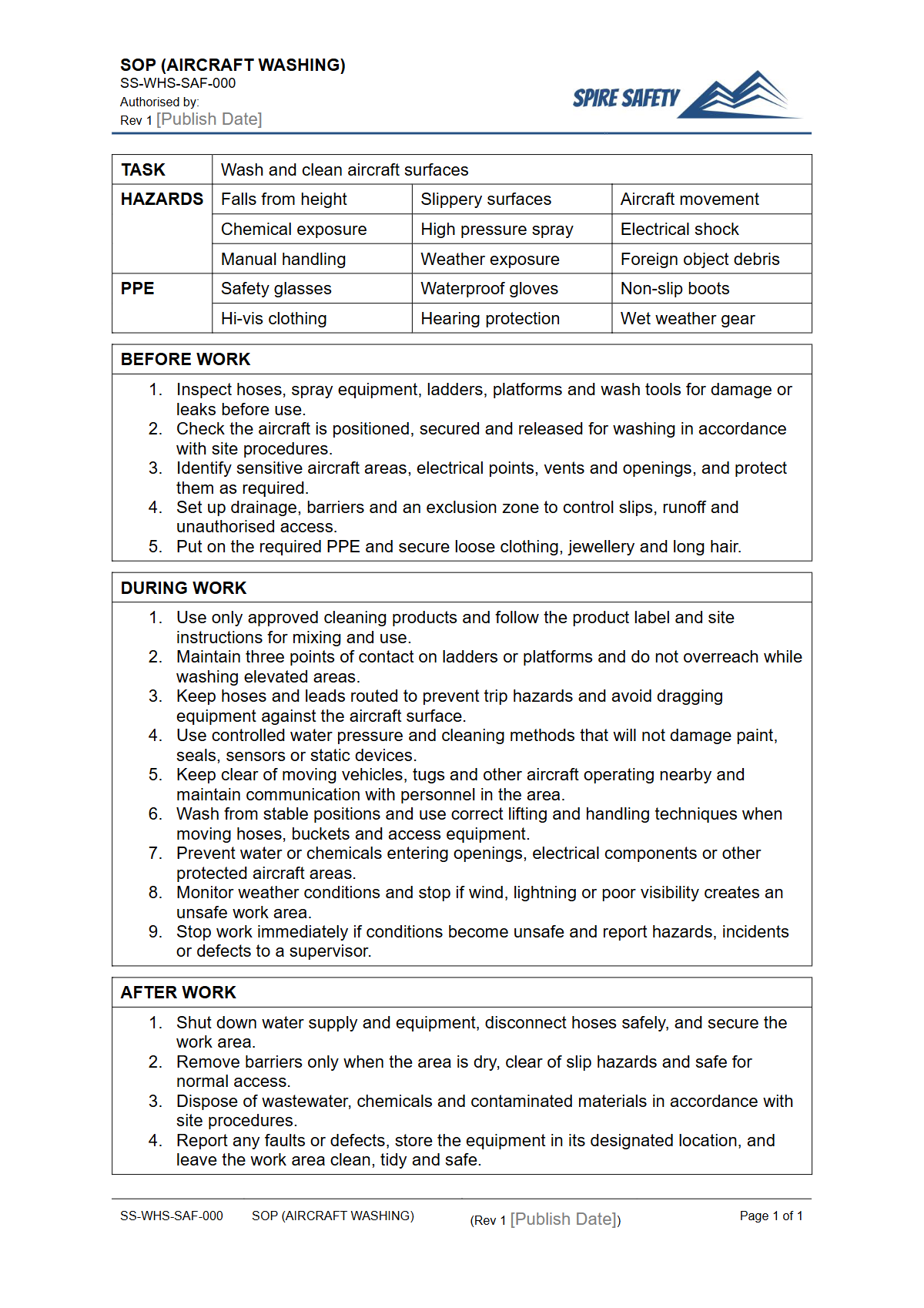
Download our free Safe Operating Procedure (Aircraft Washing) Template to outline a safe system of work for aviation maintenance. Customisable Word & PDF doc.
Free Safe Operating Procedure (Aircraft Washing) Template
DOCX • 126 KB + PDF
Updated Oct 2026
No signup required
Purpose of the Free Safe Operating Procedure (Aircraft Washing) Template
Effectively managing work health and safety in the aviation industry requires clear, documented processes for high-risk tasks. This free Safe Operating Procedure (Aircraft Washing) Template provides a structured starting point for your organisation to formally document the hazards and control measures associated with cleaning aircraft exteriors.
Using an SOP helps ensure that tasks are performed consistently and safely, every time.
Aircraft washing involves significant risks, including chemical exposure from detergents and solvents, slips and trips on wet surfaces, electrical hazards from pressure washers and other equipment, musculoskeletal injuries from manual handling, and the risk of falls from height. This template is designed to help you create a comprehensive procedure that addresses these specific hazards, helping you meet your duties as a Person Conducting a Business or Undertaking (PCBU).
A well-developed SOP is a critical component of a broader WHS management system, demonstrating a proactive approach to risk management.
Video walkthrough
How to use the Free Safe Operating Procedure (Aircraft Washing) Template
This document is a downloadable template, not a finished procedure. It must be adapted to the specific circumstances of your workplace.
To use it effectively, consult with your workers and any health and safety representatives to identify all task-related hazards. Review the aircraft manufacturer’s maintenance manuals for specific warnings or requirements related to cleaning.
Important: This is a template document that we have created as a starting point. You must customise it to reflect the specific hazards, equipment, chemicals, aircraft, and control measures relevant to your workplace.
Your final SOP should list the specific make and model of equipment used, reference the Safety Data Sheets (SDS) for all chemicals, and detail the emergency procedures for your site.
High-pressure water sprayers are common in aircraft washing and present their own unique risks, such as injection injuries. The control measures needed are similar in principle to those outlined in a safe operating procedure for a waterjet cutter, focusing on operator competency, exclusion zones, and appropriate personal protective equipment (PPE).
Key Hazard Areas in Aircraft Washing
When customising your SOP, pay close attention to the following key risk areas:
- Working at Height: Accessing the fuselage, wings, and tail of an aircraft often requires ladders, scaffolds, or elevated work platforms (EWPs). Your procedure must detail the safe selection and use of this equipment, including inspection, setup, and fall prevention measures. The principles for using a step ladder safely are a foundational part of this process.
- Chemical Safety: Aircraft cleaning involves various detergents, degreasers, and polishes. The SOP must specify the approved chemicals for use, require adherence to the relevant Safety Data Sheet (SDS), and mandate the correct PPE (e.g., chemical-resistant gloves, eye protection).
- Electrical Hazards: The combination of water and electrical equipment like pressure washers or lighting creates a serious risk of electric shock. Detail pre-use inspections of cords and equipment, the use of residual-current devices (RCDs), and procedures to keep water away from electrical connections.
- Ground Support Equipment: The use of other ground support equipment, such as air compressors for drying, also introduces hazards. Safe work practices for this machinery, like those for operating an air compressor, should be integrated or referenced in your SOP.
When to use this Safe Operating Procedure
A Safe Operating Procedure for aircraft washing should be used as a primary reference document in several situations. It should be consulted by workers before starting the task to refresh their understanding of the required steps and safety controls.
It is an essential tool for training new employees and verifying the competency of existing staff. Furthermore, the SOP serves as a benchmark during safety inspections and is a key document for review as part of any WHS compliance auditing program.
Following an incident or near miss, the SOP should be reviewed to determine if the procedure was followed and if it needs to be updated.
Who should use this procedure
This SOP is intended for all personnel involved in aircraft washing activities. This includes aviation maintenance engineers, aircraft detailers, ground support crew, and apprentices.
Supervisors and managers should use the document to oversee work, conduct toolbox talks, and ensure safety standards are being met. WHS managers and committee members can also use the procedure as part of their risk management and safety assurance activities.
For complex operations or for businesses needing guidance on implementing robust safety documentation, seeking expert WHS consulting can help ensure procedures are practical and effective.
By implementing a clear, customised SOP for aircraft washing, your organisation reinforces its commitment to a safe working environment. This template is one of many documents available in our free WHS resources library designed to help you build a stronger safety culture.
Common mistakes
Common mistakes to avoid
- Using incorrect or non-approved cleaning chemicals that can damage aircraft materials.
- Failing to properly secure the aircraft (e.g., chocking wheels) or disable relevant systems before starting work.
- Neglecting to use appropriate PPE, particularly chemical-resistant gloves and fall protection equipment.
- Inadequate management of water runoff, leading to environmental contamination or creating widespread slip hazards in the hangar.
Legal references
Legal considerations
The following legal requirements may be relevant to this type of work.
- Work Health and Safety Act (Harmonised) — Provides the primary duties for protecting workers and other people from work health and safety risks.
- Work Health and Safety Regulations (Harmonised) — Sets out requirements supporting the management of workplace hazards and risks.
The following codes may be relevant to this type of work.
- Managing WHS Risks Code of Practice — Provides practical guidance on identifying hazards, assessing risks and applying effective controls.
- Work Health and Safety Consultation, Cooperation and Coordination Code of Practice — Provides practical guidance on consulting workers and coordinating with other duty holders.
- Managing the Work Environment and Facilities Code of Practice — Provides practical guidance on safe work environments, workplace facilities and related controls.
Did you know
Corrosion Risk
Using unapproved cleaning agents or incorrect water pressure can strip protective coatings and accelerate corrosion on aircraft skin and components, creating a long-term airworthiness and safety issue.
Static Buildup
Dry washing or 'waterless' washing methods can generate significant static electricity. This requires specific grounding procedures for the aircraft to prevent a static discharge that could ignite fuel vapours.
FAQ
Frequently asked questions
01What are the main hazards involved in aircraft washing?
02Is a Safe Operating Procedure legally required for aircraft washing in Australia?
03How often should an SOP for aircraft washing be reviewed?
04Can this template be used for both large commercial jets and small propeller aircraft?
Share this resource
Free Safe Operating Procedure (Aircraft Washing) Template
Browse Categories
How To Use It
- 1Download and open in Word or PDF.
- 2Replace the placeholders with your business details.
- 3Get it reviewed by a WHS specialist before rollout.
Need it customised?
Our WHS consultants can adapt this template to your site, run a gap analysis, or audit what you already have in place.
Book a Free Consultation WHS consulting servicesor call 1300 156 382
Related templates
- Free Safe Operating Procedure (Aircraft Water Service) Template
- Free Safe Operating Procedure (Airfield Lighting Work) Template
- Free Safe Operating Procedure (Airless Paint Sprayer) Template
- Free Safe Operating Procedure (Airport Bus) Template
- Free Safe Operating Procedure (Airside Baggage Transfer) Template
- Free Safe Operating Procedure (Airside Cabin Supplies) Template