
Free Safe Operating Procedure (Alarm Response Check) Template
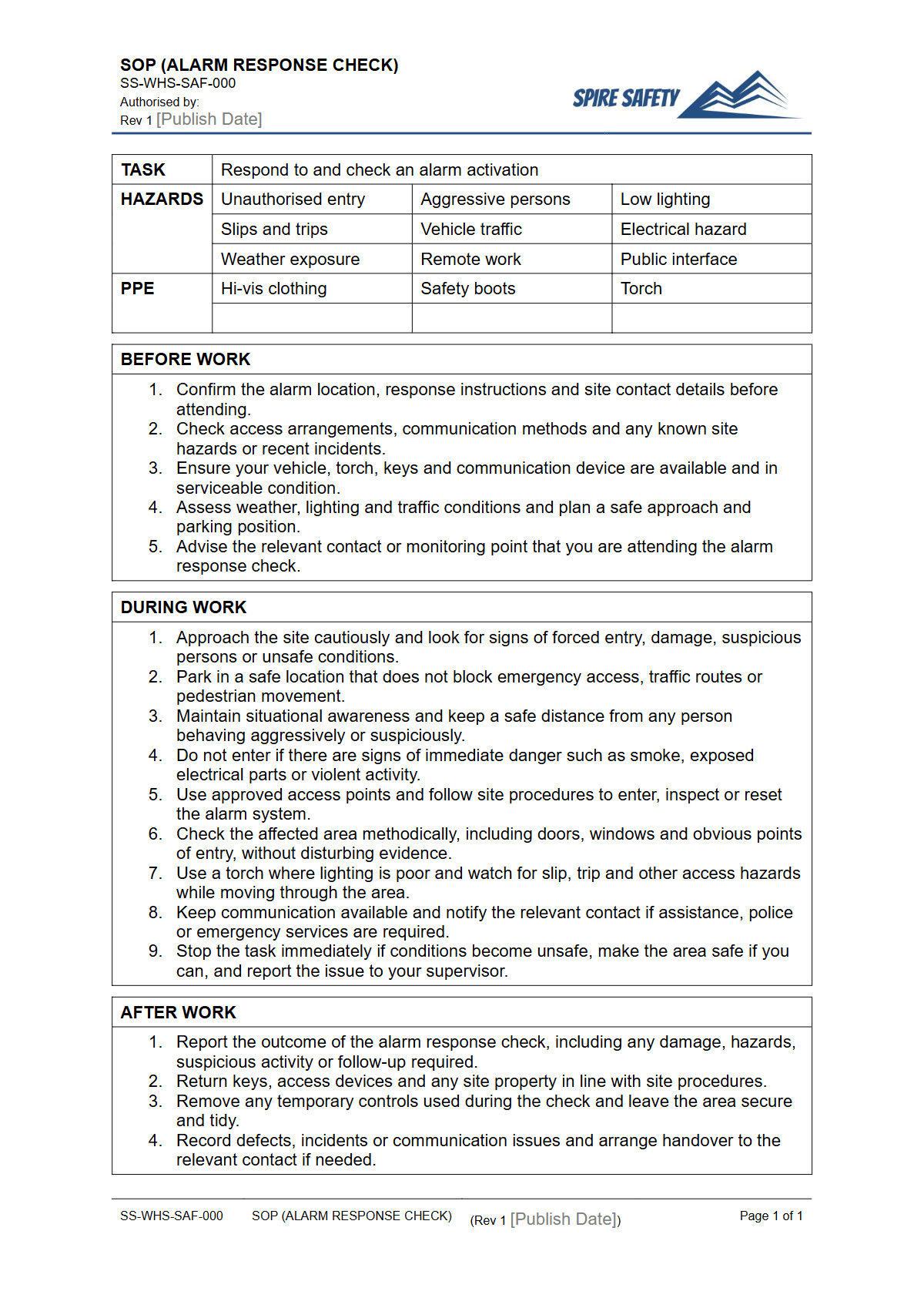
Download a free Safe Operating Procedure (Alarm Response Check) template in DOCX and PDF. This resource helps outline safe steps for responding to alarms.
Free Safe Operating Procedure (Alarm Response Check) Template
DOCX • 126 KB + PDF
Updated Oct 2026
No signup required
Purpose of the Free Safe Operating Procedure (Alarm Response Check) Template
The primary purpose of this Safe Operating Procedure is to eliminate guesswork and ensure a consistent, safe response every time an alarm is activated. Whether it's a fire alarm, security breach, or equipment malfunction alert, having a documented procedure minimises confusion and reduces the risk of injury or further incidents.
It standardises the actions of responders, from initial verification to escalation and incident reporting.
By clearly defining roles, responsibilities, and communication pathways, this SOP helps maintain control during potentially chaotic situations. Integrating this procedure into your operations is a key component of a robust WHS management system, demonstrating a proactive approach to emergency preparedness and risk management.
Video walkthrough
How to use the Free Safe Operating Procedure (Alarm Response Check) Template
This template is a starting point designed for customisation. After downloading the DOCX file, you should review each section and modify it to reflect your organisation’s specific environment.
This includes detailing the types of alarms on-site (e.g., fire, gas, intruder), the location of alarm panels, and the specific contact details for emergency services and internal response teams.
Important: This is a template only. We are not familiar with your specific worksite, equipment, or personnel.
You MUST customise this document to align with your own risk assessments and operational needs. It is not a complete solution out-of-the-box.
Like our Free Air Compressor SOP Template, its effectiveness depends on your input.
Key sections to customise include:
- Hazards & Risks: Identify potential hazards responders may face, such as exposure to smoke, hazardous materials, or aggressive intruders.
- Personal Protective Equipment (PPE): Specify the required PPE for responders, like high-visibility vests, safety boots, gloves, or respiratory protection.
- Procedure Steps: Detail the step-by-step process from receiving the alarm notification to arriving at the scene, assessing the situation, and taking initial action.
- Emergency Contacts: List internal and external contacts, including site managers, emergency services, and specialist technicians.
When to use this Safe Operating Procedure
An SOP for alarm response should be a living document, integrated into your daily safety practices. It should be used for initial and refresher training for all relevant personnel, including security guards, first aid officers, and emergency wardens.
The procedure should also be referenced during emergency drills to test its effectiveness and identify areas for improvement.
Furthermore, it serves as a critical reference tool during an actual alarm event. Regular reviews of this SOP should be scheduled as part of your WHS compliance auditing program to ensure it remains current with any changes to the site, systems, or regulations.
For complex sites, professional WHS consulting can help tailor emergency plans and ensure all procedures are fit for purpose.
Who should use it
This procedure is primarily for personnel designated as emergency responders. This may include in-house security teams, emergency wardens, maintenance staff responsible for specific systems, and managers or supervisors.
However, a simplified version or summary should be communicated to all employees so they understand the initial actions to take (e.g., evacuate, muster) and recognise who the designated responders are.
It is the responsibility of the Person Conducting a Business or Undertaking (PCBU) to ensure that workers are trained and competent in following such procedures. For more guidance and tools, explore our extensive free WHS resources library for other templates and checklists that support your safety framework.
Elements of an Effective Alarm Response SOP
To be effective, your customised SOP should cover the full lifecycle of an alarm event. A comprehensive procedure will typically address three key phases:
- Pre-Response: This includes routine checks of alarm systems, ensuring equipment is functional, and confirming that all personnel understand their roles through regular training and drills.
- Response Actions: This is the core of the SOP, detailing the step-by-step actions to take. This includes how to safely approach the alarm location, verify the alarm's cause (e.g., genuine threat vs. false alarm), and communicate findings. It may require using equipment like a ladder, for which a FREE Step Ladder SOP Template is also essential for safe access.
- Post-Response: This section outlines the steps after the immediate situation is resolved. It includes procedures for resetting the alarm system, documenting the incident in a log or report, and conducting a debrief to identify lessons learned. This information is vital for continuous improvement.
Common mistakes
Common mistakes to avoid
- Failing to customise the template with site-specific details like alarm panel locations and emergency contact numbers.
- Neglecting to train workers on the procedure, assuming they will know what to do in an emergency.
- Not conducting regular drills to test the effectiveness of the alarm response SOP in a practical setting.
- Forgetting to include post-incident reporting and review steps, missing opportunities for improvement.
Legal references
Legal considerations
The following legal requirements may be relevant to this type of work.
- Work Health and Safety Act (Harmonised) — Provides the primary duties for protecting workers and other people from work health and safety risks.
- Work Health and Safety Regulations (Harmonised) — Sets out requirements supporting the management of workplace hazards and risks.
The following codes may be relevant to this type of work.
- Managing WHS Risks Code of Practice — Provides practical guidance on identifying hazards, assessing risks and applying effective controls.
- Work Health and Safety Consultation, Cooperation and Coordination Code of Practice — Provides practical guidance on consulting workers and coordinating with other duty holders.
- Managing the Work Environment and Facilities Code of Practice — Provides practical guidance on safe work environments, workplace facilities and related controls.
Did you know
False Alarm Fatigue
A high rate of false alarms can lead to 'alarm fatigue,' where personnel become desensitised and slower to respond, increasing risk in a real emergency. Regular system maintenance and clear verification procedures help prevent this.
Legal Requirement
Under Australian WHS law, PCBUs have a primary duty of care to ensure the provision of information, training, and instruction necessary to protect people from risks. This includes having effective emergency plans and procedures.
FAQ
Frequently asked questions
01What is a Safe Operating Procedure for alarm response?
02Who is responsible for writing an alarm response SOP?
03How often should we review our alarm response procedures?
04Does this template cover all types of alarms?
Share this resource
Free Safe Operating Procedure (Alarm Response Check) Template
Browse Categories
How To Use It
- 1Download and open in Word or PDF.
- 2Replace the placeholders with your business details.
- 3Get it reviewed by a WHS specialist before rollout.
Need it customised?
Our WHS consultants can adapt this template to your site, run a gap analysis, or audit what you already have in place.
Book a Free Consultation WHS consulting servicesor call 1300 156 382
Related templates
- Free Safe Operating Procedure (Allergen Ingredient Setup) Template
- Free Safe Operating Procedure (Allergen Segregation) Template
- Free Safe Operating Procedure (Anchor Winch) Template
- Free Safe Operating Procedure (Anemometer) Template
- Free Safe Operating Procedure (Angle Drill) Template
- Free Safe Operating Procedure (Animal Crush) Template