
Free Safe Operating Procedure (Apron Feeder) Template
Download our free Safe Operating Procedure (Apron Feeder) Template.
Free Safe Operating Procedure (Apron Feeder) Template
DOCX • 126 KB + PDF
Updated Oct 2026
No signup required
Purpose of the Free Safe Operating Procedure (Apron Feeder) Template
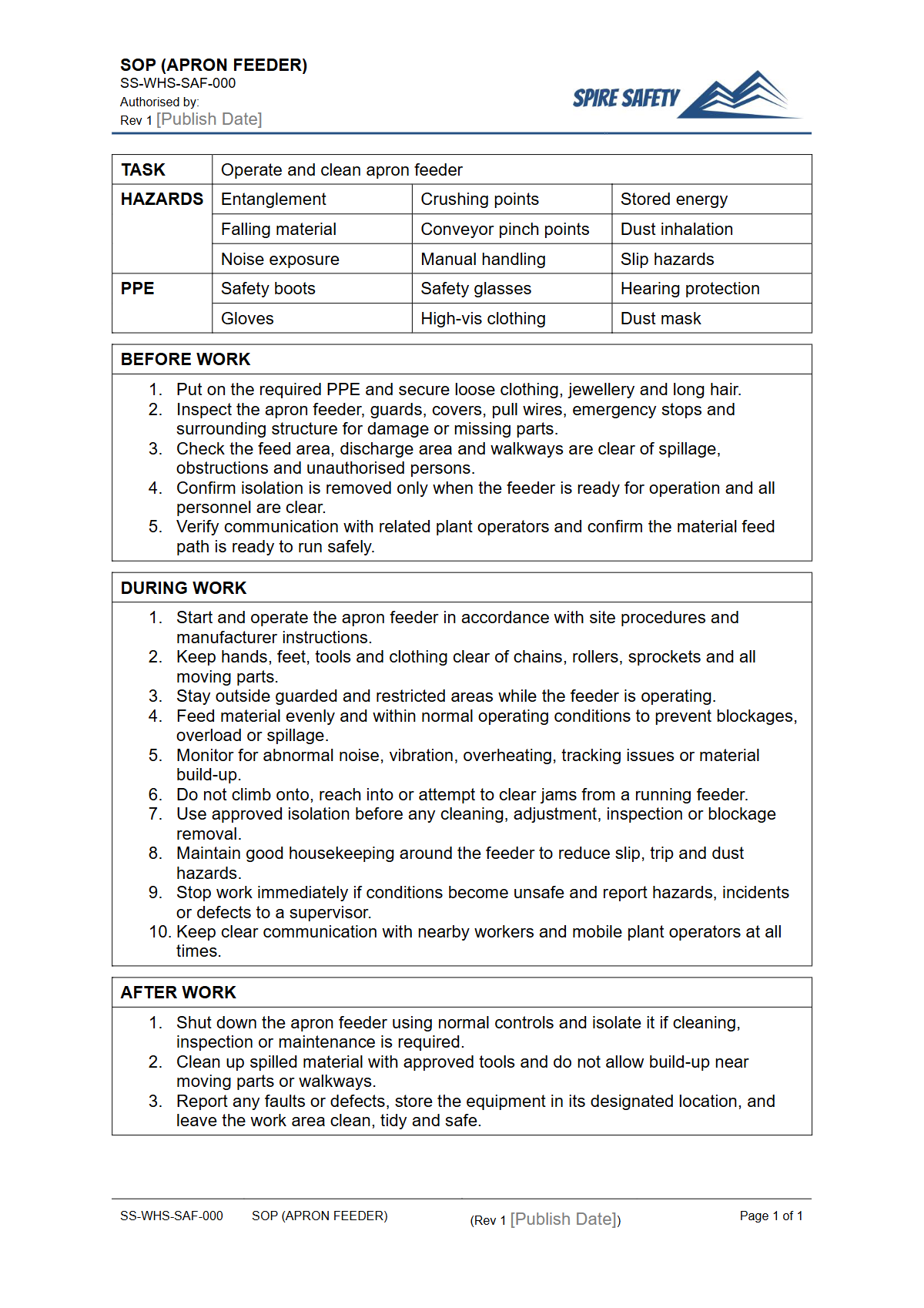
Operating heavy machinery like an apron feeder requires clear, documented safety protocols to manage significant risks. Our Free Safe Operating Procedure (Apron Feeder) Template provides a comprehensive starting point for your organisation to formalise these instructions.
This template is designed to help you outline the hazards, risk controls, and step-by-step processes for the safe use of apron feeders in mining, quarrying, and bulk material handling operations.
A Safe Operating Procedure (SOP) is a critical component of a robust safety framework. The purpose of this template is to provide a structured format for documenting the safest way to perform a task.
It translates your risk assessments into actionable, easy-to-follow instructions for operators. By clearly defining pre-start checks, operational steps, and shutdown procedures, it helps standardise safe work practices, reduce the likelihood of incidents, and supports worker training.
Integrating this SOP into your broader WHS management systems ensures that safety is managed systematically across your entire operation.
Video walkthrough
How to use the Free Safe Operating Procedure (Apron Feeder) Template
To get started, download the template in your preferred format (DOCX for easy editing or PDF). The most important step is customisation. This document is a template, not a finished product. You must adapt it to reflect the specific make and model of your apron feeder, the materials being handled, your site conditions, and the unique risks present in your workplace.
We recommend a team approach: involve experienced operators, supervisors, and WHS personnel in reviewing and finalising the content. This collaborative process ensures the final SOP is practical, accurate, and owned by the people who will use it.
For other heavy equipment, you might also find our FREE Dozer SOP Template useful for standardising your documentation format across different types of plant.
When to use an Apron Feeder SOP
An SOP for an apron feeder should be used consistently as a reference tool. It is essential during the induction and training of new operators to establish a baseline of safe behaviour.
It should also be readily available at or near the equipment for quick reference by experienced workers. Furthermore, the SOP is a key document during safety audits and formal workplace inspections.
Following an incident or a near-miss involving the apron feeder, the SOP must be reviewed as part of the investigation to identify any gaps or areas for improvement. Regular WHS compliance auditing helps verify that the procedures documented in the SOP are being followed correctly in practice.
Who should use this SOP
This procedure is intended for a range of personnel within your organisation.
- Operators are the primary users, as it guides their daily work practices.
- Supervisors and line managers use it to monitor compliance, conduct toolbox talks, and ensure their teams are working safely.
- WHS advisors and managers use it to develop safety systems, conduct risk assessments, and provide evidence of proactive safety management.
- Trainers will find it an invaluable tool for structuring practical and theoretical training sessions on safe apron feeder operation.
Key Elements of an Effective Apron Feeder SOP
A comprehensive SOP goes beyond simple instructions. This template prompts you to include several key sections to ensure all aspects of the task are covered. These include:
- Required Personal Protective Equipment (PPE): Specify the exact PPE needed, such as hard hats, safety glasses, steel-capped boots, high-visibility clothing, and hearing protection.
- Pre-Operational Checks: A detailed checklist of inspections to perform before starting the machine, covering guards, emergency stops, chains, and the surrounding area.
- Step-by-Step Operating Sequence: Clear, logical steps for starting up, loading, monitoring, and stopping the apron feeder safely.
- Shutdown and Isolation: Procedures for normal shutdown as well as for maintenance, including lock-out tag-out (LOTO) protocols to prevent unexpected start-up. Documenting procedures for similar plant, like in our FREE Scraper SOP Template, can help maintain consistency.
- Emergency Procedures: Instructions on how to respond to common emergencies like blockages, mechanical failure, or fire.
Integrating SOPs with Training and Competency
A written SOP is only effective when it is understood and applied by your workforce. It should form the backbone of your training program for apron feeder operators.
Use the SOP as a checklist during practical training and competency assessments to verify that operators can perform the task safely and correctly. It should not be treated as a document that is signed once and filed away.
Regular toolbox talks or pre-start meetings are a great opportunity to review sections of the SOP and reinforce key safety messages. Similar principles apply to other mobile plant, for which you may need documents like our FREE Body Truck SOP Template.
By implementing a detailed, site-specific Safe Operating Procedure for your apron feeder, you create a safer working environment and demonstrate a commitment to meeting your WHS obligations. This template provides a solid foundation for that process.
If you need assistance developing or reviewing your safety documentation, our team of experts offers specialised WHS consulting services to help refine your processes.
For additional guides and templates to support your safety management system, feel free to explore our complete free WHS resources library. You'll find a wide range of documents covering various plant, equipment, and high-risk work activities.
Common mistakes
Common mistakes to avoid
- Using a generic template without customising it for the specific machine and site conditions.
- Failing to adequately train workers on the finalised SOP, assuming reading it is enough.
- Neglecting to review and update the SOP after an incident, near-miss, or change in process.
- Storing the SOP in an office instead of making it easily accessible to operators at the work area.
Legal references
Legal considerations
The following legal requirements may be relevant to this type of work.
- Work Health and Safety Act (Harmonised) — Provides the primary duties for protecting workers and other people from work health and safety risks.
- Work Health and Safety Regulations (Harmonised) — Sets out requirements supporting the management of workplace hazards and risks.
The following codes may be relevant to this type of work.
- Managing WHS Risks Code of Practice — Provides practical guidance on identifying hazards, assessing risks and applying effective controls.
- Work Health and Safety Consultation, Cooperation and Coordination Code of Practice — Provides practical guidance on consulting workers and coordinating with other duty holders.
- Managing the Work Environment and Facilities Code of Practice — Provides practical guidance on safe work environments, workplace facilities and related controls.
Did you know
Built Like a Tank
The design of an apron feeder's conveying surface is based on the track system of a bulldozer or excavator, using heavy-duty, overlapping pans connected to a chain. This robust design allows them to handle heavy, abrasive, and high-impact materials that would destroy conventional belt conveyors.
FAQ
Frequently asked questions
01What are the main hazards of operating an apron feeder?
02Is this apron feeder SOP template ready to use immediately?
03How often should an Apron Feeder SOP be reviewed?
04Does a Safe Operating Procedure replace a risk assessment?
Share this resource
Free Safe Operating Procedure (Apron Feeder) Template
Browse Categories
How To Use It
- 1Download and open in Word or PDF.
- 2Replace the placeholders with your business details.
- 3Get it reviewed by a WHS specialist before rollout.
Need it customised?
Our WHS consultants can adapt this template to your site, run a gap analysis, or audit what you already have in place.
Book a Free Consultation WHS consulting servicesor call 1300 156 382
Related templates
- Free Safe Operating Procedure (Aquatic Weed Removal) Template
- Free Safe Operating Procedure (Arbor Mulching) Template
- Free Safe Operating Procedure (Arbor Press) Template
- Free Safe Operating Procedure (Arc Gouging) Template
- Free Safe Operating Procedure (Artificial Turf Care) Template
- Free Safe Operating Procedure (Asphalt Paver) Template