
Free Safe Operating Procedure (Bar Keg Changeover) Template
Manage the risks of changing beer kegs, from manual handling to pressurised systems. Our free Safe Operating Procedure (Bar Keg Changeover) template helps.
Free Safe Operating Procedure (Bar Keg Changeover) Template
DOCX • 126 KB + PDF
Updated Oct 2026
No signup required
Purpose of the Free Safe Operating Procedure (Bar Keg Changeover) Template
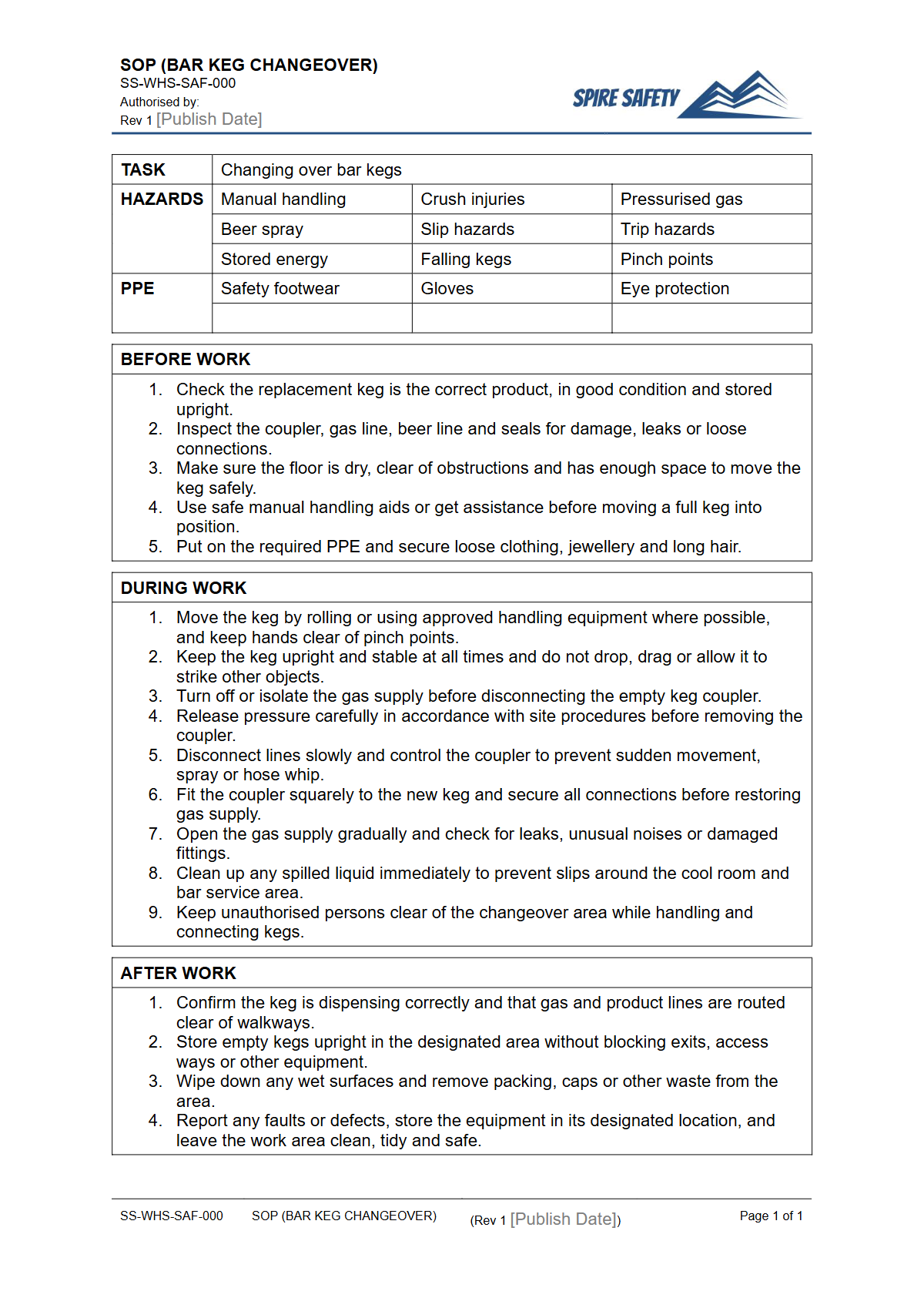
Changing a beer keg is a routine task in any hospitality venue, but it comes with significant safety risks if not performed correctly. This free Safe Operating Procedure (Bar Keg Changeover) Template provides a structured framework for documenting the required steps to complete this task safely.
It is designed to help your organisation manage key hazards, including musculoskeletal injuries from lifting heavy kegs, injuries from improperly handled pressurised gas systems, and slips, trips, and falls in potentially wet and confined cool rooms. A documented SOP is a fundamental control measure and a core component of effective WHS management systems, demonstrating a commitment to worker safety and operational consistency.
Hazards Addressed in the Template
- Hazardous Manual Tasks: Guidance on correct lifting techniques to minimise the risk of back and shoulder injuries when moving full and empty kegs.
- Pressurised Equipment: Steps for safely disconnecting and reconnecting gas lines and couplers to prevent sudden releases of pressure or gas leaks.
- Slips, Trips, and Falls: Reminders to maintain clear, dry floor surfaces in and around the cool room and cellar areas.
- Confined Spaces: Considerations for ventilation and gas monitoring, particularly concerning potential CO2 or Nitrogen leaks in enclosed spaces.
Video walkthrough
How to use the Free Safe Operating Procedure (Bar Keg Changeover) Template
This resource is available as a fully editable DOCX file and a ready-to-print PDF. The template is structured to guide you through creating a site-specific SOP for your venue.
You can add your company logo, specify the exact types of kegs and coupler systems used, and detail emergency procedures relevant to your layout. Ancillary tasks might require their own procedures, such as accessing stored items, which can be guided by resources like our FREE Step Ladder SOP Template.
Important: This template is a starting point. We have drafted it to be as comprehensive as possible, but it must be customised to reflect the specific equipment, layout, personnel, and risks of your unique workplace.
A generic procedure is not sufficient; a thorough risk assessment should inform your final document.
When to use it
A Safe Operating Procedure for changing kegs should be a living document integrated into your daily operations. It is most effective when used for inducting and training new bar staff, ensuring they learn the correct, safe method from day one.
It also serves as an excellent tool for periodic refresher training for all relevant employees. The SOP should be readily accessible near the work area (e.g., on the cool room door) for quick reference.
Furthermore, this document is critical during incident investigations or near-miss reporting and should be reviewed as part of any WHS compliance auditing program to ensure it remains current and effective.
Who should use it
This template is designed for anyone responsible for health and safety in a hospitality environment. This includes:
- Venue Managers and Owners
- Bar Supervisors and Team Leaders
- WHS/OHS Representatives and Committees
- Workers tasked with changing kegs
For managers, it provides a reliable tool for training and compliance. For workers, it offers a clear, step-by-step guide that removes ambiguity and reinforces safe work behaviour.
Systematically documenting procedures for all hazardous tasks is a hallmark of a mature safety culture, just as an industrial site would use a Free Air Compressor SOP to manage risks from its pressurised equipment. If you require expert assistance in developing and implementing SOPs tailored to your entire operation, consider engaging professional WHS consulting services.
This document is just one example of the support available to help streamline your safety management. Explore our complete free WHS resources library for more templates, checklists, and guides to support your organisation.
Common mistakes
Common mistakes to avoid
- Forgetting to turn off the gas and de-pressurise the line before uncoupling the keg.
- Lifting kegs with a twisting motion or using back muscles instead of leg muscles.
- Failing to perform a leak check (e.g., with soapy water) on gas connections after a changeover.
- Leaving hoses trailing across walkways, creating a significant trip hazard.
Legal references
Legal considerations
The following legal requirements may be relevant to this type of work.
- Work Health and Safety Act (Harmonised) — Provides the primary duties for protecting workers and other people from work health and safety risks.
- Work Health and Safety Regulations (Harmonised) — Sets out requirements supporting the management of workplace hazards and risks.
The following codes may be relevant to this type of work.
- Managing WHS Risks Code of Practice — Provides practical guidance on identifying hazards, assessing risks and applying effective controls.
- Work Health and Safety Consultation, Cooperation and Coordination Code of Practice — Provides practical guidance on consulting workers and coordinating with other duty holders.
- Managing the Work Environment and Facilities Code of Practice — Provides practical guidance on safe work environments, workplace facilities and related controls.
Did you know
Keg Weight
A full 50-litre (11-gallon) beer keg weighs between 60-63 kg. This is well above the weight recommended for a single-person lift in safe work guidelines.
Silent Hazard
Carbon Dioxide (CO2) is odourless and colourless. A significant leak in an unventilated cool room can displace oxygen and cause asphyxiation without any obvious warning signs.
FAQ
Frequently asked questions
01What are the main hazards of changing a beer keg?
02Is a Safe Operating Procedure legally required for changing kegs in Australia?
03How often should we train staff on this SOP?
04Can I use this template for other beverage systems, like post-mix syrup boxes?
Share this resource
Free Safe Operating Procedure (Bar Keg Changeover) Template
Browse Categories
How To Use It
- 1Download and open in Word or PDF.
- 2Replace the placeholders with your business details.
- 3Get it reviewed by a WHS specialist before rollout.
Need it customised?
Our WHS consultants can adapt this template to your site, run a gap analysis, or audit what you already have in place.
Book a Free Consultation WHS consulting servicesor call 1300 156 382
Related templates
- Free Safe Operating Procedure (Barber Chair Cleaning) Template
- Free Safe Operating Procedure (Bare Root Planting) Template
- Free Safe Operating Procedure (Barrel Handling) Template
- Free Safe Operating Procedure (Basement Cleaning) Template
- Free Safe Operating Procedure (Basement Pump Check) Template
- Free Safe Operating Procedure (Bath Lift) Template