
Free Safe Operating Procedure (Basement Pump Check) Template
Need an SOP for basement pump checks? Download our free template in DOCX and PDF. It provides a structured guide for safe inspections and maintenance.
Free Safe Operating Procedure (Basement Pump Check) Template
DOCX • 126 KB + PDF
Updated Oct 2026
No signup required
Purpose of the Free Safe Operating Procedure (Basement Pump Check) Template
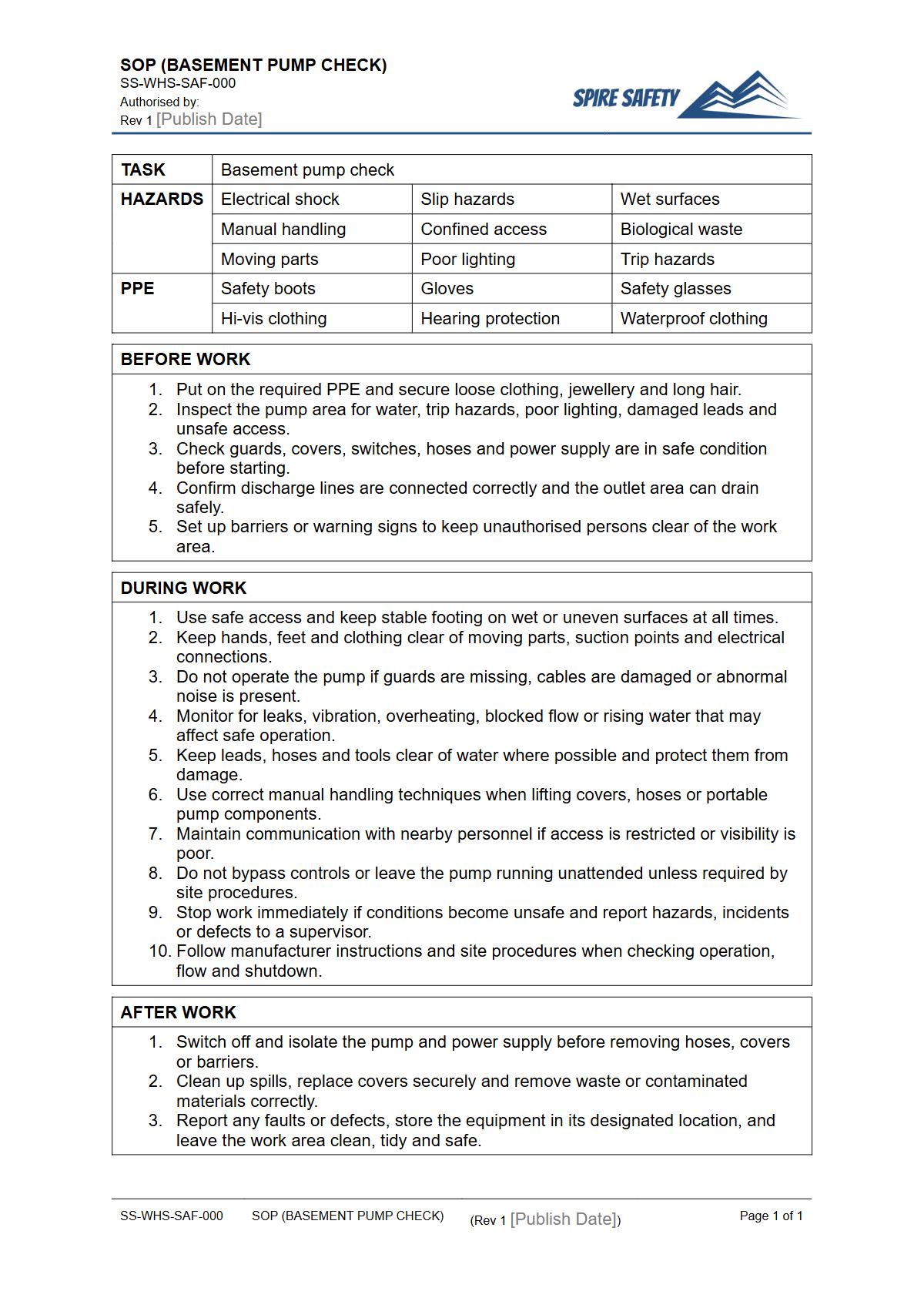
This Free Safe Operating Procedure (Basement Pump Check) Template provides a structured framework for documenting the safe work method for inspecting and maintaining basement pumps, such as sump pumps and dewatering equipment. Its primary purpose is to help workers perform the task consistently and safely by outlining a sequential process, identifying potential hazards, and stipulating the required control measures.
A well-drafted SOP is a critical tool for risk management. It standardises the approach to routine maintenance, minimising the risk of incidents arising from procedural errors or overlooked safety checks.
Key hazards addressed in this context include electrical shock from pump motors, slips and trips in wet environments, manual handling injuries when moving equipment, and potential exposure to contaminated water. This procedure is a vital component of broader comprehensive WHS management systems, ensuring that tasks are controlled and standardised across the organisation.
Video walkthrough
How to use the Free Safe Operating Procedure (Basement Pump Check) Template
To get the most value from this Free Safe Operating Procedure (Basement Pump Check) Template, it’s crucial to understand its role as a starting point. After downloading the DOCX or PDF file, you must adapt it to the specific conditions of your workplace.
This involves reviewing each section and customising the content to reflect your unique equipment, site layout, and operational requirements.
Important: This is a template, not a finished document. We have developed it as a guide based on common industry practice, but you are responsible for adapting it to your specific context.
You must conduct a site-specific risk assessment and modify the procedure to reflect your unique equipment, work environment, and legislative duties. Consultation with your workers is essential to ensure the procedure is practical and effective.
Incorporate manufacturer’s instructions for your specific pump model and integrate findings from your own risk assessments. Regular WHS compliance auditing can help verify that your customised procedures are being effectively implemented on-site and remain fit for purpose.
When to use it
A Safe Operating Procedure for basement pump checks should be used as a primary reference tool in several situations. It is essential for training new employees or contractors, providing them with clear, step-by-step instructions on how to perform the task safely before they begin work.
It should also be readily available at the work location for experienced personnel to reference, ensuring no steps are missed.
The SOP serves as a key document during pre-start meetings or toolbox talks to review hazards and controls before commencing maintenance. Furthermore, it is a critical reference point following any incident or near-miss, helping teams investigate what went wrong and update the procedure to prevent recurrence. For tasks requiring access to pits or sunken wells, ensure workers are also trained in procedures for using step ladders safely.
Who should use it
This SOP is intended for a range of personnel within an organisation. WHS Managers and Safety Officers will use it to develop and formalise safe work systems as part of their overall safety framework.
Supervisors, Team Leaders, and Facility Managers are responsible for implementing the procedure, ensuring their teams are trained on its contents and follow it correctly.
The primary users are the workers who perform the pump checks, including maintenance staff, plumbers, and technicians. The procedure gives them the necessary information to protect themselves and others from harm.
Just as a heavy machinery site would use a FREE Boom Pump SOP template for specialised tasks, this document provides specific guidance for building maintenance operations. By implementing a clear and specific SOP, you create a safer, more predictable work environment.
Explore our extensive free WHS resources library for more templates and guides to support your safety management system.
Common mistakes
Common mistakes to avoid
- Failing to isolate and lock out all energy sources (especially electricity) before starting work.
- Using a generic SOP without customising it for the specific pump model and site location.
- Neglecting to test pump functionality (e.g., float switch operation) after the check is complete.
- Not consulting with the workers who perform the task when drafting or reviewing the procedure.
Legal references
Legal considerations
The following legal requirements may be relevant to this type of work.
- Work Health and Safety Act (Harmonised) — Provides the primary duties for protecting workers and other people from work health and safety risks.
- Work Health and Safety Regulations (Harmonised) — Sets out requirements supporting the management of workplace hazards and risks.
The following codes may be relevant to this type of work.
- Managing WHS Risks Code of Practice — Provides practical guidance on identifying hazards, assessing risks and applying effective controls.
- Work Health and Safety Consultation, Cooperation and Coordination Code of Practice — Provides practical guidance on consulting workers and coordinating with other duty holders.
- Managing the Work Environment and Facilities Code of Practice — Provides practical guidance on safe work environments, workplace facilities and related controls.
Did you know
Water Damage Costs
According to insurance industry data, water damage from equipment failure is one of the most common and costly claims for commercial properties, highlighting the importance of regular pump maintenance.
Confined Space Risk
Many pump wells and sump pits are legally classified as confined spaces, requiring specific entry permits, atmospheric testing, and rescue plans before any work can begin.
FAQ
Frequently asked questions
01What hazards are associated with basement pump checks?
02Is a Safe Operating Procedure a legal requirement in Australia?
03How often should a basement pump SOP be reviewed?
04Can I use this template for any type of basement pump?
Share this resource
Free Safe Operating Procedure (Basement Pump Check) Template
Browse Categories
How To Use It
- 1Download and open in Word or PDF.
- 2Replace the placeholders with your business details.
- 3Get it reviewed by a WHS specialist before rollout.
Need it customised?
Our WHS consultants can adapt this template to your site, run a gap analysis, or audit what you already have in place.
Book a Free Consultation WHS consulting servicesor call 1300 156 382
Related templates
- Free Safe Operating Procedure (Bath Lift) Template
- Free Safe Operating Procedure (Bathroom Aid Cleaning) Template
- Free Safe Operating Procedure (Battery Bank Testing) Template
- Free Safe Operating Procedure (Battery Charging) Template
- Free Safe Operating Procedure (Battery Crimping Tool) Template
- Free Safe Operating Procedure (Battery Load Test) Template