
Free Safe Operating Procedure (Beauty Bed Cleaning) Template
Download our free Safe Operating Procedure (Beauty Bed Cleaning) Template. A crucial tool for Australian beauty salons to ensure client and staff safety.
Free Safe Operating Procedure (Beauty Bed Cleaning) Template
DOCX • 126 KB + PDF
Updated Oct 2026
No signup required
Purpose of the Free Safe Operating Procedure (Beauty Bed Cleaning) Template
Maintaining impeccable hygiene is non-negotiable in the beauty and wellness industry. A clean and sanitised environment protects both clients and staff from infection and demonstrates a high standard of professionalism.
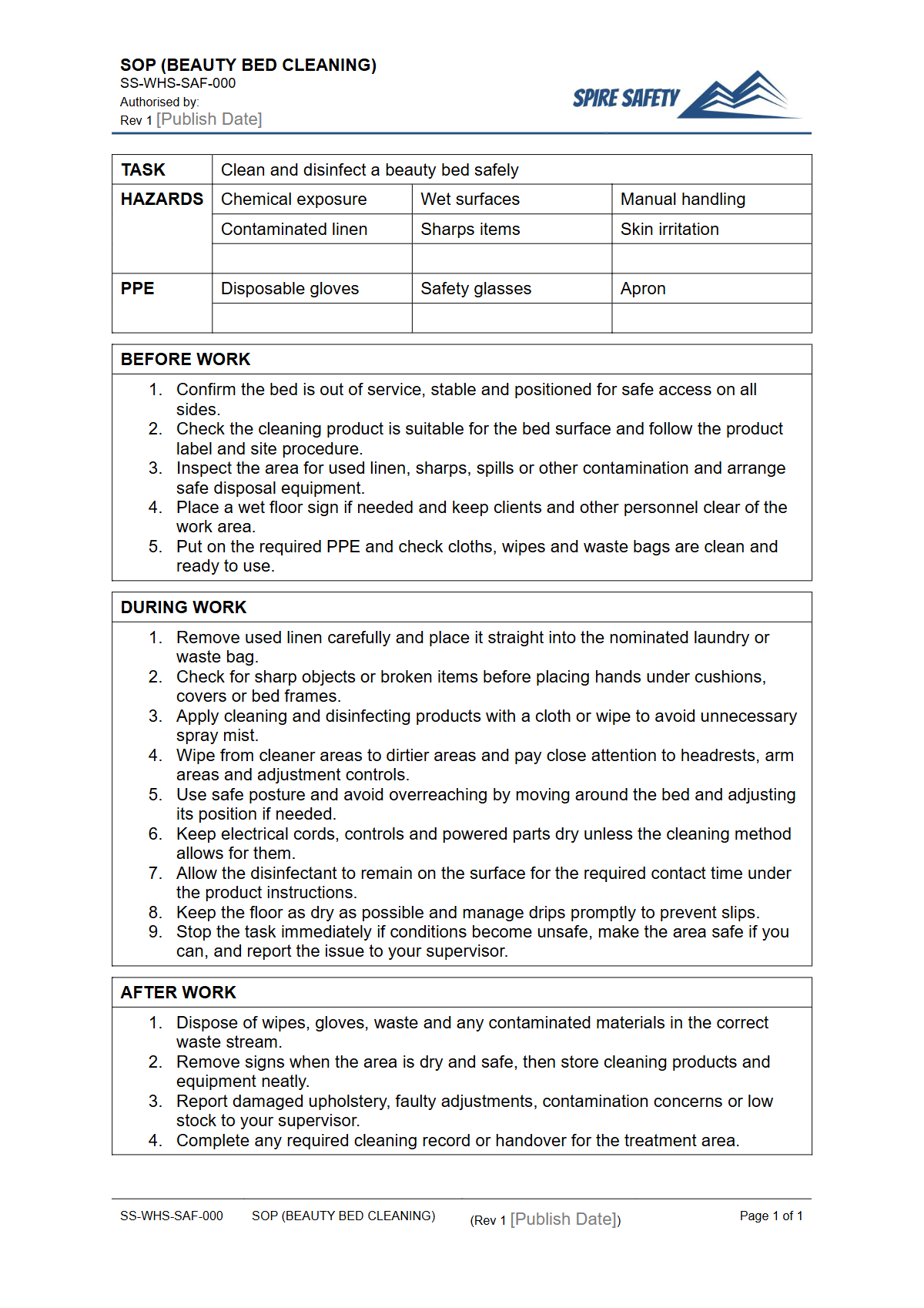
This Free Safe Operating Procedure (Beauty Bed Cleaning) Template provides a structured framework for ensuring every beauty bed is cleaned and disinfected consistently and effectively. By documenting a step-by-step process, you can minimise the risk of cross-contamination, comply with health standards, and provide peace of mind to everyone who walks through your doors.
A clear SOP is a foundational component of your overall safety management approach.
Implementing documented procedures like this SOP is a core element of a robust safety framework. For businesses looking to formalise their approach to workplace health and safety, developing comprehensive WHS management systems can integrate all safety processes into one cohesive and effective structure.
Video walkthrough
How to use the Free Safe Operating Procedure (Beauty Bed Cleaning) Template
This template is provided as a fully editable DOCX file, with a PDF version also available for easy printing and sharing. It is designed as a starting point, pre-filled with common steps and considerations relevant to beauty bed cleaning.
Your task is to adapt it to the specific context of your salon, including the types of beds you use, the cleaning and disinfecting products you have selected, and your state or territory's public health guidelines.
Important: This is a template, not a finished document. We have developed it to be a helpful starting point, but it is not a substitute for professional advice.
You must customise this document to reflect the specific equipment, chemicals, and processes used in your workplace. If you need assistance in tailoring this or other safety documents, our WHS consulting team can provide expert guidance.
When to use this Safe Operating Procedure
The beauty bed cleaning SOP should be followed meticulously to maintain hygiene standards. Its use is required at several key moments throughout the day:
- Between each client: This is the most critical time to perform the full clean and disinfection process to prevent any cross-contamination.
- At the start of the day: A quick wipe-down to remove any dust that may have settled overnight.
- At the end of the day: A thorough clean to prepare the treatment room for the next day.
- After any spill: Immediate cleaning and disinfection are required if any product, bodily fluid, or other substance is spilled on the bed.
Key Steps in Beauty Bed Cleaning
A thorough cleaning process involves more than a quick wipe. The SOP guides your staff through a logical sequence to ensure no step is missed. While the template contains full details, the core stages include:
- Preparation: Gather all necessary supplies, including gloves (and other PPE as required), disposable cloths or wipes, and the approved cleaning and disinfecting solutions. Remove all used linen and dispose of it correctly.
- Cleaning: Physically remove all visible debris, dust, hair, and product residue from the bed surface. This step is essential as disinfectants can be less effective on dirty surfaces.
- Disinfection: Apply a hospital-grade disinfectant, ensuring the entire surface is wet. Pay close attention to high-touch areas like adjustment levers, armrests, and the face cradle. Crucially, you must allow the disinfectant to sit for the manufacturer-specified 'contact time' to kill pathogens effectively.
- Finishing: Once the contact time is complete, wipe away any residue if required by the product instructions. Prepare the bed for the next client with fresh, clean linen.
Your cleaning duties might also extend to the immediate area around the bed. If this involves reaching for supplies on high shelves, ensure staff follow correct procedures, much like those detailed in our FREE Step Ladder SOP Template, to prevent falls.
Who Should Follow This Procedure?
This SOP is intended for all personnel who are responsible for preparing and maintaining treatment rooms. This includes:
- Beauty Therapists
- Dermal Clinicians
- Salon Assistants and Apprentices
- Clinic Managers responsible for training and oversight
Ensuring every team member is trained on and consistently follows this procedure is key to establishing a culture of safety and hygiene. For a broader view of safety documentation, you can explore our entire free WHS resources library, which covers a wide range of tasks and equipment.
Common mistakes
Common mistakes to avoid
- Not allowing for proper disinfectant contact time before wiping the surface dry.
- Using the same cloth to clean multiple surfaces, which spreads germs instead of removing them.
- Forgetting to clean and disinfect high-touch areas like levers, controls, and face cradle mechanisms.
- Using domestic cleaning products instead of TGA-approved, hospital-grade disinfectants required for clinical environments.
Legal references
Legal considerations
The following legal requirements may be relevant to this type of work.
- Work Health and Safety Act (Harmonised) — Provides the primary duties for protecting workers and other people from work health and safety risks.
- Work Health and Safety Regulations (Harmonised) — Sets out requirements supporting the management of workplace hazards and risks.
The following codes may be relevant to this type of work.
- Managing WHS Risks Code of Practice — Provides practical guidance on identifying hazards, assessing risks and applying effective controls.
- Work Health and Safety Consultation, Cooperation and Coordination Code of Practice — Provides practical guidance on consulting workers and coordinating with other duty holders.
- Managing the Work Environment and Facilities Code of Practice — Provides practical guidance on safe work environments, workplace facilities and related controls.
Did you know
Contact Time is Key
Most disinfectants need to remain wet on a surface for a specific period, known as 'contact time', to effectively kill germs. Wiping it off too soon can render the process ineffective, so always follow the manufacturer's instructions.
High-Touch Hotspots
While the main bed surface is an obvious cleaning area, cross-contamination often occurs via high-touch points. Bed adjustment levers, remote controls, and the therapist's stool are common hotspots that require diligent disinfection.
FAQ
Frequently asked questions
01What kind of disinfectant should be used on a beauty bed?
02What is the difference between cleaning and disinfecting?
03Is a Safe Operating Procedure a legal requirement in Australia?
04How often do I need to review my Beauty Bed Cleaning SOP?
Share this resource
Free Safe Operating Procedure (Beauty Bed Cleaning) Template
Browse Categories
How To Use It
- 1Download and open in Word or PDF.
- 2Replace the placeholders with your business details.
- 3Get it reviewed by a WHS specialist before rollout.
Need it customised?
Our WHS consultants can adapt this template to your site, run a gap analysis, or audit what you already have in place.
Book a Free Consultation WHS consulting servicesor call 1300 156 382
Related templates
- Free Safe Operating Procedure (Bed Alarm Setup) Template
- Free Safe Operating Procedure (Bed Rail Inspection) Template
- Free Safe Operating Procedure (Bed Table Cleaning) Template
- Free Safe Operating Procedure (Bed Wheel Lock Check) Template
- Free Safe Operating Procedure (Bedroom Safety Check) Template
- Free Safe Operating Procedure (Bedside Curtain Change) Template