
Free Safe Operating Procedure (Blast Chiller) Template
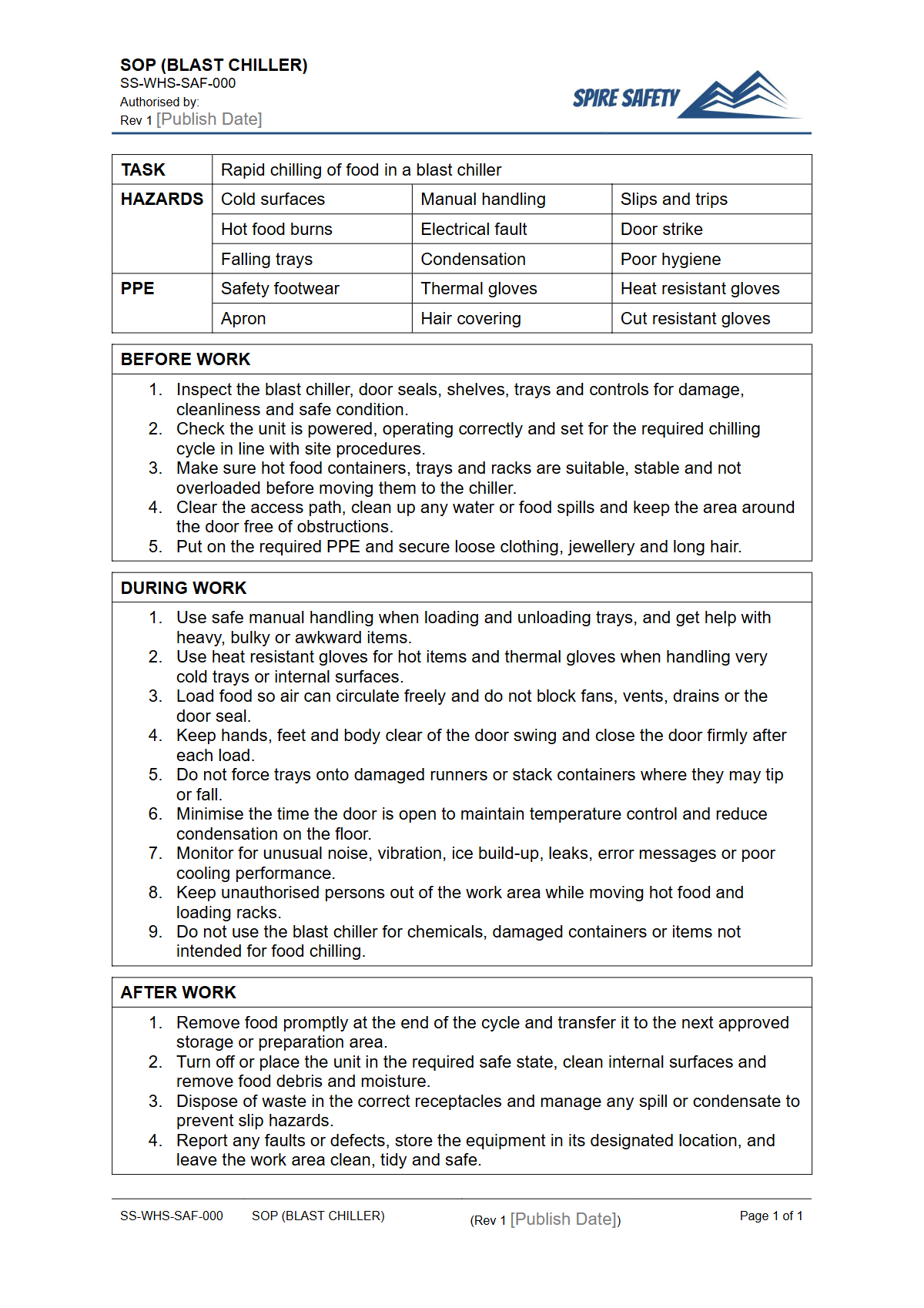
Download our free Safe Operating Procedure (Blast Chiller) template. This DOCX/PDF resource provides a structured starting point for food safety and WHS.
Free Safe Operating Procedure (Blast Chiller) Template
DOCX • 126 KB + PDF
Updated Oct 2026
No signup required
Purpose of the Free Safe Operating Procedure (Blast Chiller) Template
This Free Safe Operating Procedure (Blast Chiller) Template provides a structured starting point for documenting the safe use of blast chillers and shock freezers in commercial kitchens, food production facilities, and hospitality venues. An SOP is a critical tool that outlines step-by-step instructions to ensure tasks are performed safely and consistently, minimising risks to both workers and consumers. It forms a key part of your food safety program and broader comprehensive WHS management systems.
Blast chillers rapidly lower the temperature of cooked food to pass it safely through the temperature danger zone (5°C to 60°C), where bacteria multiply quickest. While essential for food safety compliance, their operation involves several workplace hazards, including manual handling, thermal exposure, electrical risks, and potential for slips and trips.
This template helps you identify these risks and document the control measures needed to manage them effectively.
Video walkthrough
How to use the Free Safe Operating Procedure (Blast Chiller) Template
This Safe Operating Procedure for a blast chiller is provided as a fully editable DOCX file, with a PDF version also available for easy printing and distribution. To use the template effectively, you should begin by gathering all relevant information, including the manufacturer’s operating manual for your specific blast chiller model.
A team-based approach involving chefs, kitchen hands, and supervisors who operate the equipment daily is essential for creating a practical and effective document.
Important: This document is a template, not a finished SOP. We have provided a comprehensive framework aligned with Australian WHS principles, but you must customise the content to reflect your unique workplace.
This includes adding details about your specific blast chiller models, kitchen layout, staff responsibilities, and emergency procedures. A generic procedure that doesn't match your reality offers little practical safety value and may not meet your legal obligations. The effectiveness of your safety protocols can be verified through regular WHS compliance audits.
Key Hazards and Control Measures
A blast chiller introduces specific risks that must be managed through your SOP. The procedure should detail both the hazards and the control measures required to ensure worker safety. Key areas to address include:
- Thermal Hazards: Contact with extremely cold internal surfaces can cause cold burns. The SOP should mandate the use of appropriate thermal gloves when handling trays or touching internal components.
- Electrical Hazards: Like any commercial kitchen appliance, there is a risk of electric shock, especially with water present. The procedure should include steps for daily visual inspection of cords and plugs and outline lockout/tagout procedures for maintenance.
- Manual Handling: Loading and unloading heavy, hot, or cold trays of food creates risks of sprains and strains. Your SOP should specify safe lifting techniques, team lifting for heavy loads, and the use of trolleys.
- Slips, Trips, and Falls: Condensation, spills, or leaks can create slippery surfaces around the unit. Good housekeeping procedures, including immediate clean-up of spills, should be a core part of the SOP.
- Hygiene and Food Safety: Incorrect use can compromise food safety. The procedure must define correct loading capacities, cycle selection, and temperature monitoring to align with your food safety plan. It must also include a detailed cleaning and sanitisation schedule.
Developing SOPs for all workplace equipment is a fundamental aspect of a safe system of work. Just as you would require a specific Safe Operating Procedure for a step ladder for maintenance tasks, specialised kitchen equipment demands a dedicated procedure.
Integrating the SOP into Your Workplace
This template is designed for use by a range of personnel responsible for health and safety in a food service environment. It is a tool for:
- Chefs and Kitchen Managers: To standardise procedures and train staff effectively.
- Business Owners: To help fulfil their primary duty of care under WHS legislation.
- WHS Officers and Managers: To integrate equipment-specific procedures into the overall safety management system.
- Workers: As a clear and accessible guide for performing their tasks safely and correctly.
Once customised, the SOP must be used to train all relevant workers before they operate the blast chiller. The procedure should be reviewed annually, or whenever there is a change in equipment, processes, or after an incident. If you require support developing risk-based procedures, consider engaging expert WHS consulting services.
Building a Complete Set of Procedures
A blast chiller is just one piece of equipment in a busy workplace. An effective safety system relies on a complete library of SOPs covering all significant plant, machinery, and hazardous tasks.
Using a consistent format across all your procedures helps create a system that is easy for workers to understand and for management to maintain.
For example, your facility might also require an air compressor SOP for maintenance tasks, or procedures for other specialised cutting or processing equipment. Standardising these documents helps build a strong safety culture where safe work is planned and documented.
You can find many other templates to support your business in our free WHS resources library to build out your safety document portfolio.
Common mistakes
Common mistakes to avoid
- Overloading the unit, which prevents proper air circulation and leads to inefficient, uneven cooling.
- Failing to pre-cool the blast chiller cabinet before loading hot food.
- Using the template as-is without customising it for the specific model of blast chiller and workplace risks.
- Neglecting to document and follow a regular cleaning and sanitisation schedule.
Legal references
Legal considerations
The following legal requirements may be relevant to this type of work.
- Work Health and Safety Act (Harmonised) — Provides the primary duties for protecting workers and other people from work health and safety risks.
- Work Health and Safety Regulations (Harmonised) — Sets out requirements supporting the management of workplace hazards and risks.
The following codes may be relevant to this type of work.
- Managing WHS Risks Code of Practice — Provides practical guidance on identifying hazards, assessing risks and applying effective controls.
- Work Health and Safety Consultation, Cooperation and Coordination Code of Practice — Provides practical guidance on consulting workers and coordinating with other duty holders.
- Managing the Work Environment and Facilities Code of Practice — Provides practical guidance on safe work environments, workplace facilities and related controls.
Did you know
Quality Preservation
Beyond just safety, blast chillers help preserve the quality of food. The rapid cooling process creates smaller ice crystals than conventional freezing, which does less damage to the cellular structure of food, better maintaining its texture, flavour, and nutritional value.
FAQ
Frequently asked questions
01What is a Safe Operating Procedure (SOP) for a blast chiller?
02Why is rapid cooling with a blast chiller important for food safety?
03How often should I review my blast chiller SOP?
04Does this SOP template cover cleaning and maintenance?
Share this resource
Free Safe Operating Procedure (Blast Chiller) Template
Browse Categories
How To Use It
- 1Download and open in Word or PDF.
- 2Replace the placeholders with your business details.
- 3Get it reviewed by a WHS specialist before rollout.
Need it customised?
Our WHS consultants can adapt this template to your site, run a gap analysis, or audit what you already have in place.
Book a Free Consultation WHS consulting servicesor call 1300 156 382
Related templates
- Free Safe Operating Procedure (Blast Hole Drill) Template
- Free Safe Operating Procedure (Bleacher Cleaning) Template
- Free Safe Operating Procedure (Blockage Clearing) Template
- Free Safe Operating Procedure (Blower Vacuum) Template
- Free Safe Operating Procedure (Boarding Gate Setup) Template
- Free Safe Operating Procedure (Boat Cabin Cleaning) Template