
Free Safe Operating Procedure (Bored Piling Rig) Template
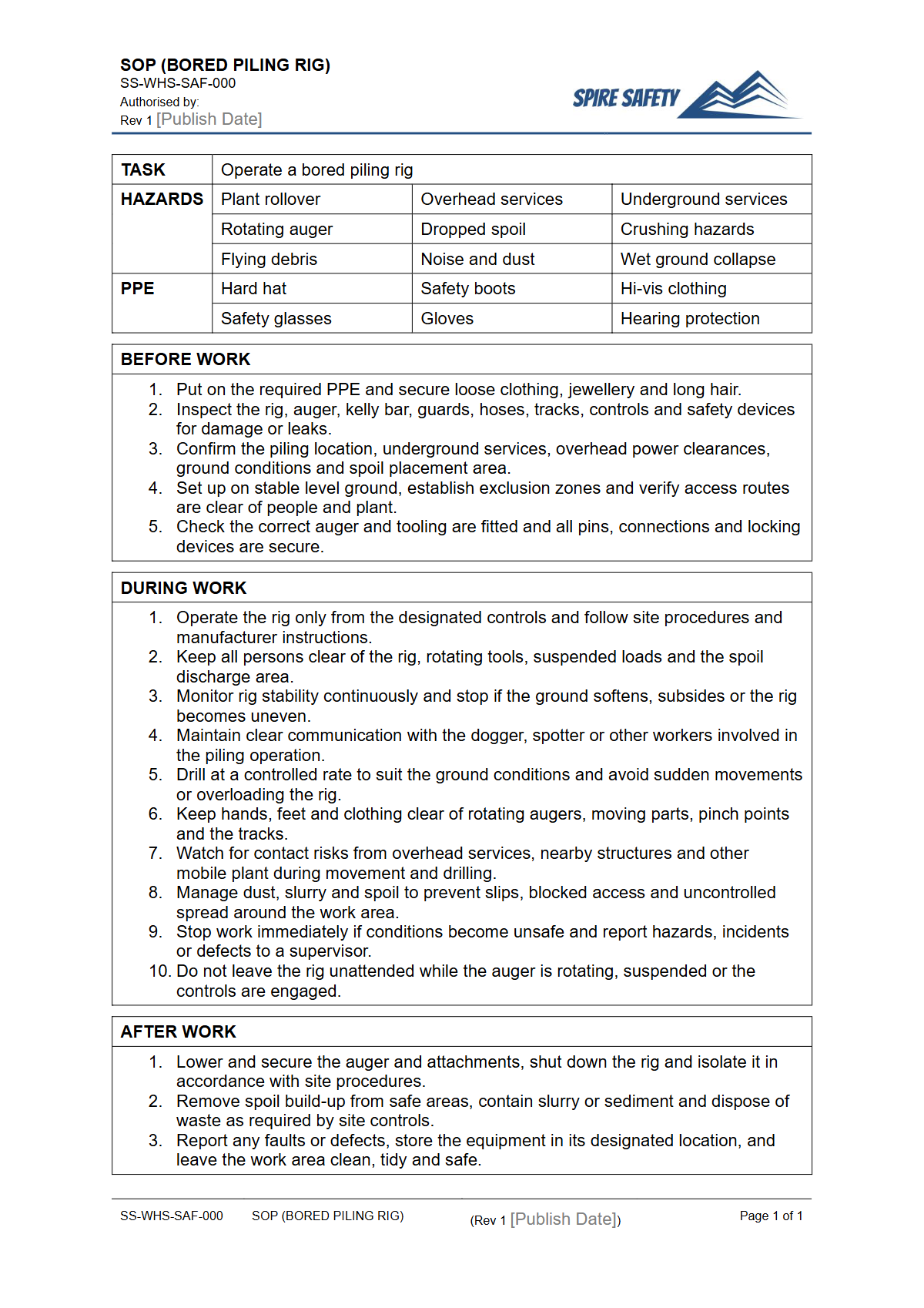
Download our free Safe Operating Procedure (Bored Piling Rig) template. This customisable DOCX and PDF provides a structured guide for safe piling operations.
Free Safe Operating Procedure (Bored Piling Rig) Template
DOCX • 126 KB + PDF
Updated Oct 2026
No signup required
Purpose of the Free Safe Operating Procedure (Bored Piling Rig) Template
A Safe Operating Procedure (SOP) is a critical administrative control that formalises a safe method for performing a task. The purpose of this bored piling rig SOP is to provide a clear, step-by-step guide that minimises the risk of injury to operators and other personnel.
It details pre-operational checks, operational steps, emergency procedures, and shutdown protocols. By documenting these processes, you create a consistent standard for training, supervision, and performance.
This procedure is a fundamental component of effective WHS management systems, helping to ensure that all legal duties regarding safe work systems are met.
Video walkthrough
How to use the Free Safe Operating Procedure (Bored Piling Rig) Template
This resource is provided in both DOCX and PDF formats for your convenience. The DOCX file is fully editable, allowing you to tailor the content to your specific operational needs.
It is crucial to adapt the template to the make and model of your piling rig, the specific site conditions, and your organisation's existing safety policies.
Important: This document is a template and is not a substitute for professional WHS advice. We strongly recommend that you customise this SOP to reflect the specific equipment, processes, and risks present in your workplace.
This process should be done in consultation with your operators and other relevant personnel to ensure it is practical and effective. Just as with piling, other specialised construction tasks require their own specific procedures, such as those outlined in our free Boom Pump SOP.
When to use it
The SOP for a bored piling rig should be the primary reference document for all stages of the equipment's use. It should be consulted during operator inductions, refresher training, and before commencing any piling task.
It is particularly important when planning high-risk activities, such as setting up on uneven ground, working near overhead powerlines, or drilling in areas with known underground services. The procedures within help structure daily pre-start inspections and ensure consistent, safe work practices are followed every time, similar to the routine checks required for other heavy equipment like those in a free Dozer SOP template.
Key Hazards in Piling Operations
Customising this SOP requires a detailed understanding of the associated hazards. Your site-specific risk assessment should address:
- Ground Conditions: Unstable soil, voids, or unexpected rock formations can cause the rig to become unstable or tip over.
- Underground Services: Striking gas pipes, water mains, or electrical cables can have catastrophic consequences.
- Mechanical Failure: Hydraulic hose bursts, wire rope snaps, or structural failure of the mast or kelly bar.
- Falling Objects: Spoil, tools, or equipment falling from the rig, posing a risk to ground crew.
- Manual Handling: Handling heavy reinforcement cages, augers, and other attachments can lead to musculoskeletal injuries.
Like all heavy earthmoving machinery, piling rigs require careful planning and execution to manage risk. For related earthmoving procedures, you might find our free Scraper SOP template a useful reference for your project.
Who should use it
This SOP is intended for a range of personnel within a construction or engineering business:
- Plant Operators: To follow as a direct guide for safe operation.
- Supervisors and Foremen: To enforce safe work practices, conduct toolbox talks, and supervise operations.
- Project Managers: To ensure that piling works are planned and executed in line with the company’s safety commitments.
- WHS Advisors: To use as a baseline for developing site-specific procedures and for conducting safety observations. Regular reviews of its implementation are a key part of any WHS compliance auditing program.
By implementing a well-developed SOP, you take a significant step towards creating a safer working environment. For more templates and safety guides, explore our complete free WHS resources library.
Common mistakes
Common mistakes to avoid
- Failing to conduct a thorough geotechnical investigation before starting work.
- Neglecting to identify and locate all underground services in the work area.
- Using operators who are not formally trained and verified as competent for the specific make and model of the rig.
- Poor communication and a lack of clear exclusion zones for ground personnel during drilling.
Legal references
Legal considerations
The following legal requirements may be relevant to this type of work.
- Work Health and Safety Act (Harmonised) — Provides the primary duties for protecting workers and other people from work health and safety risks.
- Work Health and Safety Regulations (Harmonised) — Sets out requirements supporting the management of workplace hazards and risks.
The following codes may be relevant to this type of work.
- Managing WHS Risks Code of Practice — Provides practical guidance on identifying hazards, assessing risks and applying effective controls.
- Work Health and Safety Consultation, Cooperation and Coordination Code of Practice — Provides practical guidance on consulting workers and coordinating with other duty holders.
- Managing the Work Environment and Facilities Code of Practice — Provides practical guidance on safe work environments, workplace facilities and related controls.
Did you know
Underground Dangers
A significant number of construction incidents involving excavation and piling are caused by striking underground services. A 'Dial Before You Dig' enquiry is a critical first step before any ground is broken.
Foundation Depth
Bored piles can be drilled to significant depths, sometimes exceeding 60 metres, to reach stable soil or rock layers capable of supporting massive structures like high-rise buildings and bridges.
FAQ
Frequently asked questions
01What are the main hazards associated with bored piling operations?
02Is a Safe Operating Procedure legally required for a bored piling rig in Australia?
03How often should an SOP for a bored piling rig be reviewed?
04Who is responsible for writing and approving a piling rig SOP?
Share this resource
Free Safe Operating Procedure (Bored Piling Rig) Template
Browse Categories
How To Use It
- 1Download and open in Word or PDF.
- 2Replace the placeholders with your business details.
- 3Get it reviewed by a WHS specialist before rollout.
Need it customised?
Our WHS consultants can adapt this template to your site, run a gap analysis, or audit what you already have in place.
Book a Free Consultation WHS consulting servicesor call 1300 156 382
Related templates
- Free Safe Operating Procedure (Borescope) Template
- Free Safe Operating Procedure (Bosun Chair) Template
- Free Safe Operating Procedure (Bottle Bin Handling) Template
- Free Safe Operating Procedure (Bottle Crusher) Template
- Free Safe Operating Procedure (Bottle Jack) Template
- Free Safe Operating Procedure (Bottling Line) Template