
Free Safe Operating Procedure (Brake Disc Replacement) Template
Download a free Safe Operating Procedure (SOP) template for brake disc replacement. Customise this DOCX and PDF to outline safe work steps for your workshop.
Free Safe Operating Procedure (Brake Disc Replacement) Template
DOCX • 126 KB + PDF
Updated Oct 2026
No signup required
Purpose of the Free Safe Operating Procedure (Brake Disc Replacement) Template
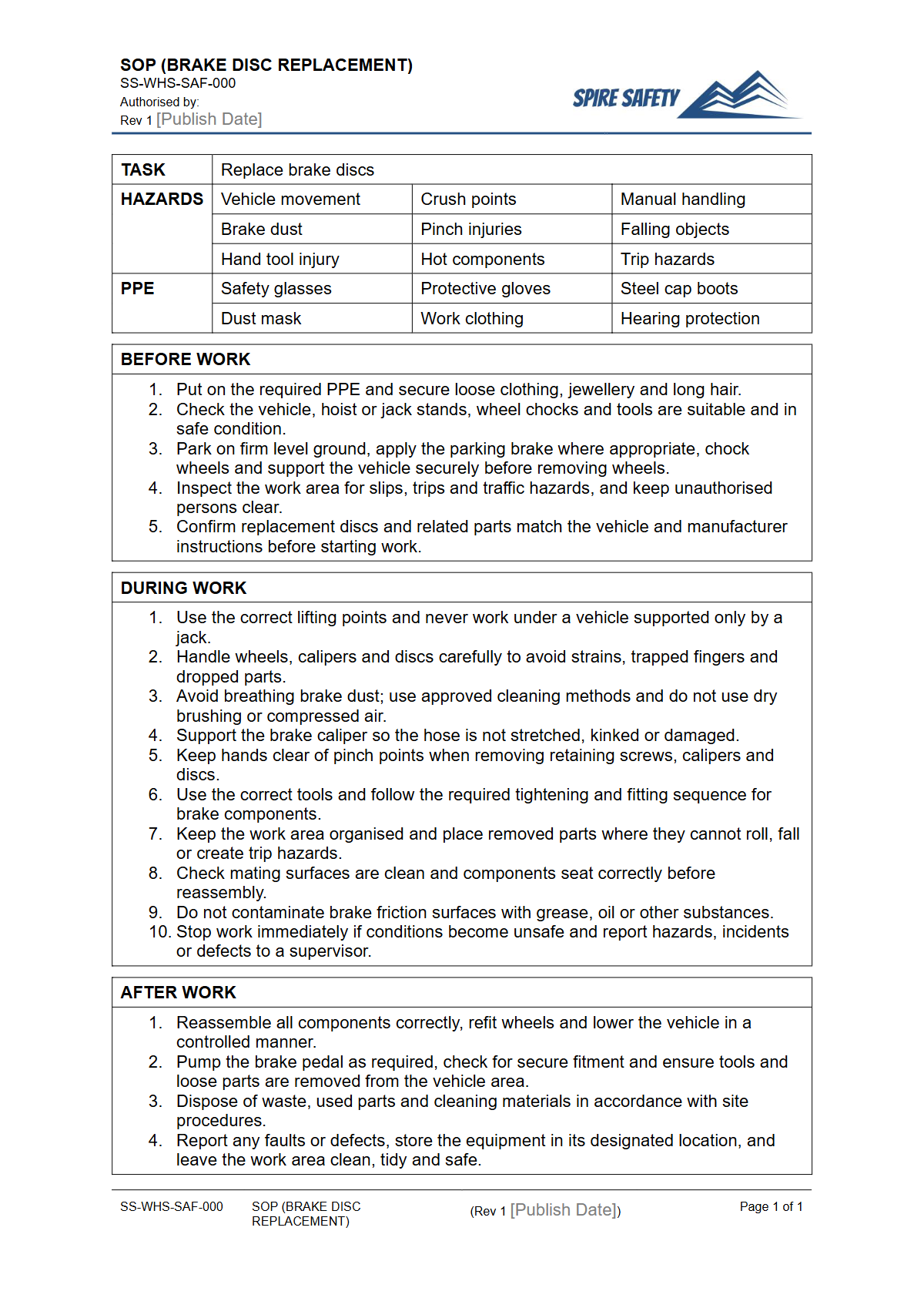
This Free Safe Operating Procedure (Brake Disc Replacement) Template provides a structured starting point for developing a comprehensive safety document for your workshop. Its purpose is to help you formally outline the hazards and control measures associated with replacing brake discs on light or heavy vehicles.
A well-developed SOP is a critical tool for managing risks such as vehicle instability, crush injuries from unexpected movement, ergonomic strains from manual handling, and exposure to hazardous substances like brake fluid and dust. Integrating task-specific SOPs like this into your organisation's framework is a fundamental part of building a robust WHS management system.
Video walkthrough
How to use the Free Safe Operating Procedure (Brake Disc Replacement) Template
Begin by downloading the template in your preferred format, either DOCX for easy editing or PDF for straightforward printing. The next step is the most critical: customisation.
This document must be adapted to detail the specific equipment, vehicles, and conditions found in your workplace. Generic procedures are insufficient for managing site-specific risks.
Things to add include the makes and models of vehicles serviced, the specific tools used (e.g., brand and model of vehicle hoists, jack stands, torque wrenches), and the emergency procedures relevant to your workshop layout. For related tasks, consider using our Air Compressor SOP template if pneumatic tools are part of your process.
Please note: This template provides a general guide only. We have no way of knowing your specific site conditions, tools, or personnel. You MUST customise this document to reflect your actual workplace environment and legal obligations in consultation with your workers.
When to Use This Safe Operating Procedure
A Safe Operating Procedure for brake disc replacement should be used as a primary reference document for multiple WHS activities. It is essential for training new mechanics or apprentices, ensuring they learn the correct, safe method from the outset.
It should also be used as a guide for pre-start meetings or toolbox talks before the task begins. Furthermore, the SOP serves as a benchmark for workplace inspections and a key document during incident investigations to determine if prescribed safety steps were followed.
Reviewing it alongside other vehicle-related procedures, such as our free Body Truck SOP, can help create a consistent safety approach across all workshop tasks.
Who Should Use This SOP?
This document is intended for use by all personnel involved in vehicle maintenance. Qualified mechanics should use it to ensure their work practices are consistent and aligned with the workshop's safety standards.
Apprentices and trainees must use it under the direct supervision of a competent person. Workshop supervisors and managers are responsible for implementing the SOP, ensuring workers are trained on its contents, and verifying that the prescribed procedures are followed on the floor.
Safety officers can use the SOP as a basis for risk assessments and as a checklist during WHS compliance auditing activities.
Key Hazards and Control Measures
Your customised SOP must identify all foreseeable hazards and list specific, practical control measures. Use the following as a starting point:
- Vehicle Movement: Control by working on level ground, chocking wheels that remain on the ground, and using correctly rated axle stands. Never work under a vehicle supported only by a jack.
- Crush Injuries: Ensure axle stands are placed on strong, designated points on the vehicle's frame or subframe. Inspect stands for damage or defects before each use.
- Manual Handling: Heavy brake rotors and callipers can cause musculoskeletal injuries. Specify mechanical lifting aids or two-person lifts for heavy components.
- Hazardous Substances: Control exposure to brake fluid (skin irritant) and brake cleaner (fumes) by requiring appropriate PPE, such as nitrile gloves and safety glasses. Ensure adequate ventilation.
- Working at Heights: For larger vehicles like trucks or buses, accessing brake components may involve working from a height. Your procedure should reference safe work practices for this, potentially linking to your Step Ladder SOP or other platform-use documents.
Finalising and Implementing the Procedure
Before the SOP is finalised, it is vital to consult with the workers who will be using it. They have hands-on experience and can provide invaluable feedback on whether the steps are practical and effective.
Once finalised and approved by a manager or supervisor, the SOP should be made readily available to all relevant staff. Ensure all workers receive training on the finalised procedure and that a system is in place for regular review and updates. To explore more templates that can support your safety system, browse our complete free WHS resources library.
Common mistakes
Common mistakes to avoid
- Relying solely on a hydraulic jack without using correctly rated axle stands.
- Failing to clean and lubricate slide pins, leading to uneven pad wear and braking issues.
- Neglecting to use a calibrated torque wrench for wheel nuts and critical brake components.
- Using compressed air to blow away brake dust, which can disperse hazardous particles into the air.
Legal references
Legal considerations
The following legal requirements may be relevant to this type of work.
- Work Health and Safety Act (Harmonised) — Provides the primary duties for protecting workers and other people from work health and safety risks.
- Work Health and Safety Regulations (Harmonised) — Sets out requirements supporting the management of workplace hazards and risks.
The following codes may be relevant to this type of work.
- Managing WHS Risks Code of Practice — Provides practical guidance on identifying hazards, assessing risks and applying effective controls.
- Work Health and Safety Consultation, Cooperation and Coordination Code of Practice — Provides practical guidance on consulting workers and coordinating with other duty holders.
- Managing the Work Environment and Facilities Code of Practice — Provides practical guidance on safe work environments, workplace facilities and related controls.
Did you know
Asbestos in Brakes
While new brake pads sold in Australia are asbestos-free, older or imported vehicles may still contain asbestos. Always treat brake dust as hazardous and use safe handling methods like wet cleaning or an H-class vacuum.
Torque Specs Matter
Incorrectly torqued wheel nuts or calliper bolts can lead to catastrophic failure. An SOP should always specify using a calibrated torque wrench to tighten fasteners to the manufacturer's exact specifications.
FAQ
Frequently asked questions
01Is this SOP template compliant with Australian WHS laws?
02What should be included in a brake disc replacement SOP?
03Who is responsible for writing a Safe Operating Procedure?
04How often should an SOP be reviewed?
Share this resource
Free Safe Operating Procedure (Brake Disc Replacement) Template
Browse Categories
How To Use It
- 1Download and open in Word or PDF.
- 2Replace the placeholders with your business details.
- 3Get it reviewed by a WHS specialist before rollout.
Need it customised?
Our WHS consultants can adapt this template to your site, run a gap analysis, or audit what you already have in place.
Book a Free Consultation WHS consulting servicesor call 1300 156 382
Related templates
- Free Safe Operating Procedure (Brake Drum Removal) Template
- Free Safe Operating Procedure (Brake Fluid Change) Template
- Free Safe Operating Procedure (Brake Lathe) Template
- Free Safe Operating Procedure (Brake Pad Replacement) Template
- Free Safe Operating Procedure (Branch Chipping Prep) Template
- Free Safe Operating Procedure (Brazing Torch) Template