
Free Safe Operating Procedure (Brake Drum Removal) Template
Get our free Safe Operating Procedure for brake drum removal. This template helps formalise safety steps for vehicle maintenance. Download the DOCX or PDF now.
Free Safe Operating Procedure (Brake Drum Removal) Template
DOCX • 126 KB + PDF
Updated Oct 2026
No signup required
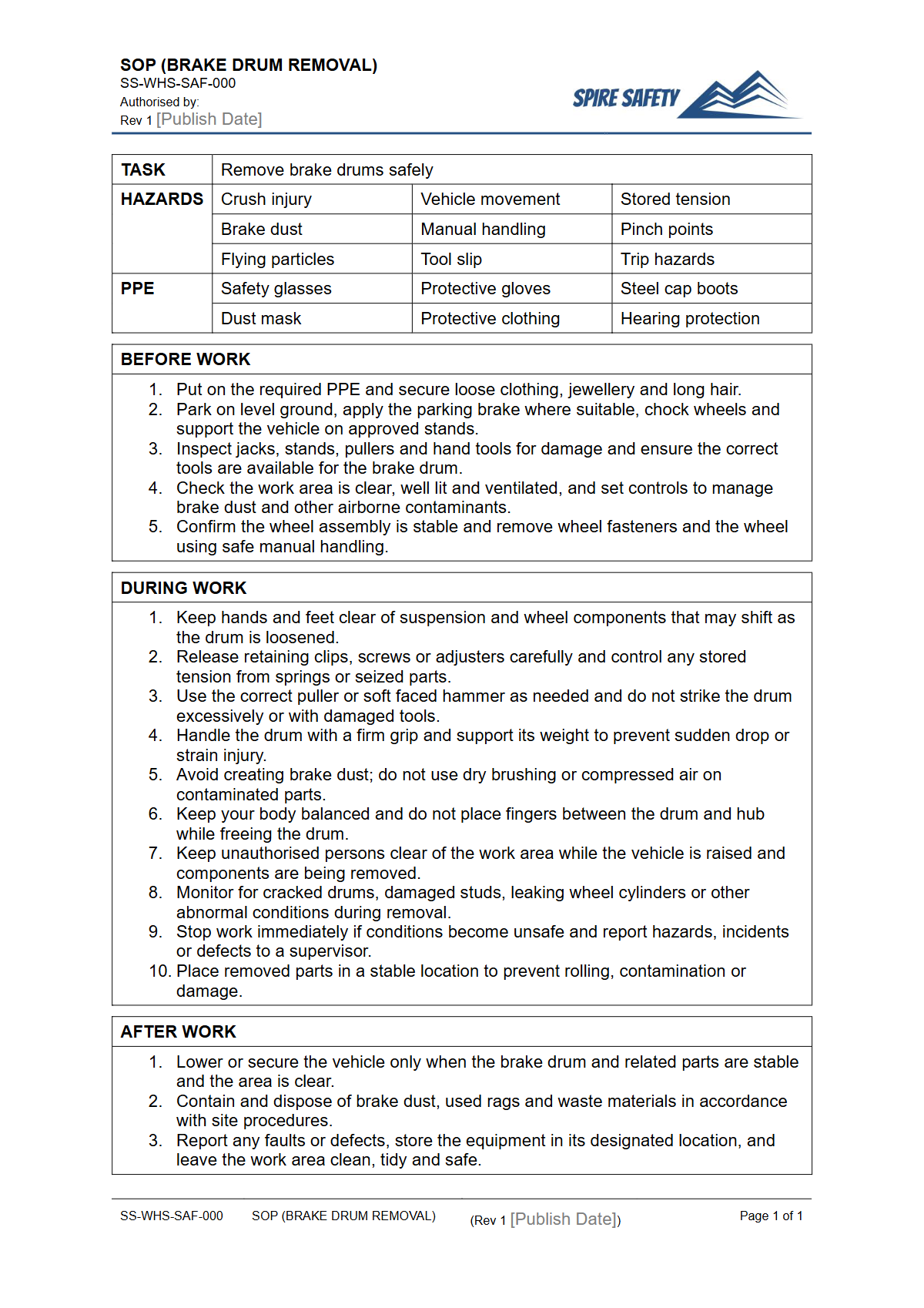
Purpose of the Free Safe Operating Procedure (Brake Drum Removal) Template
This free Safe Operating Procedure (Brake Drum Removal) Template provides a foundation for documenting the safety protocols required for heavy and light vehicle maintenance. Brake drum removal is a high-risk task involving significant manual handling, potential exposure to hazardous dust, and risks associated with lifting and securing vehicles.
A documented Safe Operating Procedure ensures that every mechanic follows a consistent, safe method, minimising the risk of injury and property damage. It formalises the steps for vehicle immobilisation, drum removal, inspection, and reinstallation, acting as a crucial training and compliance tool.
Key Hazards and Controls
Brake drum removal presents several significant hazards that this SOP helps to control. These include:
- Musculoskeletal Injury: Drums, especially on heavy vehicles, are heavy and awkward. The SOP specifies the use of mechanical lifting aids or two-person lifts.
- Crushing/Impact: Unstable vehicles or dropped components can cause severe injuries. The procedure mandates the use of certified vehicle hoists or axle stands. For larger vehicles where access might be an issue, it's also important to follow procedures for safe elevation, as detailed in our free Step Ladder SOP.
- Hazardous Dust: Older brake systems may contain asbestos. The SOP outlines dust control measures like using wet cleaning methods or HEPA-filtered vacuums, never compressed air.
- Slips, Trips, and Falls: Spilled brake fluid or poor housekeeping can create hazards. The procedure reinforces the need for a clean and organised work area.
Video walkthrough
How to Use the Free Safe Operating Procedure (Brake Drum Removal) Template
Download the template in your preferred format (DOCX or PDF). The DOCX version is fully editable, allowing you to tailor it to your workshop's specific needs.
It is structured based on the model WHS framework to provide a solid starting point for your documentation. A well-implemented SOP is a critical component of a robust WHS management system.
Important Note: This document is a template only. We have provided a comprehensive framework, but you must review and customise every section to reflect the specific tools (e.g., vehicle hoists, drum pullers), equipment, and chemicals used in your workplace.
You must also incorporate your site-specific risk assessment findings into the procedure.
When to Use This Safe Operating Procedure
This SOP should be used every time a worker is required to remove, inspect, or reinstall a brake drum on any vehicle. It is particularly critical for:
- Training new or apprentice mechanics on the established safe work method.
- Serving as a pre-start checklist for experienced technicians to ensure no steps are missed.
- Use during toolbox talks to refresh workers on the associated hazards and controls.
- Acting as a reference document during maintenance and repair activities.
- Informing broader vehicle safety management, which for some vehicles may also require a specific Body Truck SOP.
Who Should Use This Document
This procedure is designed for use by competent personnel who have been trained in vehicle maintenance. This includes:
- Qualified heavy or light vehicle mechanics.
- Apprentice mechanics under direct supervision.
- Workshop supervisors and managers responsible for overseeing maintenance tasks and ensuring safety compliance.
- WHS personnel responsible for developing and reviewing safety documentation.
The procedure assumes users are familiar with standard workshop equipment, including the safe use of compressed air. If your workshop uses this equipment, you might also need a dedicated Air Compressor SOP.
Review and Auditing
A Safe Operating Procedure is a living document. It should be reviewed regularly (e.g., annually) and updated whenever there is a change to the task, equipment, or after any incident or near miss.
Regular reviews ensure the procedure remains effective and reflects current best practices. A formal WHS compliance audit can help verify that this SOP, along with other safety procedures, is being correctly implemented and followed by all relevant personnel in your workshop.
Common mistakes
Common mistakes to avoid
- Failing to properly support the vehicle on certified axle stands before starting work.
- Using incorrect tools, such as pry bars instead of a proper drum puller, leading to component damage or injury.
- Neglecting to use dust suppression methods (e.g., wet wiping) when cleaning brake components.
- Not wearing appropriate PPE, especially respiratory and eye protection, when dealing with brake dust.
Legal references
Legal considerations
The following legal requirements may be relevant to this type of work.
- Work Health and Safety Act (Harmonised) — Provides the primary duties for protecting workers and other people from work health and safety risks.
- Work Health and Safety Regulations (Harmonised) — Sets out requirements supporting the management of workplace hazards and risks.
The following codes may be relevant to this type of work.
- Managing WHS Risks Code of Practice — Provides practical guidance on identifying hazards, assessing risks and applying effective controls.
- Work Health and Safety Consultation, Cooperation and Coordination Code of Practice — Provides practical guidance on consulting workers and coordinating with other duty holders.
- Managing the Work Environment and Facilities Code of Practice — Provides practical guidance on safe work environments, workplace facilities and related controls.
Did you know
Hidden Danger
Brake dust from vehicles manufactured before 2004 can contain asbestos, posing a serious respiratory hazard if not managed with proper dust control and PPE.
Heavy Lifting
A single brake drum from a heavy commercial vehicle can weigh over 50 kg, making mechanical lifting aids essential to prevent serious musculoskeletal injuries.
FAQ
Frequently asked questions
01What are the main hazards involved in brake drum removal?
02Is an SOP legally required for brake drum removal in Australia?
03How often should a Safe Operating Procedure be reviewed?
04Can this template be used for disc brake maintenance?
Share this resource
Free Safe Operating Procedure (Brake Drum Removal) Template
Browse Categories
How To Use It
- 1Download and open in Word or PDF.
- 2Replace the placeholders with your business details.
- 3Get it reviewed by a WHS specialist before rollout.
Need it customised?
Our WHS consultants can adapt this template to your site, run a gap analysis, or audit what you already have in place.
Book a Free Consultation WHS consulting servicesor call 1300 156 382
Related templates
- Free Safe Operating Procedure (Brake Fluid Change) Template
- Free Safe Operating Procedure (Brake Lathe) Template
- Free Safe Operating Procedure (Brake Pad Replacement) Template
- Free Safe Operating Procedure (Branch Chipping Prep) Template
- Free Safe Operating Procedure (Brazing Torch) Template
- Free Safe Operating Procedure (Bread Slicer) Template