
Free Safe Operating Procedure (Car Park Oil Cleanup) Template
Download our free Safe Operating Procedure (Car Park Oil Cleanup) Template.
Free Safe Operating Procedure (Car Park Oil Cleanup) Template
DOCX • 126 KB + PDF
Updated Oct 2026
No signup required
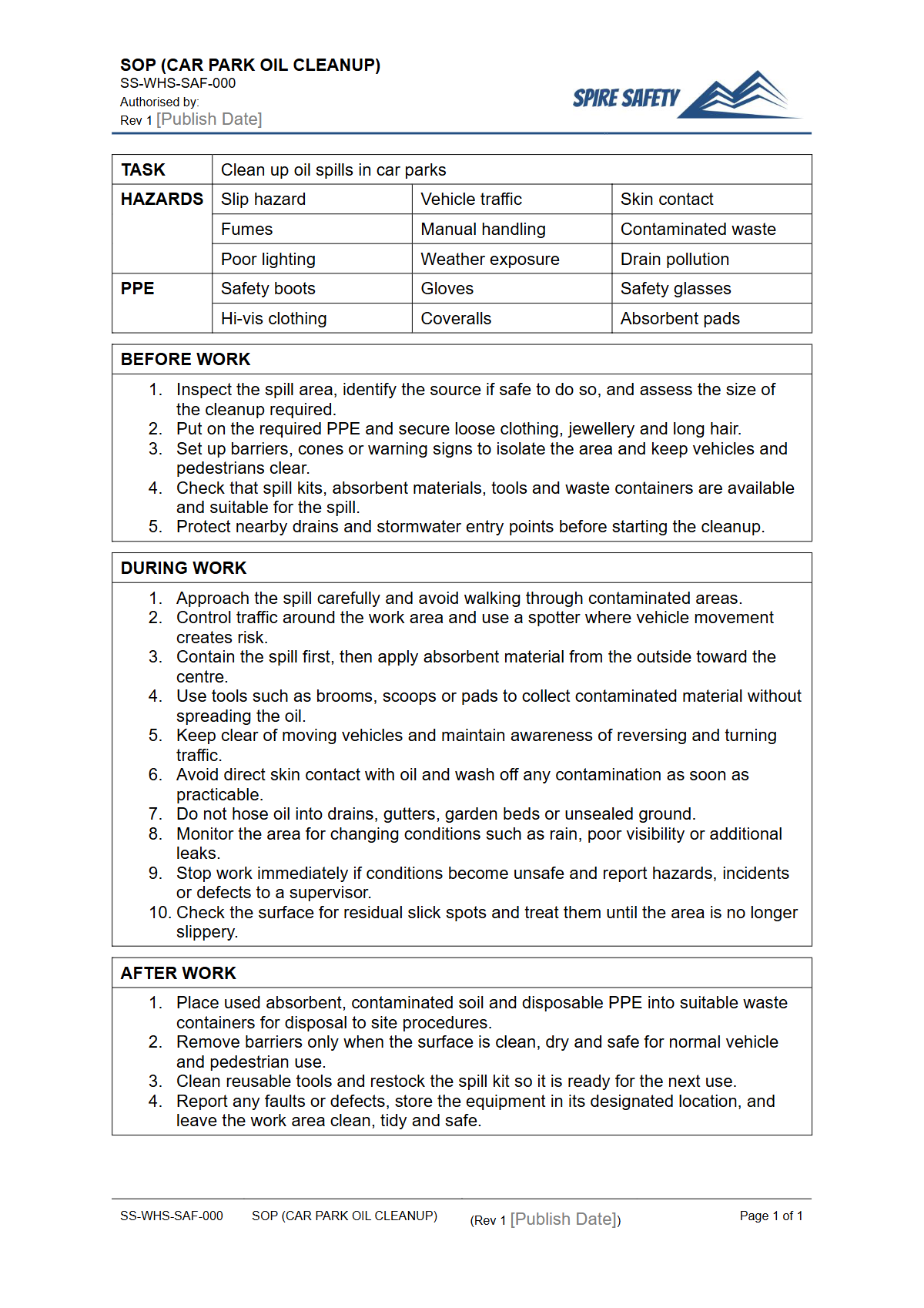
Purpose of the Free Safe Operating Procedure (Car Park Oil Cleanup) Template
Managing oil and fuel spills in a car park is essential for preventing slips, trips, falls, and environmental contamination. Our Free Safe Operating Procedure (Car Park Oil Cleanup) Template provides a structured framework for your business to develop clear, step-by-step instructions for this common but hazardous task.
This downloadable document helps you formalise your cleanup process, ensuring workers respond safely, effectively, and consistently every time a spill occurs.
A documented Safe Operating Procedure (SOP) is a key administrative control measure that supports your overall safety management efforts. It serves as a vital training tool for workers and demonstrates a commitment to proactively managing workplace risks.
Integrating this procedure into your broader safety framework helps build a more robust and resilient organisation. For businesses looking to formalise their safety processes, developing comprehensive WHS management systems is a logical next step.
Video walkthrough
How to use the Free Safe Operating Procedure (Car Park Oil Cleanup) Template
This document is provided in both DOCX and PDF formats for your convenience. The DOCX file is fully editable, allowing you to tailor it directly to your operational needs.
To use the template, download the file and add your company-specific details, including business name, site address, emergency contact information, and the locations of your spill kits and first aid stations. You should also review and adjust the steps to match the specific equipment and absorbent materials your team uses.
Important Customisation Note
This is a template and not a complete, ready-to-use document. It is essential that you customise this Safe Operating Procedure to reflect the specific hazards, equipment, environment, and legislative requirements of your workplace. We are not responsible for the implementation or compliance of the final document you create.
When to use it
This SOP should be initiated whenever a hydrocarbon spill (such as engine oil, diesel fuel, petrol, or hydraulic fluid) is identified in a car park, loading bay, driveway, or other vehicle-accessible area. It is designed for minor to moderate spills that can be safely managed by trained on-site personnel.
For large or uncontained spills that pose an immediate threat to drains, waterways, or public safety, your site's emergency response plan should be activated instead.
Who should use it
This procedure is intended for any worker tasked with responding to spills. This typically includes facilities managers, maintenance staff, cleaning crews, groundskeepers, and security personnel.
It is also an essential resource for WHS managers and supervisors responsible for training staff and overseeing workplace safety. The clear, sequential format makes it an excellent training aid for new employee inductions and for periodic refresher training sessions.
Key Elements of an Effective Oil Cleanup SOP
An effective procedure goes beyond just the cleanup steps. Our template prompts you to consider the entire process, from preparation to disposal, ensuring no critical step is missed. Key sections include:
- Hazards & Risks: Identifies potential dangers such as slips, chemical exposure, fire, and environmental harm.
- Personal Protective Equipment (PPE): Specifies the necessary PPE, such as nitrile gloves, safety glasses, and non-slip footwear.
- Pre-operational Checks: Ensures spill kits are fully stocked, accessible, and ready for use. Proper storage is key, and if kits are kept on high shelving, staff must be trained on safe access, which may require its own procedure like our FREE Step Ladder SOP Template.
- Step-by-Step Cleanup Guide: A logical sequence covering assessment, containment (protecting drains), absorption, and surface cleaning.
- Waste Disposal: Instructions for correctly bagging, sealing, and disposing of used absorbent materials in accordance with local environmental regulations.
Preventing spills is always preferable to cleaning them up. Consider implementing preventative maintenance schedules and pre-start checks for vehicles that frequently use your site.
A specific vehicle SOP, such as our FREE Body Truck SOP Template, can help formalise these checks and reduce the likelihood of leaks.
Verifying and Improving Your Procedure
A Safe Operating Procedure is a living document that should be reviewed and updated regularly. We recommend reviewing your Car Park Oil Cleanup SOP annually, or after any incident involving a spill.
This review process helps verify that the procedure is still effective, practical, and understood by all relevant workers. Regular site walk-throughs and safety checks can identify new hazards or shortcomings in your current process.
Conducting formal evaluations ensures your documented procedures align with actual work practices and remain effective. If you need external expertise to validate your safety processes, engaging a consultant for WHS compliance auditing can provide valuable, independent insights.
After customising this template, explore our entire free WHS resources library for more documents to support your safety management system.
Common mistakes
Common mistakes to avoid
- Failing to block stormwater drains before starting cleanup, leading to environmental contamination.
- Using water to try and wash the oil away, which only spreads the spill further.
- Improper disposal of used absorbent materials, which are often classified as controlled waste.
- Not restricting pedestrian and vehicle access to the spill area during cleanup.
Legal references
Legal considerations
The following legal requirements may be relevant to this type of work.
- Work Health and Safety Act (Harmonised) — Provides the primary duties for protecting workers and other people from work health and safety risks.
- Work Health and Safety Regulations (Harmonised) — Sets out requirements supporting the management of workplace hazards and risks.
The following codes may be relevant to this type of work.
- Managing WHS Risks Code of Practice — Provides practical guidance on identifying hazards, assessing risks and applying effective controls.
- Work Health and Safety Consultation, Cooperation and Coordination Code of Practice — Provides practical guidance on consulting workers and coordinating with other duty holders.
- Managing the Work Environment and Facilities Code of Practice — Provides practical guidance on safe work environments, workplace facilities and related controls.
Did you know
Slip Risk
According to Safe Work Australia, slips, trips, and falls are a leading cause of workplace injury. Oil and fluid spills on smooth surfaces like concrete or asphalt significantly increase this risk.
Environmental Impact
Just one litre of oil can contaminate up to one million litres of water. Preventing spills from entering stormwater drains is a critical part of any cleanup procedure.
FAQ
Frequently asked questions
01What should be in an oil spill kit for a car park?
02How often should staff be trained on oil spill cleanup procedures?
03Is a Safe Operating Procedure legally required for oil cleanup?
04What is the difference between an SOP and a SWMS for oil cleanup?
Share this resource
Free Safe Operating Procedure (Car Park Oil Cleanup) Template
Browse Categories
How To Use It
- 1Download and open in Word or PDF.
- 2Replace the placeholders with your business details.
- 3Get it reviewed by a WHS specialist before rollout.
Need it customised?
Our WHS consultants can adapt this template to your site, run a gap analysis, or audit what you already have in place.
Book a Free Consultation WHS consulting servicesor call 1300 156 382
Related templates
- Free Safe Operating Procedure (Car Park Sweeping) Template
- Free Safe Operating Procedure (Car Wash Bay Cleanup) Template
- Free Safe Operating Procedure (Car Wash Detailing) Template
- Free Safe Operating Procedure (Car Wash Vacuuming) Template
- Free Safe Operating Procedure (Carcass Handling) Template
- Free Safe Operating Procedure (Cardboard Compactor) Template