
Free Safe Operating Procedure (Ceiling Track Check) Template
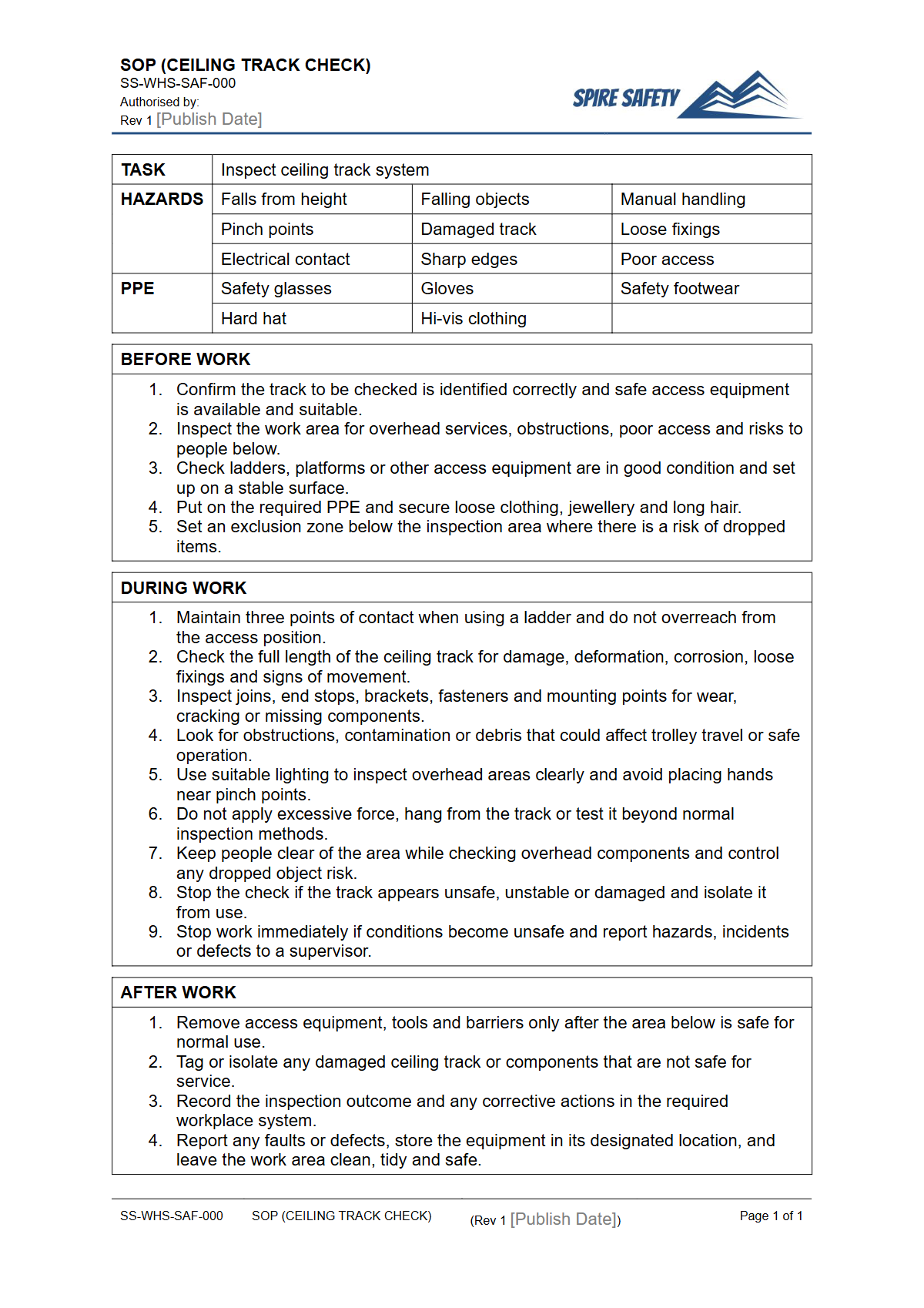
Download our Free Safe Operating Procedure (Ceiling Track Check) Template. This customisable DOCX and PDF helps organisations document safe work methods.
Free Safe Operating Procedure (Ceiling Track Check) Template
DOCX • 126 KB + PDF
Updated Oct 2026
No signup required
Purpose of the Free Safe Operating Procedure (Ceiling Track Check) Template
Patient lifting systems, such as ceiling track hoists, are critical equipment in healthcare, aged care, and disability support settings. Ensuring they are safe and functional is paramount to preventing serious injury to both patients and workers.
This Free Safe Operating Procedure (Ceiling Track Check) Template provides a structured starting point for organisations to document the routine inspection process for this vital equipment. Using a standardised SOP helps promote consistent, safe work practices and demonstrates a commitment to managing risks associated with patient handling.
A well-drafted SOP is a key component of a compliant safety framework, detailing step-by-step instructions for pre-use and periodic checks. It helps workers identify potential faults, damage, or wear and tear before an incident occurs. This template is designed to be adapted to your specific equipment and workplace, forming a vital part of your overall WHS management systems.
Video walkthrough
How to use the Free Safe Operating Procedure (Ceiling Track Check) Template
This template is provided in both DOCX and PDF formats for your convenience. The DOCX file is fully editable, allowing you to tailor the content to the specific models of ceiling tracks and hoists used in your facility.
We recommend consulting the manufacturer's instructions for your equipment and incorporating their specific maintenance and inspection requirements into the document.
To use the template effectively:
- Download the DOCX file.
- Add your company's name, logo, and other relevant details.
- Review each section and modify the steps to reflect your workplace's specific procedures, equipment, and environment.
- Involve experienced operators and maintenance personnel in the review process to ensure the SOP is practical and accurate.
- Obtain final approval from a competent person before issuing the SOP.
Important: This is a template, not a finished document. We are not familiar with your specific operations, equipment, or workplace hazards.
It is your responsibility to customise this document to ensure it is suitable for your business. For other health-related procedures, you might also find our Safe Operating Procedure for defibrillator operation useful.
When to use it
A Safe Operating Procedure for ceiling track checks should be used consistently as part of your routine safety protocols. It is most commonly applied in several key situations:
- Pre-use Checks: A simplified version of the SOP should be referenced by carers or operators before every use to ensure the equipment is safe at that moment.
- Periodic Inspections: The full SOP guides more detailed weekly or monthly inspections, which should be documented for record-keeping purposes.
- Post-Maintenance: After any repair or maintenance work, the SOP should be used to verify the system is safe and ready for return to service.
- Training and Competency: The SOP is an essential training tool for new staff, ensuring they understand the correct inspection process before they are authorised to use the equipment.
Regularly reviewing and documenting these checks is a critical activity that will be examined during any WHS compliance auditing process, whether internal or external.
Who should use it
This Safe Operating Procedure is intended for several key roles within a facility that uses ceiling track hoist systems. Each role may interact with the SOP differently:
- Nurses and Carers: Primary users who conduct daily pre-use visual checks to ensure immediate safety before transferring a patient.
- Maintenance Staff: Personnel responsible for conducting scheduled periodic inspections, servicing, and repairs as outlined in the detailed SOP and manufacturer's guidelines.
- WHS Managers/Coordinators: Individuals responsible for implementing the SOP, ensuring staff are trained, and that records of inspections and maintenance are properly kept.
- Trainers: Those who use the SOP as a basis for training and assessing the competency of staff on the safe use and inspection of ceiling hoists.
Ensuring all relevant personnel understand their responsibilities as outlined in the SOP is crucial for maintaining a safe environment. If your team needs guidance on establishing safe systems of work for various tasks, our expert WHS consulting services can provide tailored support.
You can also browse our complete free WHS resources library for more templates and guides.
Common mistakes
Common mistakes to avoid
- Neglecting to inspect the lifting sling for frays, tears, or expired service life.
- Ignoring unusual noises or jerky movements from the hoist motor during operation.
- Failing to check that the track is clear of obstructions before starting a transfer.
- Not documenting periodic checks, creating gaps in maintenance and compliance records.
Legal references
Legal considerations
The following legal requirements may be relevant to this type of work.
- Work Health and Safety Act (Harmonised) — Provides the primary duties for protecting workers and other people from work health and safety risks.
- Work Health and Safety Regulations (Harmonised) — Sets out requirements supporting the management of workplace hazards and risks.
The following codes may be relevant to this type of work.
- Managing WHS Risks Code of Practice — Provides practical guidance on identifying hazards, assessing risks and applying effective controls.
- Work Health and Safety Consultation, Cooperation and Coordination Code of Practice — Provides practical guidance on consulting workers and coordinating with other duty holders.
- Managing the Work Environment and Facilities Code of Practice — Provides practical guidance on safe work environments, workplace facilities and related controls.
Did you know
Manual Handling Injuries
In Australia, the healthcare and social assistance industry has one of the highest rates of serious workers' compensation claims, with hazardous manual tasks being a leading cause of injury. Properly maintained lifting equipment like ceiling hoists can significantly reduce these risks.
Lifting Equipment Standards
The Australian Standard AS/NZS ISO 10535:2011 outlines specific requirements and test methods for hoists used for transferring people. Familiarity with this standard is considered best practice when managing patient lifting equipment.
FAQ
Frequently asked questions
01What is a ceiling track hoist system?
02How often should ceiling tracks and hoists be inspected?
03Is this SOP template suitable for all types of patient hoists?
04Who is responsible for ensuring ceiling hoists are safe to use?
Share this resource
Free Safe Operating Procedure (Ceiling Track Check) Template
Browse Categories
How To Use It
- 1Download and open in Word or PDF.
- 2Replace the placeholders with your business details.
- 3Get it reviewed by a WHS specialist before rollout.
Need it customised?
Our WHS consultants can adapt this template to your site, run a gap analysis, or audit what you already have in place.
Book a Free Consultation WHS consulting servicesor call 1300 156 382
Related templates
- Free Safe Operating Procedure (Cellar Cleaning) Template
- Free Safe Operating Procedure (Cellar Stock Handling) Template
- Free Safe Operating Procedure (Cemetery Grounds Care) Template
- Free Safe Operating Procedure (Centrifugal Pump) Template
- Free Safe Operating Procedure (Centrifuge) Template
- Free Safe Operating Procedure (Chafing Dish) Template