
Free Safe Operating Procedure (Chafing Dish) Template
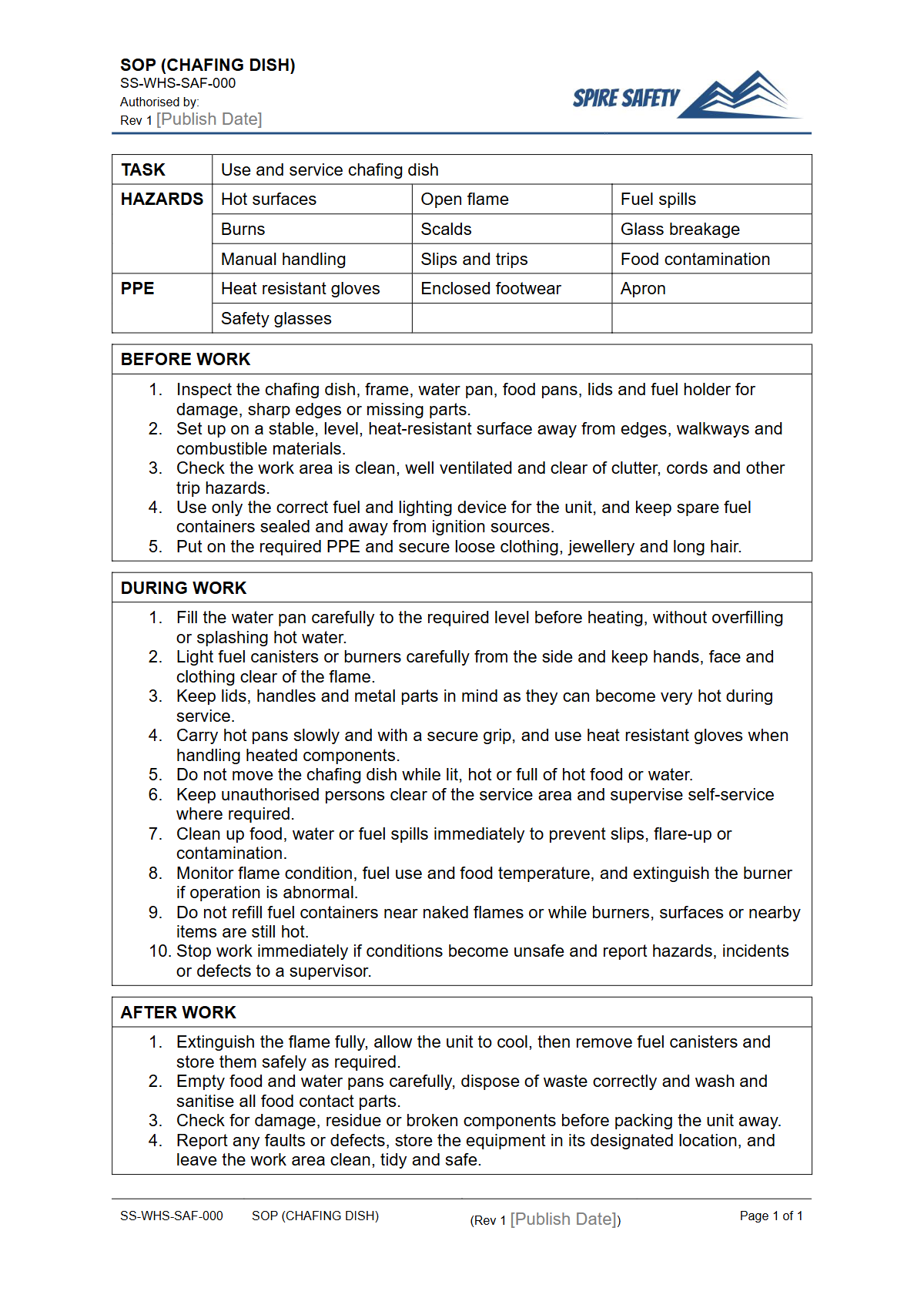
Download our free Safe Operating Procedure (Chafing Dish) Template. This customisable DOCX & PDF provides a clear framework for safely using chafing dishes.
Free Safe Operating Procedure (Chafing Dish) Template
DOCX • 126 KB + PDF
Updated Oct 2026
No signup required
Purpose of the Free Safe Operating Procedure (Chafing Dish) Template
Operating catering equipment like chafing dishes presents specific workplace hazards, primarily related to heat, fire, and manual handling. Our Free Safe Operating Procedure (Chafing Dish) Template provides a structured starting point for your business to document the required steps for safe setup, operation, and pack-down.
Using a formal SOP helps standardise processes across all staff, reduces the risk of burn injuries and fires, and forms a critical part of your overall safety management system.
This document is designed to help you outline key safety requirements, from selecting the right fuel and ensuring proper ventilation to maintaining correct food temperatures. By implementing a clear procedure, you create a safer environment for employees and guests, while also providing a valuable tool for staff training and induction.
It serves as evidence of your organisation's commitment to managing foreseeable risks in the workplace.
Video walkthrough
How to use the Free Safe Operating Procedure (Chafing Dish) Template
This template is available for download as a fully editable DOCX file, with a PDF version also provided for easy distribution. The document is structured based on the model WHS framework and common industry practices.
To use it effectively, you must add specific details relevant to your own operations. This includes listing the exact models of chafing dishes you use, the specific PPE required (e.g., brand or type of heat-resistant gloves), and your site-specific emergency contacts and procedures.
Please note: this template is a general guide. It is essential that you customise it to reflect the specific equipment, environment, and procedures in your workplace.
We recommend a competent person reviews and approves the final document before it is issued to staff. A generic procedure that doesn't match your reality offers little practical safety value.
When to use this Safe Operating Procedure
A Safe Operating Procedure for chafing dishes should be a core document within your hospitality or catering operations. It should be used as a primary training resource during the induction of new kitchen staff, event coordinators, and any employee responsible for setting up or supervising buffet service.
The SOP should also be referenced for regular refresher training to prevent complacency. Furthermore, it is a crucial document to review following any incident or near-miss involving a chafing dish, as it may highlight gaps in your existing process.
Integrating this procedure into your broader WHS management system ensures it is kept current and used consistently.
Who should use this Safe Operating Procedure
This SOP is intended for all personnel who interact with chafing dishes. This includes:
- Kitchen hands and chefs
- Catering and event staff
- Function and restaurant managers
- Supervisors responsible for overseeing food service
- Work Health and Safety (WHS) officers
Supervisors hold a key responsibility in ensuring that the procedures outlined in the SOP are understood and followed by all team members. They must provide adequate instruction and monitor compliance to maintain a safe system of work. For guidance on developing comprehensive safety training, consider engaging professional WHS consulting services.
Key Hazards and Control Measures
Chafing dishes, while simple, can introduce several significant hazards if not managed correctly. This SOP template guides you in documenting controls for each.
Burns from Heat and Steam
The most common injuries are burns from hot surfaces, spilled hot water, or escaping steam. Controls include using insulated handles, wearing appropriate thermal gloves when handling pans, and opening lids away from the body to safely release steam.
Fire and Explosion
Using flammable gel or liquid fuel introduces a serious fire risk. Key controls involve ensuring adequate ventilation, keeping flammable materials away from the units, using only the manufacturer-approved fuel type, and never refilling fuel canisters while they are hot or alight. Having appropriate fire extinguishers readily accessible is also critical, as is training on general emergency response, which can be supported by documents like a Safe Operating Procedure for Defibrillator Operation.
Slips, Trips and Falls
Spilled water from the pan creates a slip hazard. For electric models, cords can create a trip hazard.
Control measures include placing units on stable, level surfaces away from high-traffic edges, implementing a 'clean-as-you-go' policy for spills, and properly securing any electrical cords. If setting up stations requires working at height, a separate step ladder SOP should be followed.
Review and Improvement
Safe Operating Procedures are not 'set and forget' documents. They should be reviewed regularly—typically annually, or whenever there is a change in equipment, processes, or relevant legislation.
Regular reviews are a cornerstone of continuous improvement and can be verified through internal checks or formal WHS compliance audits. This ensures your safety documentation remains effective and relevant. For more templates and safety guides, you can browse our complete free WHS resources library.
Common mistakes
Common mistakes to avoid
- Using the wrong type or amount of fuel, creating a fire hazard.
- Refilling fuel canisters while they are still hot or burning.
- Letting the water pan boil dry, which can damage the equipment and scorch food.
- Placing chafing dishes on unstable surfaces or too close to the edge of a table.
Legal references
Legal considerations
The following legal requirements may be relevant to this type of work.
- Work Health and Safety Act (Harmonised) — Provides the primary duties for protecting workers and other people from work health and safety risks.
- Work Health and Safety Regulations (Harmonised) — Sets out requirements supporting the management of workplace hazards and risks.
The following codes may be relevant to this type of work.
- Managing WHS Risks Code of Practice — Provides practical guidance on identifying hazards, assessing risks and applying effective controls.
- Work Health and Safety Consultation, Cooperation and Coordination Code of Practice — Provides practical guidance on consulting workers and coordinating with other duty holders.
- Managing the Work Environment and Facilities Code of Practice — Provides practical guidance on safe work environments, workplace facilities and related controls.
Did you know
A Fiery History
The term 'chafing dish' comes from the Old French word 'chaufer', meaning 'to make warm'. These devices have been used for centuries to keep food warm away from the main kitchen fire.
Burn Risk
According to Safe Work Australia, hot objects and substances are a leading cause of burn injuries in the accommodation and food services industry, highlighting the importance of proper procedures for equipment like chafing dishes.
FAQ
Frequently asked questions
01What are the main hazards of using a chafing dish?
02How often should a chafing dish SOP be reviewed?
03Is a Safe Operating Procedure legally required for a chafing dish in Australia?
04What is the correct way to extinguish a chafing dish fuel fire?
Share this resource
Free Safe Operating Procedure (Chafing Dish) Template
Browse Categories
How To Use It
- 1Download and open in Word or PDF.
- 2Replace the placeholders with your business details.
- 3Get it reviewed by a WHS specialist before rollout.
Need it customised?
Our WHS consultants can adapt this template to your site, run a gap analysis, or audit what you already have in place.
Book a Free Consultation WHS consulting servicesor call 1300 156 382
Related templates
- Free Safe Operating Procedure (Chain Block) Template
- Free Safe Operating Procedure (Chain of Custody Check) Template
- Free Safe Operating Procedure (Chain Sling Use) Template
- Free Safe Operating Procedure (Chainsaw - Standard Operation) Template
- Free Safe Operating Procedure (Change Room Inspection) Template
- Free Safe Operating Procedure (Chargrill Operation) Template