
Free Safe Operating Procedure (Cellar Stock Handling) Template
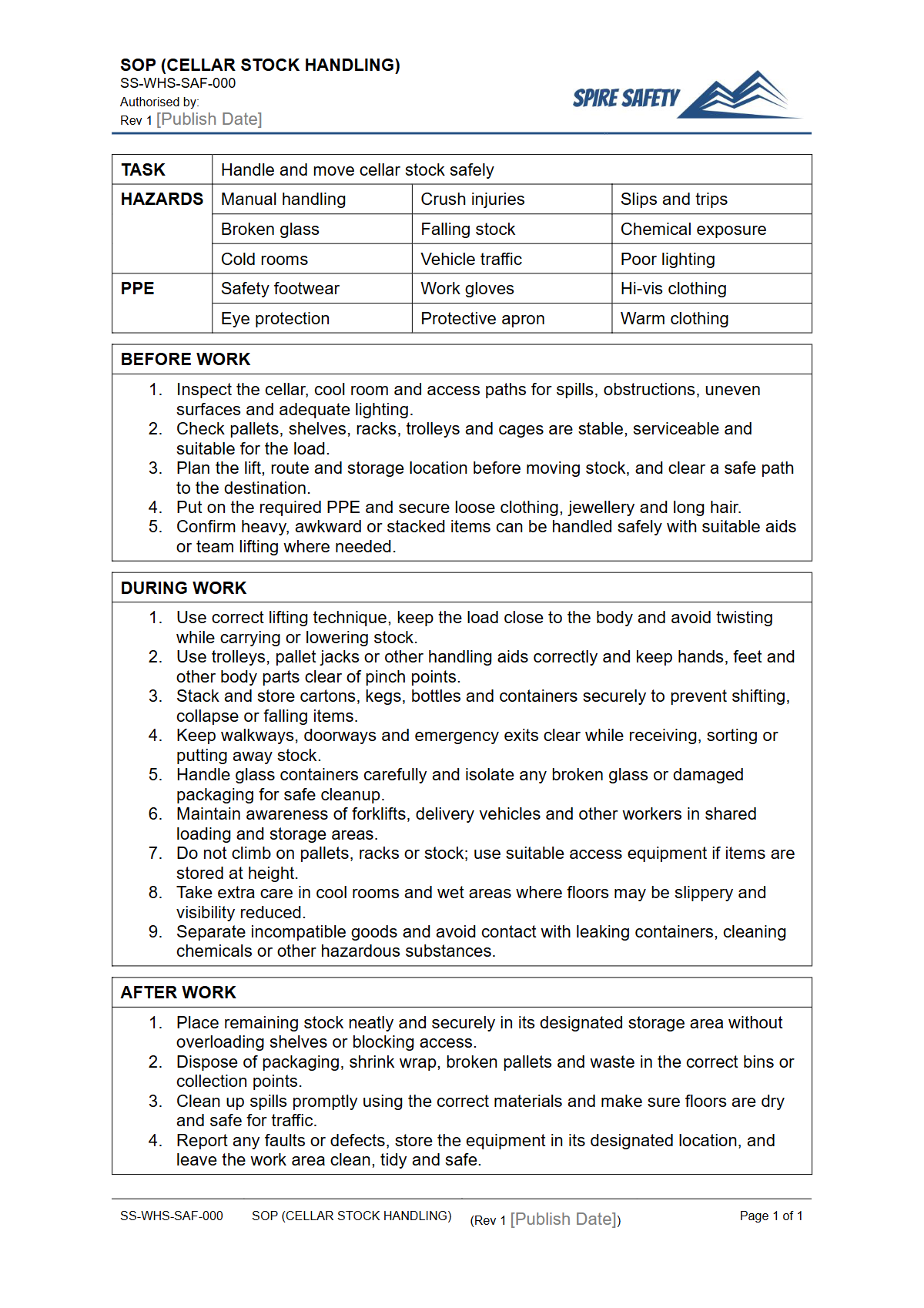
Download our free Safe Operating Procedure (Cellar Stock Handling) template. This DOCX and PDF resource helps you document safe work methods for your venue.
Free Safe Operating Procedure (Cellar Stock Handling) Template
DOCX • 126 KB + PDF
Updated Oct 2026
No signup required
Purpose of the Free Safe Operating Procedure (Cellar Stock Handling) Template
This free Safe Operating Procedure (Cellar Stock Handling) Template provides a structured framework for documenting the safe methods required for moving stock in a hospitality cellar or cool room. Handling kegs, cartons of wine and spirits, and CO2 cylinders involves significant risks, primarily from hazardous manual tasks.
This SOP helps your business formally identify these hazards and establish clear, step-by-step controls to minimise the risk of musculoskeletal injuries, slips, trips, and falls.
By implementing a formal SOP, you create a consistent and repeatable process for all staff members, which is a critical component for training, supervision, and demonstrating due diligence. A documented procedure acts as a key element within broader WHS management systems, helping to ensure that safety requirements are clearly communicated and understood by everyone involved in the task.
Video walkthrough
How to use the Free Safe Operating Procedure (Cellar Stock Handling) Template
Using this free Safe Operating Procedure (Cellar Stock Handling) Template is a straightforward process designed to be adapted to your specific venue. Once downloaded in your preferred DOCX or PDF format, you should review the contents and systematically edit each section to reflect the unique layout, equipment, and stock types found in your workplace.
This includes specifying the types of mechanical aids available (like trolleys or keg movers), the personal protective equipment (PPE) required (such as steel-capped boots and gloves), and your site-specific emergency procedures.
IMPORTANT: This document is a template and must be customised to your specific workplace. We provide this as a starting point, but we cannot know or account for the unique hazards present in your work environment.
You must conduct your own risk assessment in consultation with your workers and adapt this Safe Operating Procedure to ensure it is relevant and effective for your operations. If you need more templates for other tasks, you can browse our complete free WHS resources library.
When to use a Cellar Stock Handling SOP
A Safe Operating Procedure for cellar stock handling should be used as the primary reference document for all tasks involving the movement of goods in and out of your cellar or storage areas. It should be consulted before, during, and after these activities to ensure they are performed safely.
Key situations include receiving deliveries from suppliers, stacking and organising stock on shelves, rotating kegs, transporting goods to the bar area, and managing empty containers and gas cylinders.
The SOP is also an essential tool for worker induction and training, providing a clear basis for demonstrating the correct and safe way to perform the job. For tasks that involve working at height, such as retrieving stock from high shelves, it is critical to integrate specific procedures for safe access.
This may involve referencing other documents, like our free Step Ladder SOP template, to ensure all associated risks are controlled. The effectiveness of this SOP should also be reviewed periodically as part of your safety management activities.
Who should use this SOP
This Safe Operating Procedure is intended for use by all individuals involved in managing and performing cellar duties. This includes Venue Managers, Duty Managers, and WHS Representatives who are responsible for implementing and enforcing safety procedures.
They use the SOP to ensure they are meeting their obligations as a Person Conducting a Business or Undertaking (PCBU) and to provide a consistent standard for training and supervision. The effectiveness of its implementation can be verified during a WHS compliance audit.
Bar staff, cellar workers, and any other employees tasked with handling stock are the primary end-users of the procedure. They must be trained on its contents and are expected to follow the documented steps to protect their own health and safety and that of their colleagues.
The SOP should also detail emergency response actions, such as what to do in case of an injury, a chemical spill, or a gas leak, which may include referencing the location of first aid kits or instructions for using emergency equipment. For example, your overall emergency plan may require a defibrillator operation Safe Operating Procedure for trained first aiders.
Common mistakes
Common mistakes to avoid
- Failing to customise the template for the specific venue layout and equipment.
- Neglecting to train workers on the final, approved procedure.
- Not providing or ensuring the use of specified mechanical aids, such as keg trolleys.
- Using the SOP as a 'set and forget' document instead of reviewing it after incidents or changes.
Legal references
Legal considerations
The following legal requirements may be relevant to this type of work.
- Work Health and Safety Act (Harmonised) — Provides the primary duties for protecting workers and other people from work health and safety risks.
- Work Health and Safety Regulations (Harmonised) — Sets out requirements supporting the management of workplace hazards and risks.
The following codes may be relevant to this type of work.
- Managing WHS Risks Code of Practice — Provides practical guidance on identifying hazards, assessing risks and applying effective controls.
- Work Health and Safety Consultation, Cooperation and Coordination Code of Practice — Provides practical guidance on consulting workers and coordinating with other duty holders.
- Managing the Work Environment and Facilities Code of Practice — Provides practical guidance on safe work environments, workplace facilities and related controls.
Did you know
Manual Handling Risk
According to Safe Work Australia, injuries resulting from hazardous manual tasks are the most common type of work-related injury in the country, highlighting the importance of proper procedures for tasks like cellar stock handling.
FAQ
Frequently asked questions
01What are the main hazards in cellar stock handling?
02Is a Safe Operating Procedure a legal requirement in Australia for cellar work?
03How often should cellar stock handling procedures be reviewed?
04What training is required for handling cellar stock?
Share this resource
Free Safe Operating Procedure (Cellar Stock Handling) Template
Browse Categories
How To Use It
- 1Download and open in Word or PDF.
- 2Replace the placeholders with your business details.
- 3Get it reviewed by a WHS specialist before rollout.
Need it customised?
Our WHS consultants can adapt this template to your site, run a gap analysis, or audit what you already have in place.
Book a Free Consultation WHS consulting servicesor call 1300 156 382
Related templates
- Free Safe Operating Procedure (Cemetery Grounds Care) Template
- Free Safe Operating Procedure (Centrifugal Pump) Template
- Free Safe Operating Procedure (Centrifuge) Template
- Free Safe Operating Procedure (Chafing Dish) Template
- Free Safe Operating Procedure (Chain Block) Template
- Free Safe Operating Procedure (Chain of Custody Check) Template