
Free Safe Operating Procedure (Chemical Shed Cleaning) Template
Develop a safe system of work for cleaning chemical storage areas. Download our Free Safe Operating Procedure (Chemical Shed Cleaning) Template to get started.
Free Safe Operating Procedure (Chemical Shed Cleaning) Template
DOCX • 126 KB + PDF
Updated Oct 2026
No signup required
Purpose of the Free Safe Operating Procedure (Chemical Shed Cleaning) Template
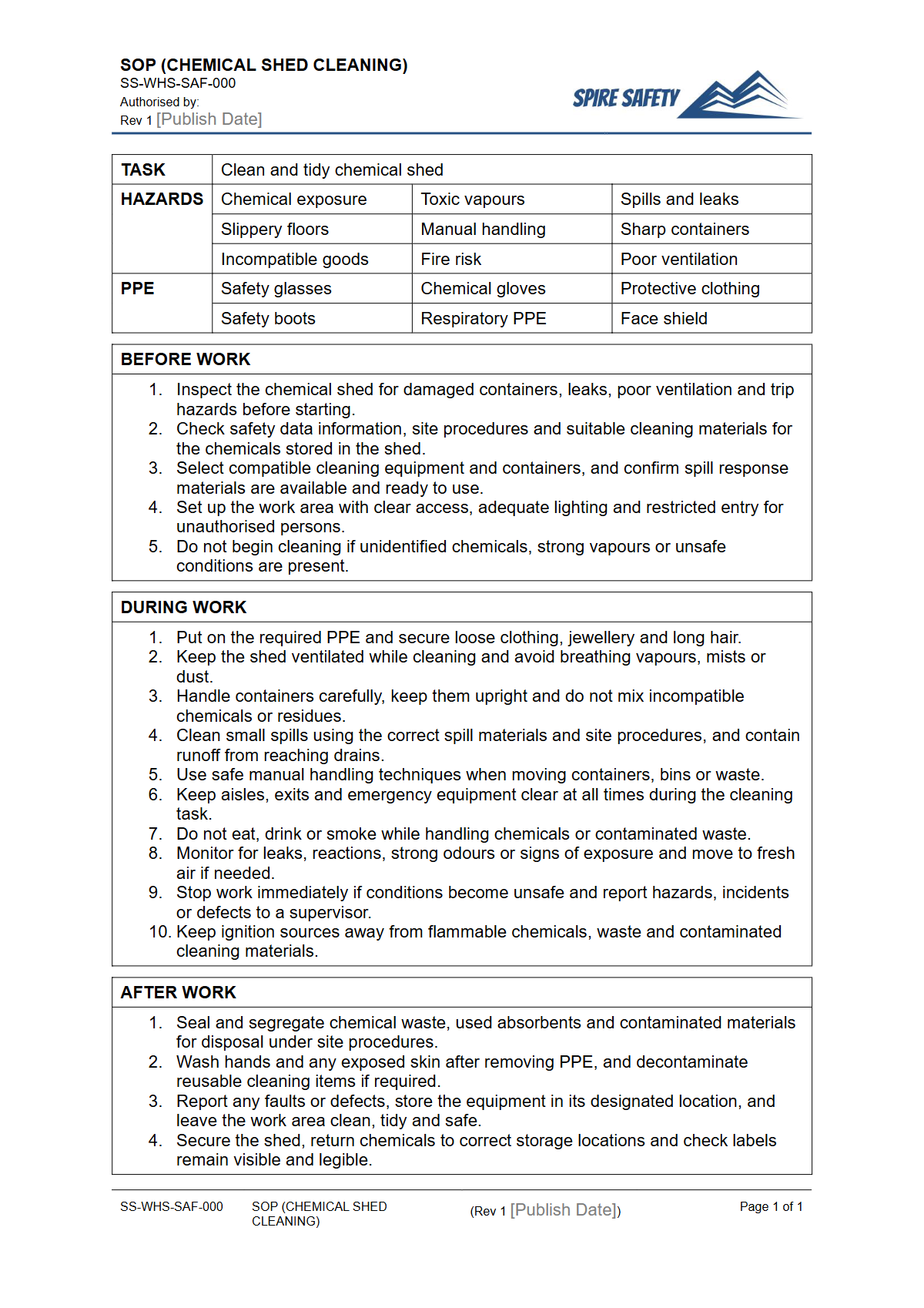
Cleaning a chemical storage shed is a high-risk activity that demands a formal, documented process to protect workers and the environment. This Free Safe Operating Procedure (Chemical Shed Cleaning) Template provides a structured framework for businesses to establish and implement safe work methods for this essential task.
It guides users in identifying hazards, outlining necessary personal protective equipment (PPE), detailing step-by-step cleaning processes, and defining emergency responses. Using a standardised SOP helps minimise the risk of chemical exposure, accidental spills, dangerous reactions from mixing incompatible substances, and potential long-term health effects for employees.
This document is designed as a foundational component of a comprehensive safety system. It assists organisations in meeting their duty of care under Australian WHS laws by formalising procedures and ensuring they are communicated effectively to all relevant personnel.
A well-developed SOP is a critical tool for training, risk management, and demonstrating due diligence.
Video walkthrough
How to use the Free Safe Operating Procedure (Chemical Shed Cleaning) Template
This resource is available for download as a fully editable DOCX file, with a PDF version also provided for easy printing and distribution. To make this Safe Operating Procedure effective, it must be adapted to the specific conditions of your site.
This process should involve consultation with workers who perform the task.
Please note: This is a template document. To be effective, we recommend it is customised by a competent person to reflect the specific hazards, equipment, chemicals, and control measures unique to your workplace.
The goal is to create a practical document that forms part of your broader WHS management systems, not just a piece of paper.
Key sections to customise include:
- Required PPE: Specify the exact type of gloves, eyewear, respiratory protection, and protective clothing based on the chemicals stored.
- Pre-operational Checks: Detail checks for ventilation systems, availability of spill kits, and communication equipment.
- Step-by-Step Procedure: Write clear, unambiguous steps for the cleaning process, from preparation to completion. Include instructions on handling specific chemical containers and waste.
- Emergency Procedures: Outline the exact steps to take in case of a spill, fire, or personal exposure, including contact numbers and the location of safety showers and eyewash stations.
When to Use This Safe Operating Procedure
A formal SOP for chemical shed cleaning should be followed every time the task is performed. This includes:
- Routine Cleaning: As part of a regular maintenance schedule to prevent accumulation of dust, debris, and small leaks. The frequency should be determined by a risk assessment.
- Post-Spill Clean-up: After a chemical spill has been contained and neutralised, this procedure guides the final cleaning and decontamination of the area.
- Before Audits or Inspections: Ensuring the shed is clean and organised is often a key part of internal safety checks or external WHS compliance auditing.
- Prior to Restocking: Cleaning shelves and floors before a new shipment of chemicals arrives ensures containers are placed on stable, uncontaminated surfaces.
Who Should Use It
This SOP is intended for several key groups within an organisation:
- Workers and Contractors: Any individual tasked with cleaning the chemical shed must be trained in and follow the finalised SOP. Their competency to perform the task safely should be verified.
- Supervisors and Team Leaders: Managers responsible for overseeing cleaning operations use the SOP to induct workers, monitor adherence, and conduct pre-start briefings.
- WHS Managers and Advisors: Safety professionals use the template to develop and review site-specific procedures. For complex sites, engaging external WHS consulting can provide valuable expertise in customisation.
- Business Owners (PCBUs): Persons Conducting a Business or Undertaking can use this as evidence of providing a safe system of work.
Key Safety Considerations for Chemical Shed Cleaning
Safety Data Sheets (SDS)
Before any cleaning begins, the Safety Data Sheets for all chemicals stored in the area must be reviewed. The SDS provides critical information on hazards, required PPE, first aid measures, and safe handling.
Pay close attention to sections detailing incompatibilities to avoid dangerous reactions.
Ventilation and Atmosphere
Adequate ventilation is non-negotiable. Many cleaning agents and residual chemical vapours can create a hazardous atmosphere.
The SOP should specify whether natural ventilation is sufficient or if mechanical extraction systems are required. In some cases, atmospheric monitoring may be necessary before entry.
Waste Management
Waste generated from cleaning a chemical shed is often considered hazardous. This includes used rags, contaminated absorbents from spills, and empty chemical containers.
The procedure must outline the correct methods for segregating, containing, labelling, and disposing of this waste in accordance with local environmental regulations. Procedures for handling chemical waste share principles with other hazardous tasks, such as those found in our Safe Operating Procedure for pool chemical dosing system operation.
By thoroughly documenting these critical safety elements, your customised SOP becomes a powerful tool for preventing incidents. You can explore more templates and checklists in our complete free WHS resources library to support your safety management efforts.
Common mistakes
Common mistakes to avoid
- Using incompatible cleaning products that react dangerously with stored chemicals.
- Failing to ensure adequate ventilation, leading to the build-up of toxic fumes.
- Incorrectly disposing of contaminated cleaning materials and rinse water.
- Not reading the Safety Data Sheet (SDS) for each chemical before starting work.
Legal references
Legal considerations
The following legal requirements may be relevant to this type of work.
- Work Health and Safety Act (Harmonised) — Provides the primary duties for protecting workers and other people from work health and safety risks.
- Work Health and Safety Regulations (Harmonised) — Sets out requirements supporting the management of workplace hazards and risks.
The following codes may be relevant to this type of work.
- Managing WHS Risks Code of Practice — Provides practical guidance on identifying hazards, assessing risks and applying effective controls.
- Work Health and Safety Consultation, Cooperation and Coordination Code of Practice — Provides practical guidance on consulting workers and coordinating with other duty holders.
- Managing the Work Environment and Facilities Code of Practice — Provides practical guidance on safe work environments, workplace facilities and related controls.
Did you know
Incompatible Chemicals
Storing or mixing incompatible chemicals is a leading cause of incidents in chemical sheds. For example, mixing chlorine-based products (like bleach) with ammonia-based cleaners can release toxic chloramine gas.
FAQ
Frequently asked questions
01What PPE is generally required for cleaning a chemical shed?
02What is the difference between an SOP and a SWMS for chemical handling?
03Do I need a specific spill kit for a chemical shed?
04How often should a chemical shed be inspected and cleaned?
Share this resource
Free Safe Operating Procedure (Chemical Shed Cleaning) Template
Browse Categories
How To Use It
- 1Download and open in Word or PDF.
- 2Replace the placeholders with your business details.
- 3Get it reviewed by a WHS specialist before rollout.
Need it customised?
Our WHS consultants can adapt this template to your site, run a gap analysis, or audit what you already have in place.
Book a Free Consultation WHS consulting servicesor call 1300 156 382
Related templates
- Free Safe Operating Procedure (Chemical Spill Cleanup) Template
- Free Safe Operating Procedure (Chemical Transfer) Template
- Free Safe Operating Procedure (Chicken Coop Cleaning) Template
- Free Safe Operating Procedure (Child Play Area Cleaning) Template
- Free Safe Operating Procedure (Chiller Plant Operation) Template
- Free Safe Operating Procedure (Chip Spreader) Template