
Free Safe Operating Procedure (Chemical Spill Cleanup) Template
Download our free Chemical Spill Cleanup SOP template. This customisable DOCX & PDF helps you define safe, step-by-step procedures for managing spills.
Free Safe Operating Procedure (Chemical Spill Cleanup) Template
DOCX • 126 KB + PDF
Updated Oct 2026
No signup required
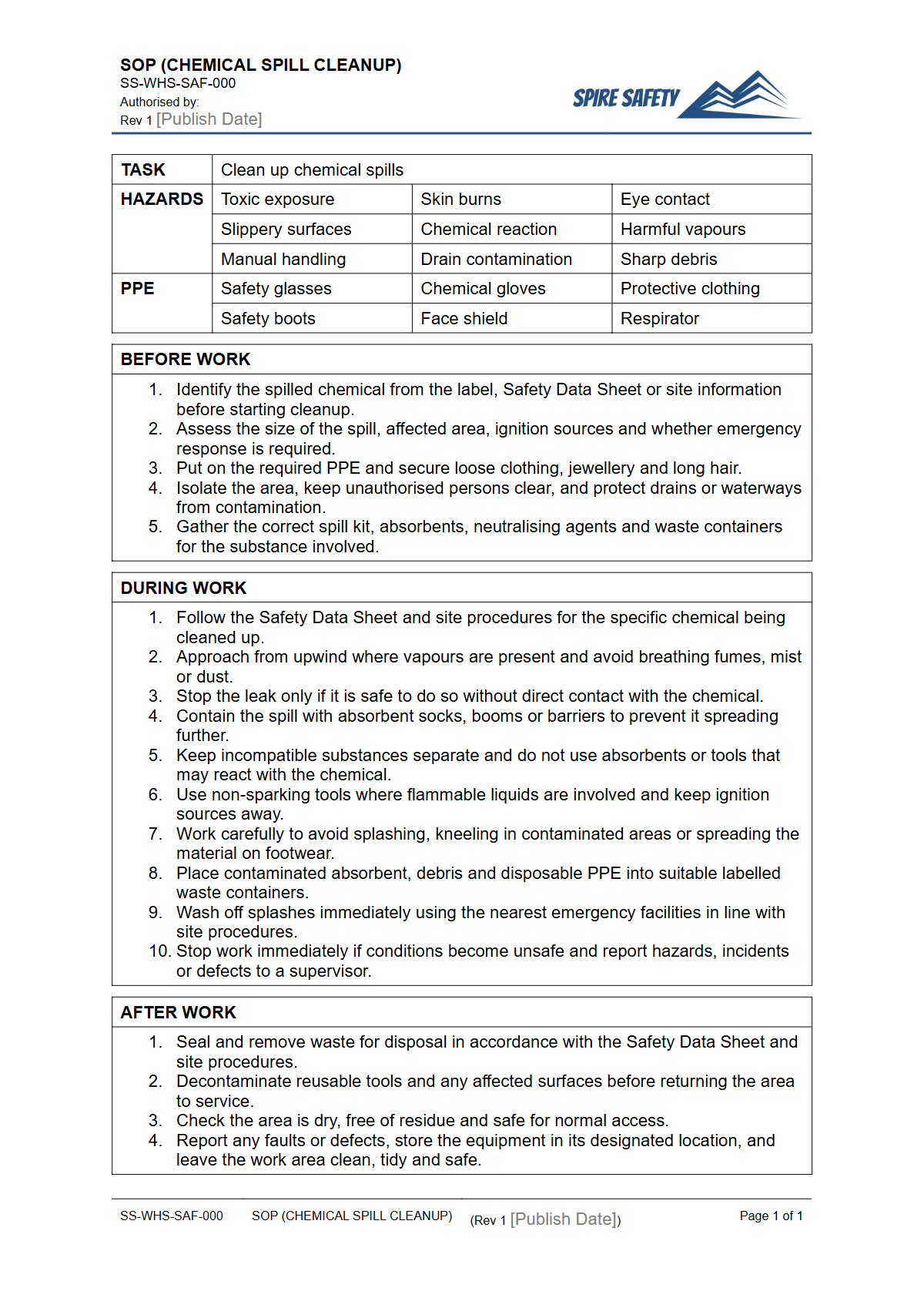
Purpose of the Free Safe Operating Procedure (Chemical Spill Cleanup) Template
Managing hazardous substances is a critical part of workplace health and safety. This Free Safe Operating Procedure (Chemical Spill Cleanup) Template provides a structured starting point for creating a clear, actionable guide for your team.
An effective SOP ensures that in the event of a spill, workers can respond quickly, consistently, and safely, minimising exposure and potential harm.
Formalising your cleanup process helps standardise your emergency response, ensuring that every step, from containment to disposal, is performed correctly every time. It serves as a vital training document for new and existing staff, reinforcing safe work practices. A well-drafted SOP is a cornerstone of your safety framework, demonstrating a proactive approach to risk management and forming a key component of your overall WHS management system.
Video walkthrough
How to use the Free Safe Operating Procedure (Chemical Spill Cleanup) Template
This resource is available as a DOCX file for easy editing and a PDF for straightforward printing and distribution. To use it, simply download the template and begin populating it with your site-specific information.
It is designed to be adapted to a wide range of industries where chemicals are used, from workshops and laboratories to manufacturing and cleaning services.
It is crucial to consult the Safety Data Sheet (SDS) for each chemical you use onsite. The SDS provides essential information on hazards, required Personal Protective Equipment (PPE), and first aid measures that must be included in your final SOP.
For instance, the cleanup procedure for a flammable liquid will differ significantly from that for a corrosive acid. Other procedures, such as our SOP for pool chemical dosing systems, also rely heavily on SDS information for safe operation.
A Note on Customisation
Important: This document is a template, not a finished procedure. To be effective and support your WHS duties, you must thoroughly customise it to your specific workplace.
We have provided a structured guide, but it is your responsibility to ensure the final document reflects the unique chemicals, spill kits, equipment, emergency contacts, and layout of your work environment. A generic procedure is insufficient for ensuring safety.
Key Sections to Customise
Pay close attention to these sections when adapting the template:
- Specific Chemicals Covered: List the chemicals or chemical groups this SOP applies to.
- Spill Kit Contents & Location: Detail the exact contents of your spill kit and clearly describe where it is located.
- Personal Protective Equipment (PPE): Specify the exact type of gloves, eyewear, respiratory protection, and protective clothing required, as recommended by the SDS.
- Step-by-Step Cleanup Procedure: Outline the precise sequence of actions: Alert, Contain, Absorb, Clean, and Dispose. This must be tailored to the substance.
- Decontamination: Detail the process for decontaminating the area, tools, and personnel after the cleanup.
- Waste Disposal: Describe how and where to dispose of used absorbent materials and contaminated PPE in accordance with local environmental regulations.
- Emergency Contacts: List internal first aid officers, fire wardens, and supervisors, along with external emergency services numbers.
If you require assistance in tailoring this document or developing a suite of SOPs for your operations, our team offers specialist WHS consulting to help you meet your obligations.
When to use it
A Safe Operating Procedure for chemical spills is a document used both proactively and reactively. It should be integrated into your safety system and used during:
- Worker Inductions: To introduce new employees to your site's specific emergency procedures.
- Refresher Training & Toolbox Talks: To keep safety knowledge current and front-of-mind for all relevant personnel.
- Risk Assessments: As a control measure identified during the assessment of tasks involving hazardous chemicals.
- Emergency Drills: To practice and evaluate the effectiveness of your spill response plan.
- Incident Response: As the primary guide for workers to follow during an actual chemical spill.
Regular reviews and updates to your SOPs are essential. These documents should be included in your schedule for periodic safety reviews and WHS compliance auditing to ensure they remain current and effective.
Who should use it
This SOP is intended for any person who could be involved in or affected by a chemical spill in the workplace. This includes:
- Operators and Workers: Anyone who handles, decants, transports, or works in the vicinity of hazardous chemicals.
- Supervisors and Line Managers: To oversee safe work practices and lead the initial response in their areas.
- WHS Personnel: Safety officers, advisors, and managers responsible for developing and implementing safety procedures.
- Emergency Response Teams: Designated spill response members or site wardens who need a clear, authoritative guide.
- Maintenance Staff: Who may encounter spills or need to clean areas where chemicals are used.
While this SOP covers a specific hazard, it is part of a broader library of procedures. You may also find our machine-specific guides, such as the Brake Press SOP, useful for other high-risk tasks.
Explore our entire free WHS resources library for more templates to support your safety management system.
Common mistakes
Common mistakes to avoid
- Using a generic template without customising it for specific workplace chemicals.
- Failing to provide practical, hands-on training on how to use the spill kit and follow the procedure.
- Incorrectly disposing of contaminated cleanup materials and PPE.
- Not restocking the spill kit immediately after use, leaving the area unprepared for a future incident.
Legal references
Legal considerations
The following legal requirements may be relevant to this type of work.
- Work Health and Safety Act (Harmonised) — Provides the primary duties for protecting workers and other people from work health and safety risks.
- Work Health and Safety Regulations (Harmonised) — Sets out requirements supporting the management of workplace hazards and risks.
The following codes may be relevant to this type of work.
- Managing WHS Risks Code of Practice — Provides practical guidance on identifying hazards, assessing risks and applying effective controls.
- Work Health and Safety Consultation, Cooperation and Coordination Code of Practice — Provides practical guidance on consulting workers and coordinating with other duty holders.
- Managing the Work Environment and Facilities Code of Practice — Provides practical guidance on safe work environments, workplace facilities and related controls.
Did you know
SDS is Key
A Safety Data Sheet (SDS) is mandatory for any hazardous chemical and contains crucial information for spill cleanup, including first aid measures and the specific PPE required.
The Spill Response Hierarchy
Effective spill response generally follows a set sequence: Control the source of the spill, Contain the spread of the liquid, Clean up the material, and Decontaminate the area and personnel.
FAQ
Frequently asked questions
01What is a Safe Operating Procedure (SOP)?
02Is this chemical spill cleanup template compliant with Australian WHS laws?
03Do I need a separate SOP for every chemical?
04What should be in a chemical spill kit?
Share this resource
Free Safe Operating Procedure (Chemical Spill Cleanup) Template
Browse Categories
How To Use It
- 1Download and open in Word or PDF.
- 2Replace the placeholders with your business details.
- 3Get it reviewed by a WHS specialist before rollout.
Need it customised?
Our WHS consultants can adapt this template to your site, run a gap analysis, or audit what you already have in place.
Book a Free Consultation WHS consulting servicesor call 1300 156 382
Related templates
- Free Safe Operating Procedure (Chemical Transfer) Template
- Free Safe Operating Procedure (Chicken Coop Cleaning) Template
- Free Safe Operating Procedure (Child Play Area Cleaning) Template
- Free Safe Operating Procedure (Chiller Plant Operation) Template
- Free Safe Operating Procedure (Chip Spreader) Template
- Free Safe Operating Procedure (Chlorine Handling) Template