
Free Safe Operating Procedure (Clean Load Inspection) Template
Download our free Safe Operating Procedure (Clean Load Inspection) template.
Free Safe Operating Procedure (Clean Load Inspection) Template
DOCX • 126 KB + PDF
Updated Oct 2026
No signup required
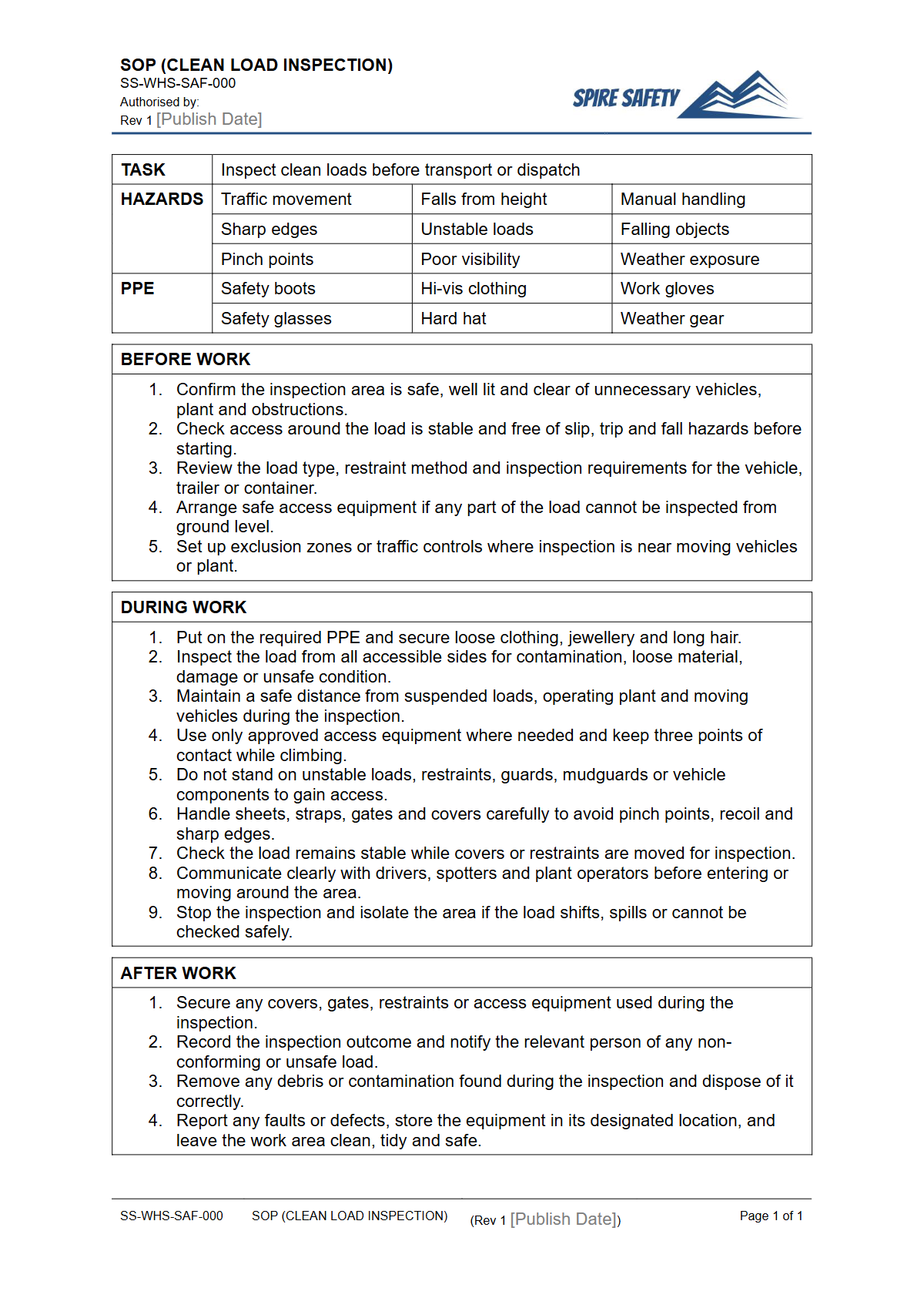
Purpose of the Free Safe Operating Procedure (Clean Load Inspection) Template
A Safe Operating Procedure (SOP) for clean load inspections provides a formal, documented process for verifying that materials being transported are free from contaminants, hazardous substances, and prohibited waste. Our Free Safe Operating Procedure (Clean Load Inspection) Template gives your organisation a structured starting point to control this critical task.
The primary purpose is to prevent cross-contamination, supports your compliance efforts with environmental regulations, avoid costly disposal fees or fines for rejected loads, and protect the health and safety of workers at both the source and destination sites.
Implementing a clear procedure ensures every load is checked consistently, reducing the risk of human error. It formalises responsibilities and provides a clear set of steps for operators and supervisors to follow.
This is particularly important in industries like construction, waste management, demolition, and recycling, where the composition of loads can vary significantly. By standardising the inspection process, you create a safer, more compliant, and more efficient operational workflow.
This document can also be a key component when creating a broader Scraper SOP template or for other earthmoving equipment.
Video walkthrough
How to use the Free Safe Operating Procedure (Clean Load Inspection) Template
This Safe Operating Procedure template is provided in both DOCX and PDF formats for your convenience. The DOCX file is fully editable, allowing you to tailor the content to the specific requirements of your workplace, machinery, and materials.
To use it effectively, download the document and integrate your site-specific details. This includes identifying the types of loads and common contaminants you encounter, listing the required Personal Protective Equipment (PPE) for inspectors, and detailing the exact steps for both visual and physical inspection.
Important: It is crucial that you customise this template for your specific workplace. We have provided a structured starting point, but you must add details relevant to your equipment, personnel, and operational context to ensure it is effective.
A generic procedure is not a substitute for a risk-based assessment of your own activities. Integrating this SOP is a vital step in developing a WHS management system that effectively manages operational risks.
When to conduct a Clean Load Inspection
A clean load inspection should be performed at key points in the transport and disposal lifecycle to ensure integrity. The specific timing will depend on your operational procedures, but common triggers include:
- Before departure from a site: The operator or a site supervisor should inspect the load before the vehicle leaves to ensure it meets the client's or disposal facility's requirements.
- Upon arrival at a facility: Weighbridge operators or receiving staff at a landfill, recycling centre, or processing plant will inspect incoming loads to confirm they are acceptable.
- During loading activities: For high-risk materials, ongoing observation during loading can prevent contamination from occurring in the first place. Using equipment like that covered in a Telehandler Safe Operating Procedure requires the operator to be vigilant about what is being loaded.
- Random spot checks: Supervisors may conduct random inspections to verify that procedures are being followed correctly and to reinforce the importance of diligence.
Who should use this Safe Operating Procedure
This SOP is designed for use by various personnel involved in material handling and transportation. The primary users are typically:
- Vehicle and Plant Operators: Drivers of trucks, tippers, and other transport vehicles are often the first line of defence in ensuring their load is 'clean'. Operators of machinery used for loading, such as those guided by a Dozer SOP, are also responsible for the material they handle.
- Site Supervisors and Forepersons: These leaders are responsible for overseeing operations, enforcing procedures, and ensuring workers are trained and competent in performing inspections.
- Weighbridge Operators and Receiving Staff: Personnel at disposal or recycling facilities who are responsible for accepting or rejecting incoming loads based on their contents.
- WHS and Environmental Officers: Safety and environmental professionals use this procedure to train staff, monitor compliance, and investigate incidents related to contaminated loads. Regular reviews of these documents are a common component of internal and external WHS compliance audits.
By using this template, you can ensure all relevant parties understand their roles and responsibilities. For other procedural documents, feel free to browse our complete free WHS resources library.
Common mistakes
Common mistakes to avoid
- Conducting only a superficial 'top of the load' check without inspecting deeper.
- Failing to document the inspection, leaving no record for compliance or dispute resolution.
- Lack of specific training for inspectors on how to identify common contaminants.
- Assuming a load is clean based on its source without performing a physical verification.
Legal references
Legal considerations
The following legal requirements may be relevant to this type of work.
- Work Health and Safety Act (Harmonised) — Provides the primary duties for protecting workers and other people from work health and safety risks.
- Work Health and Safety Regulations (Harmonised) — Sets out requirements supporting the management of workplace hazards and risks.
The following codes may be relevant to this type of work.
- Managing WHS Risks Code of Practice — Provides practical guidance on identifying hazards, assessing risks and applying effective controls.
- Work Health and Safety Consultation, Cooperation and Coordination Code of Practice — Provides practical guidance on consulting workers and coordinating with other duty holders.
- Managing the Work Environment and Facilities Code of Practice — Provides practical guidance on safe work environments, workplace facilities and related controls.
Did you know
Cost of Contamination
Disposing of a contaminated load can cost a business anywhere from two to ten times more than a 'clean' load, due to rejection fees, transport costs, and special disposal charges.
Chain of Responsibility
Under Chain of Responsibility (CoR) laws, multiple parties can be held liable for breaches, including those related to improper loading and transport of materials, not just the driver.
FAQ
Frequently asked questions
01What legally defines a 'clean load' in Australia?
02Who is responsible if a contaminated load is discovered?
03Are there specific training requirements for inspecting loads?
04Can I use this SOP template for hazardous waste transportation?
Share this resource
Free Safe Operating Procedure (Clean Load Inspection) Template
Browse Categories
How To Use It
- 1Download and open in Word or PDF.
- 2Replace the placeholders with your business details.
- 3Get it reviewed by a WHS specialist before rollout.
Need it customised?
Our WHS consultants can adapt this template to your site, run a gap analysis, or audit what you already have in place.
Book a Free Consultation WHS consulting servicesor call 1300 156 382
Related templates
- Free Safe Operating Procedure (Clean Utility Room) Template
- Free Safe Operating Procedure (Cleaners Room Cleaning) Template
- Free Safe Operating Procedure (Clegg Hammer) Template
- Free Safe Operating Procedure (Clinic Couch Cleaning) Template
- Free Safe Operating Procedure (Clinical Waste Handling) Template
- Free Safe Operating Procedure (Cloth Spreader) Template