
Free Safe Operating Procedure (Cleaners Room Cleaning) Template
Download our free Safe Operating Procedure (Cleaners Room Cleaning) Template. This DOCX & PDF resource helps define safe work steps for cleaners.
Free Safe Operating Procedure (Cleaners Room Cleaning) Template
DOCX • 126 KB + PDF
Updated Oct 2026
No signup required
Purpose of the Free Safe Operating Procedure (Cleaners Room Cleaning) Template
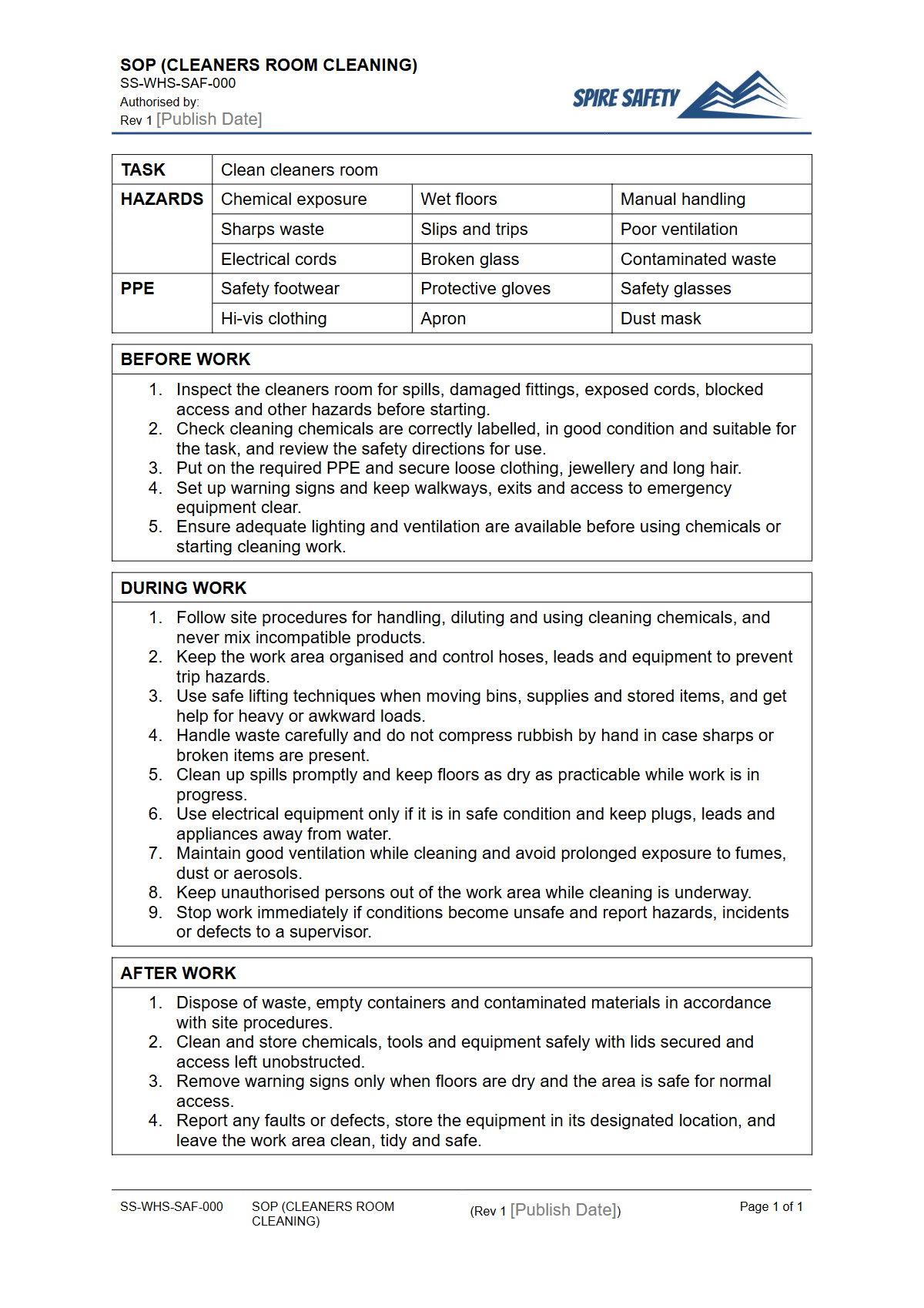
Maintaining a clean and organised cleaners' room is essential for hygiene and safety, but the task itself presents a range of workplace hazards. This Free Safe Operating Procedure (Cleaners Room Cleaning) Template provides a structured framework for documenting the step-by-step process required to clean these areas safely.
It helps organisations identify risks such as chemical exposure, slips and trips, manual handling injuries, and electrical hazards, and implement effective control measures. By formalising the process, you create a consistent, safe system of work that minimises the risk of injury to your cleaning and maintenance staff.
A well-drafted Safe Operating Procedure (SOP) is a key component of a proactive safety culture. It serves as a vital training tool for new employees and a reliable reference for experienced workers.
This template is designed to be integrated into your broader safety framework, forming part of your comprehensive WHS management systems to ensure risks are systematically controlled.
Video walkthrough
How to use the Free Safe Operating Procedure (Cleaners Room Cleaning) Template
This template is provided in both DOCX and PDF formats for your convenience. The DOCX file is fully editable, allowing you to tailor the content directly to the specific requirements of your workplace.
To use it effectively, you should download the document and methodically work through each section, replacing the placeholder text with information relevant to your site's equipment, chemical inventory, layout, and personnel.
It is crucial to remember that this is a template. We've provided a solid foundation based on Australian WHS principles, but you must customise it with your specific site details, equipment, chemicals (and their Safety Data Sheets), and emergency procedures to ensure it is relevant and effective for your workplace.
This includes identifying the correct Personal Protective Equipment (PPE), detailing waste disposal methods, and outlining steps for responding to spills or injuries. If an emergency requires immediate medical intervention, a clear process, such as that detailed in a Safe Operating Procedure for Defibrillator Operation, is critical.
Customisation Checklist:
- Site Details: Add your company name, address, and the specific location of the cleaners' room(s).
- PPE Requirements: List all mandatory PPE, such as chemical-resistant gloves, safety glasses, and non-slip footwear.
- Chemicals and Equipment: List every chemical product and piece of equipment used, referencing the corresponding Safety Data Sheet (SDS) for each chemical.
- Step-by-Step Procedure: Detail the exact sequence of tasks, from pre-start checks to clean-up and waste disposal.
- Risk Assessment: Ensure the hazards and control measures listed align with your own site-specific risk assessment.
- Emergency Contacts: Include names and numbers for first aid officers, fire wardens, and emergency services.
When to use it
A Safe Operating Procedure for cleaning the cleaners' room should be used as a primary reference document at several key stages. It is essential during the induction and training of new cleaning staff to ensure they understand the established safe work method from day one.
It should also be readily accessible in or near the cleaners' room for workers to consult at any time, especially as a refresher before starting the task. Furthermore, the SOP should be a central document during toolbox talks or safety meetings focused on housekeeping and chemical safety.
Reviewing the procedure is also necessary after any incident or near-miss, or when a new chemical, piece of equipment, or process is introduced. These regular checks help ensure its ongoing effectiveness, which can be formally verified through scheduled WHS compliance auditing.
Who should use it
This SOP is intended for a range of personnel within an organisation. The primary users are the Cleaning and Janitorial Staff who perform the task.
They must be trained on the procedure and follow it diligently to protect their own health and safety. Supervisors and Team Leaders are responsible for ensuring their staff are trained, competent, and adhering to the SOP.
They also play a key role in reviewing and updating the document. Work Health and Safety (WHS) Managers or representatives should use this template as part of the organisation's overall risk management program, ensuring it is properly implemented and meets best practice standards.
The principles of developing clear, task-specific SOPs extend beyond cleaning. Similar structured procedures are vital for operating equipment safely, whether it's a simple tool or more complex machinery.
For instance, if cleaning tasks require accessing high shelves, workers may also need to consult a free Step Ladder SOP to do so safely. Likewise, workshops or maintenance areas may have procedures for different tools, such as an Air Compressor SOP, to control associated risks.
Spire Safety offers a wide range of templates and documents to help streamline your WHS compliance efforts. You can browse our complete free WHS resources library for more guides, checklists, and procedures to support your business.
Common mistakes
Common mistakes to avoid
- Using a generic template without customising it for site-specific chemicals, equipment, and layouts.
- Failing to reference current Safety Data Sheets (SDS) for all chemicals listed in the procedure.
- Not providing or documenting practical, hands-on training for all workers who perform the task.
- Forgetting to review and update the SOP after an incident or when a process changes.
Legal references
Legal considerations
The following legal requirements may be relevant to this type of work.
- Work Health and Safety Act (Harmonised) — Provides the primary duties for protecting workers and other people from work health and safety risks.
- Work Health and Safety Regulations (Harmonised) — Sets out requirements supporting the management of workplace hazards and risks.
The following codes may be relevant to this type of work.
- Managing WHS Risks Code of Practice — Provides practical guidance on identifying hazards, assessing risks and applying effective controls.
- Work Health and Safety Consultation, Cooperation and Coordination Code of Practice — Provides practical guidance on consulting workers and coordinating with other duty holders.
- Managing the Work Environment and Facilities Code of Practice — Provides practical guidance on safe work environments, workplace facilities and related controls.
Did you know
Chemical Safety
According to Safe Work Australia, exposure to hazardous chemicals is a significant contributor to work-related diseases, highlighting the importance of correct handling procedures documented in SOPs.
Slips and Trips
Slips, trips, and falls are one of the most common causes of workplace injury in Australia, often resulting in serious sprains, fractures, and back injuries that require significant time off work.
FAQ
Frequently asked questions
01What hazards should be included in a cleaners' room SOP?
02How often should a Safe Operating Procedure for cleaning be reviewed?
03Is training required for a cleaners' room SOP?
04What is the difference between an SOP and a SWMS?
Share this resource
Free Safe Operating Procedure (Cleaners Room Cleaning) Template
Browse Categories
How To Use It
- 1Download and open in Word or PDF.
- 2Replace the placeholders with your business details.
- 3Get it reviewed by a WHS specialist before rollout.
Need it customised?
Our WHS consultants can adapt this template to your site, run a gap analysis, or audit what you already have in place.
Book a Free Consultation WHS consulting servicesor call 1300 156 382
Related templates
- Free Safe Operating Procedure (Clegg Hammer) Template
- Free Safe Operating Procedure (Clinic Couch Cleaning) Template
- Free Safe Operating Procedure (Clinical Waste Handling) Template
- Free Safe Operating Procedure (Cloth Spreader) Template
- Free Safe Operating Procedure (Clothing Aid Cleaning) Template
- Free Safe Operating Procedure (Clothing Rack Handling) Template