
Free Safe Operating Procedure (Community Pool Setup) Template
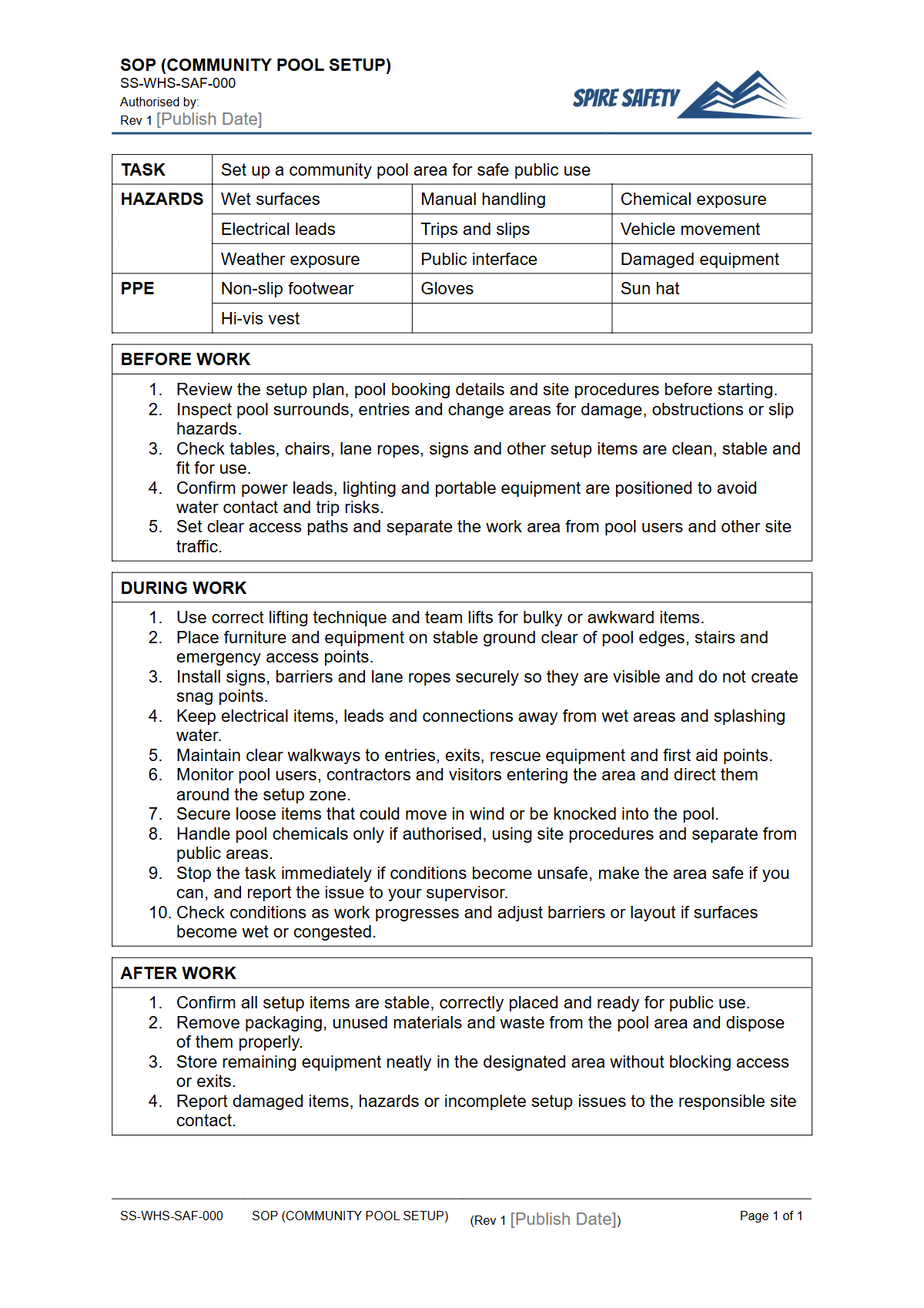
Download our free Safe Operating Procedure (Community Pool Setup) template. This Word & PDF resource helps manage risks for a safe pool season.
Free Safe Operating Procedure (Community Pool Setup) Template
DOCX • 126 KB + PDF
Updated Oct 2026
No signup required
Purpose of the Free Safe Operating Procedure (Community Pool Setup) Template
This Free Safe Operating Procedure (Community Pool Setup) Template provides a structured framework for managing the health and safety risks associated with preparing a community swimming pool for public use. It covers key steps from pre-season inspections to final safety checks, helping your organisation establish a documented, safe system of work for your team.
The primary purpose of this Safe Operating Procedure is to provide a clear, step-by-step guide for workers to follow. It aims to control common hazards such as slips, trips, and falls on wet surfaces, manual handling injuries from moving furniture and equipment, electrical risks from pumps and lighting, and exposure to hazardous chemicals.
A documented procedure ensures all critical safety tasks are completed consistently before patrons arrive, forming a key part of your WHS duties. This SOP should be used alongside specific procedures for tasks like chemical handling; our Safe Operating Procedure for pool chemical dosing systems provides a detailed guide for that critical task.
Video walkthrough
How to use the Free Safe Operating Procedure (Community Pool Setup) Template
Download the template in your preferred format—DOCX for easy editing or PDF for straightforward printing and reference. This document serves as a comprehensive starting point, with its structure aligned with Australian WHS practice and the model WHS framework.
It prompts you to consider hazards and control measures across all stages of the setup process, from inspecting the pool shell to commissioning the filtration system.
Important: This template provides a foundation, but it must be customised to reflect the specific equipment, layout, chemicals, and procedures of your facility. We recommend you conduct a consultation process with your team to review and adapt the steps, identify any unique site hazards, and ensure the final SOP is practical and effective for your workforce.
This collaborative approach is a core component of developing robust WHS management systems that are truly embedded in your organisation's operations.
When to use this Safe Operating Procedure
This SOP should be implemented as a mandatory checklist at the beginning of each swimming season before the pool is opened to the public. It is also essential to review and follow the procedure after any significant facility upgrades, such as the installation of new play equipment or accessibility features.
Furthermore, the SOP should be used following major maintenance on critical plant like pumps or filtration systems, or if an incident or near-miss occurs during the setup process. Regular reviews ensure the procedure remains relevant and effective at managing risk.
For complex facility changes, you might consider engaging specialist WHS consulting services to ensure all new risks are appropriately controlled.
Who should use this Safe Operating Procedure
This SOP is intended for all personnel involved in the seasonal or post-maintenance setup of a community swimming pool. This typically includes facility managers, maintenance staff, groundskeepers, and specialist pool technicians.
It also serves as a critical training and induction document for new employees and as a valuable refresher for experienced staff, ensuring everyone understands the standardised safety requirements for bringing the pool into service. For tasks performed at height, such as cleaning high surfaces or replacing light fixtures, workers must be trained on and follow a specific Safe Operating Procedure for step ladder use.
Maintaining a safe pool environment goes beyond the initial setup. The effectiveness of your procedures should be verified through practical observation and documentation.
Conducting regular WHS compliance audits can help identify gaps between your documented procedures and actual work practices, providing valuable opportunities for improvement. You can find more templates and checklists to support your safety program in our extensive free WHS resources library.
Common mistakes
Common mistakes to avoid
- Forgetting to inspect the integrity and expiry dates of rescue equipment like lifebuoys, spinal boards, and first aid kits.
- Failing to conduct comprehensive pre-season training for staff on the setup procedures, especially if anything has changed.
- Neglecting to properly document all water quality tests and any corrective actions taken to balance the water.
- Overlooking physical hazards around the pool deck, such as uneven pavers, broken tiles, or unsecured shade structures.
Legal references
Legal considerations
The following legal requirements may be relevant to this type of work.
- Work Health and Safety Act (Harmonised) — Provides the primary duties for protecting workers and other people from work health and safety risks.
- Work Health and Safety Regulations (Harmonised) — Sets out requirements supporting the management of workplace hazards and risks.
The following codes may be relevant to this type of work.
- Managing WHS Risks Code of Practice — Provides practical guidance on identifying hazards, assessing risks and applying effective controls.
- Work Health and Safety Consultation, Cooperation and Coordination Code of Practice — Provides practical guidance on consulting workers and coordinating with other duty holders.
- Managing the Work Environment and Facilities Code of Practice — Provides practical guidance on safe work environments, workplace facilities and related controls.
Did you know
Waterborne Illnesses
Improperly treated or balanced pool water can become a breeding ground for harmful bacteria and protozoa like Cryptosporidium and Giardia, which can cause significant gastrointestinal illness.
The Importance of Fencing
According to Royal Life Saving Australia, inadequate or faulty fencing is a leading contributing factor in drowning incidents involving young children. Pre-season checks must include rigorous inspection of all gates, latches, and fence panels.
FAQ
Frequently asked questions
01What key tasks should be in a community pool setup SOP?
02Is this template suitable for a private backyard pool?
03How often should our Community Pool Setup SOP be reviewed?
04What are the most significant risks during the pool setup process?
Share this resource
Free Safe Operating Procedure (Community Pool Setup) Template
Browse Categories
How To Use It
- 1Download and open in Word or PDF.
- 2Replace the placeholders with your business details.
- 3Get it reviewed by a WHS specialist before rollout.
Need it customised?
Our WHS consultants can adapt this template to your site, run a gap analysis, or audit what you already have in place.
Book a Free Consultation WHS consulting servicesor call 1300 156 382
Related templates
- Free Safe Operating Procedure (Compaction Wheel) Template
- Free Safe Operating Procedure (Compost Bin Cleaning) Template
- Free Safe Operating Procedure (Compost Turning) Template
- Free Safe Operating Procedure (Compressed Air Blowdown) Template
- Free Safe Operating Procedure (Compressor Drain) Template
- Free Safe Operating Procedure (Compressor Filter Change) Template