
Free Safe Operating Procedure (Courier Route Handover) Template
Streamline your courier operations with our free Safe Operating Procedure for route handovers.
Free Safe Operating Procedure (Courier Route Handover) Template
DOCX • 126 KB + PDF
Updated Oct 2026
No signup required
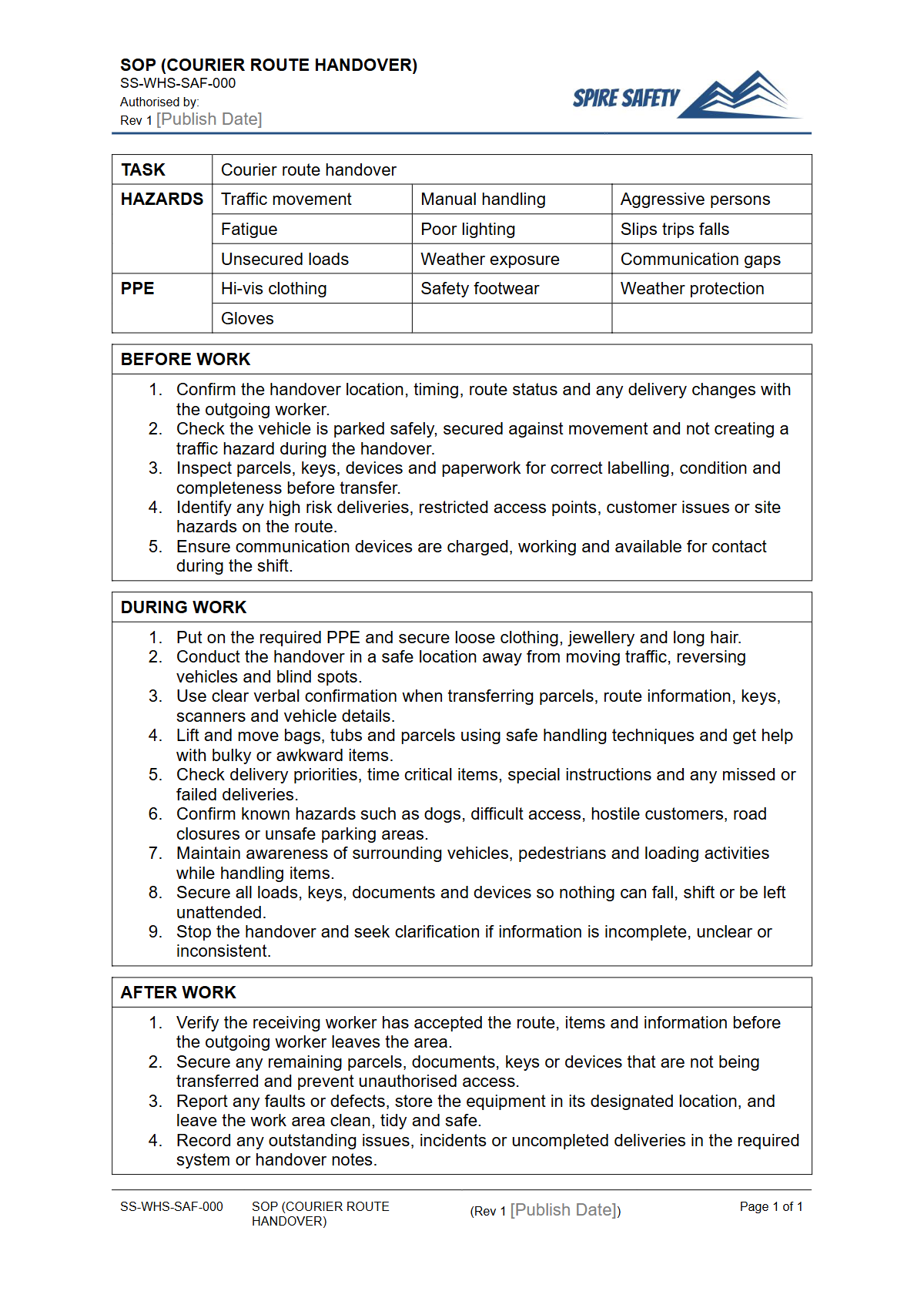
Purpose of the Free Safe Operating Procedure (Courier Route Handover) Template
A structured handover between courier drivers is critical for safety, efficiency, and accountability. Our Free Safe Operating Procedure (Courier Route Handover) Template provides a clear, documented framework for this crucial task.
Using this SOP helps standardise the process, reducing the risk of miscommunication, overlooked vehicle faults, or incomplete information about routes and deliveries. It formalises the transfer of responsibility for the vehicle, cargo, and delivery schedule, ensuring nothing is missed.
By implementing a formal procedure, your organisation can systematically manage hazards associated with courier work, such as driver fatigue, unfamiliar routes, vehicle maintenance issues, and load security. A documented handover process is a key component of a robust safety management system, demonstrating a commitment to workplace health and safety. This procedure serves as a practical tool to help meet your duty of care obligations under Australian WHS laws and is an essential part of well-structured WHS management systems.
Video walkthrough
How to use the Free Safe Operating Procedure (Courier Route Handover) Template
This Safe Operating Procedure template is provided in both DOCX and PDF formats for your convenience. To use it, simply download the file and integrate it into your organisation's safety documentation.
The primary step is customisation. Every courier operation is different, and this template must be adapted to reflect your specific processes, vehicles, cargo types, and workplace hazards.
IMPORTANT: This document is a template, not a finished product. We have no knowledge of your specific worksite, vehicles, routes, or personnel.
You MUST customise this Safe Operating Procedure to align with your unique operational risks and legal obligations. We recommend a consultation process involving drivers, dispatchers, and supervisors to ensure the final SOP is practical and comprehensive.
For organisations with complex logistics or those seeking expert guidance, engaging professional WHS consulting services can provide valuable support in tailoring safety documents.
When to use this Safe Operating Procedure
This SOP should be used every time responsibility for a courier route is transferred from one person to another. It is not just for end-of-day shift changes. Specific scenarios include:
- Start and End of Shift: The most common use, ensuring a complete handover of the vehicle and outstanding tasks.
- Relief Driver Takeover: When a driver takes over a route mid-shift due to unforeseen circumstances or planned breaks.
- Introduction of a New Route or Vehicle: Provides a checklist to ensure the new driver is fully briefed on unfamiliar aspects.
- Temporary Assignments: For staff who do not normally drive a particular route and require a detailed briefing.
Who should use this Safe Operating Procedure
This procedure is designed for all personnel involved in the courier and logistics chain of command. A successful handover relies on clear communication between several key roles:
- Courier Drivers: The primary users, responsible for conducting the handover checks and communicating vehicle and route status.
- Dispatch Staff and Logistics Planners: Responsible for overseeing handovers and ensuring procedures are followed.
- Supervisors and Team Leaders: Responsible for training staff on the SOP and verifying its correct implementation.
- WHS Managers and Officers: Responsible for integrating the SOP into the broader safety system and reviewing its effectiveness. Regular checks can be supported by formal WHS compliance auditing to ensure procedures are consistently applied.
Key Handover Areas
A thorough handover should cover several key domains to manage risk effectively. Your customised procedure should include checks for:
- Vehicle Condition: Pre-start checks, existing damage, fuel/charge levels, and any known mechanical faults. Handovers may take place in a depot where loading equipment is present; ensure operators are trained by referencing documents like our FREE Telehandler SOP Template.
- Cargo and Equipment: Confirming all parcels are accounted for, securing loads, and checking the status of scanners, phones, or payment devices.
- Route Information: Discussing known traffic issues, road closures, difficult delivery locations, or specific customer instructions.
- Documentation: Signing off on run sheets, vehicle logs, and the handover checklist itself to create a clear audit trail.
By embedding this SOP into your daily operations, you create a safer and more organised work environment for everyone. Explore our entire free WHS resources library for more templates to support your safety goals.
Common mistakes
Common mistakes to avoid
- Treating the handover as an informal chat instead of a formal process.
- Failing to physically inspect the vehicle and document its condition at handover.
- Neglecting to communicate real-time route hazards like road closures or access issues.
- Not allocating sufficient time for a thorough handover, leading to rushed and incomplete checks.
Legal references
Legal considerations
The following legal requirements may be relevant to this type of work.
- Work Health and Safety Act (Harmonised) — Provides the primary duties for protecting workers and other people from work health and safety risks.
- Work Health and Safety Regulations (Harmonised) — Sets out requirements supporting the management of workplace hazards and risks.
The following codes may be relevant to this type of work.
- Managing WHS Risks Code of Practice — Provides practical guidance on identifying hazards, assessing risks and applying effective controls.
- Work Health and Safety Consultation, Cooperation and Coordination Code of Practice — Provides practical guidance on consulting workers and coordinating with other duty holders.
- Managing the Work Environment and Facilities Code of Practice — Provides practical guidance on safe work environments, workplace facilities and related controls.
Did you know
Transport Industry Risks
According to Safe Work Australia, the transport, postal, and warehousing industry has one of the highest rates of serious workers' compensation claims, highlighting the critical need for documented safety procedures.
FAQ
Frequently asked questions
01What is a courier route handover SOP for?
02Is this template suitable for all types of courier businesses?
03How often should we review our courier route handover procedures?
04Who is responsible for training staff on this Safe Operating Procedure?
Share this resource
Free Safe Operating Procedure (Courier Route Handover) Template
Browse Categories
How To Use It
- 1Download and open in Word or PDF.
- 2Replace the placeholders with your business details.
- 3Get it reviewed by a WHS specialist before rollout.
Need it customised?
Our WHS consultants can adapt this template to your site, run a gap analysis, or audit what you already have in place.
Book a Free Consultation WHS consulting servicesor call 1300 156 382
Related templates
- Free Safe Operating Procedure (Court Surface Cleaning) Template
- Free Safe Operating Procedure (Courtyard Washdown) Template
- Free Safe Operating Procedure (Crack Monitor) Template
- Free Safe Operating Procedure (Crane Limit Switch Test) Template
- Free Safe Operating Procedure (Crane Outrigger Setup) Template
- Free Safe Operating Procedure (Crane Pendant Control) Template