
Free Safe Operating Procedure (Courtyard Washdown) Template
Download our free Safe Operating Procedure for courtyard washdowns. This template provides a structured starting point for developing your own site-specific SOP.
Free Safe Operating Procedure (Courtyard Washdown) Template
DOCX • 126 KB + PDF
Updated Oct 2026
No signup required
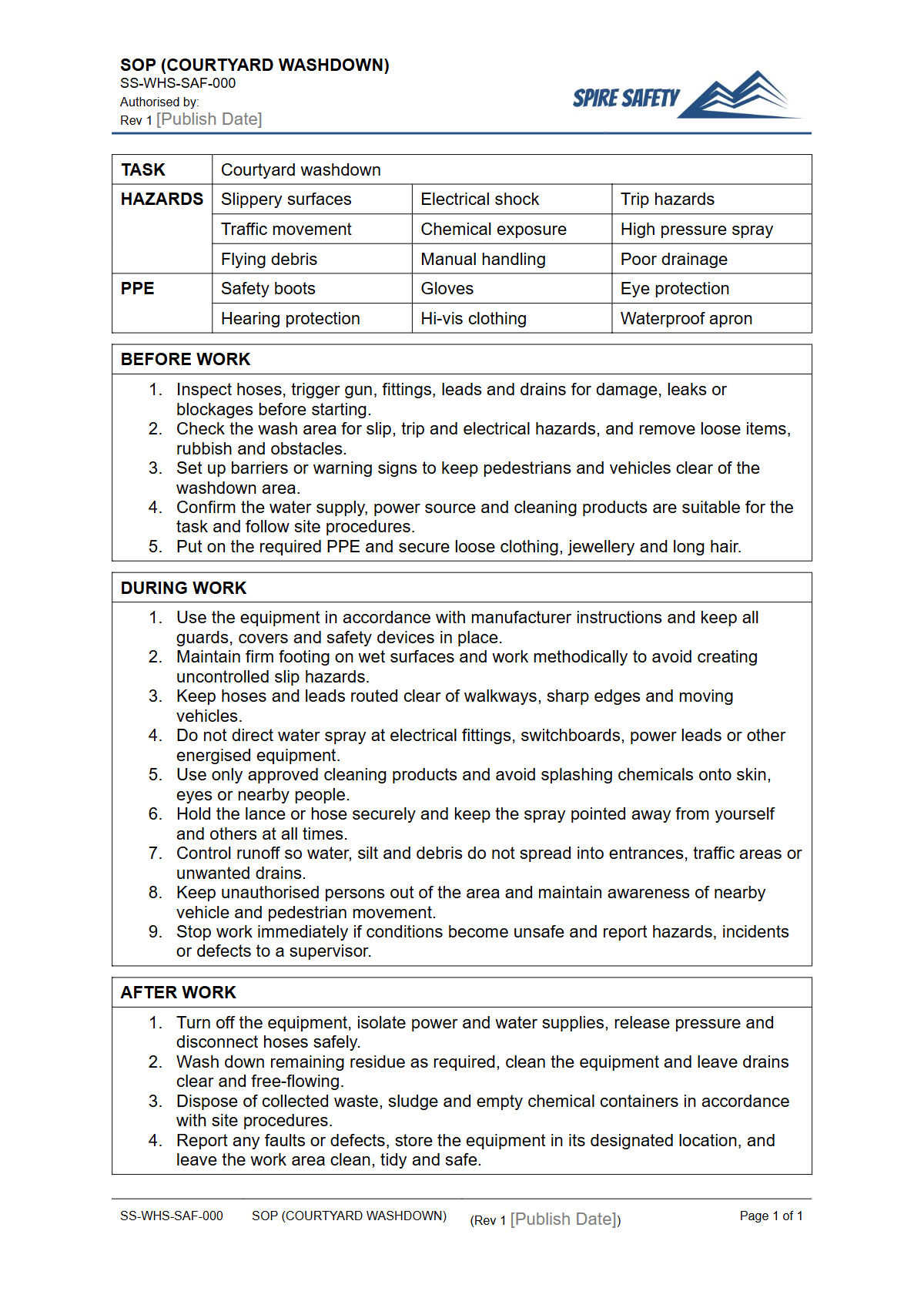
Purpose of the Free Safe Operating Procedure (Courtyard Washdown) Template
Performing a courtyard washdown might seem like a simple cleaning task, but it involves several hazards that must be managed to ensure worker safety. These risks include slips, trips, and falls from wet and slippery surfaces, ergonomic injuries from handling high-pressure hoses, exposure to cleaning chemicals, and potential contact with electrical equipment.
This Safe Operating Procedure (SOP) template provides a structured framework for documenting the required steps, safety controls, and personal protective equipment (PPE) for this common maintenance activity. It helps organisations standardise their approach, train workers effectively, and demonstrate due diligence in managing workplace risks.
A documented procedure is a critical element of any robust safety framework. It formalises risk control measures and integrates them into your daily operations.
By using this template, you can create a clear, step-by-step guide that helps prevent incidents before they occur. This process is a fundamental part of building comprehensive WHS management systems that protect your people and your business.
The procedure ensures that everyone involved understands the hazards and the specific actions needed to control them, from pre-operational checks to waste disposal.
Hazards Associated with Courtyard Washdowns
Developing a specific SOP is essential because of the variety of hazards present. Key risks to identify and control include:
- Slips, trips, and falls: Caused by wet surfaces, hoses, and equipment left in walkways.
- Chemical exposure: Skin or respiratory irritation from detergents, degreasers, or other cleaning agents.
- High-pressure injection: Injuries from high-pressure water streams piercing the skin.
- Manual handling: Strains from moving heavy equipment or managing unwieldy hoses.
- Electrical hazards: Risk of electric shock if water comes into contact with live electrical outlets or equipment.
- Noise: Hearing damage from loud pressure washers or other machinery.
For tasks involving specific machinery, such as using a large pressure washer powered by a separate unit, it is crucial to have dedicated procedures for that equipment. For instance, if your washdown process involves a pressure cleaner driven by a petrol or diesel engine, you may need to supplement this document with a specific air compressor SOP to cover its unique operational risks.
Video walkthrough
How to use the Free Safe Operating Procedure (Courtyard Washdown) Template
This document is a template, not a finished product. It must be customised to reflect the specific environment, equipment, chemicals, and processes used in your workplace.
To use it effectively, consult with the workers who actually perform the washdown tasks. Their direct input is invaluable for identifying practical hazards and effective controls.
Follow these steps to adapt the template:
- Download the DOCX file: This format allows for easy editing.
- Conduct a risk assessment: Before filling out the template, assess the specific courtyard area, the pressure washing equipment, and any chemicals to be used.
- Customise the content: Add your company name and logo. Fill in the sections for PPE, specific equipment models, and emergency procedures. Adjust the step-by-step instructions to match your exact process.
- Review and consult: Share the draft SOP with your team and Health and Safety Representatives (HSRs) for feedback.
- Approve and train: Once finalised, have the SOP approved by a manager. Train all relevant workers on the procedure and ensure they understand it completely before starting work.
- Schedule regular reviews: An SOP should be a living document, reviewed periodically and updated whenever a process, chemical, or piece of equipment changes.
Regularly reviewing your safety documents is a key part of maintaining a safe workplace. This process is often a core component of formal safety assessments, where an external party verifies that your documented procedures are practical and being followed.
Engaging with experts for a WHS compliance auditing service can help identify gaps and opportunities for improvement in your safety systems.
When to use this Safe Operating Procedure
This SOP should be used every time a courtyard washdown is performed, whether it's part of a routine cleaning schedule or a one-off task. It is particularly important for new or inexperienced workers who may not be familiar with the risks involved.
It also serves as a critical reference during refresher training and for supervisors monitoring the work. The procedure should be readily accessible to all workers in the area where the task is performed.
Using an SOP consistently helps build a positive safety culture where safe work practices become second nature. It moves your organisation away from informal, verbal instructions towards a formalised system that is clear, consistent, and accountable.
This is also relevant when preparing for tasks that generate significant debris, like those requiring a free Circular Saw SOP, ensuring cleanup procedures are just as controlled as the primary task.
Who should use this Safe Operating Procedure
This SOP is intended for use by a range of personnel within an organisation:
- Workers and Operators: The primary users are the individuals assigned to carry out the washdown task. They must follow the procedure to ensure their own safety and the safety of others.
- Supervisors and Managers: They are responsible for ensuring workers are trained on the SOP, have the correct PPE, and are following the procedure correctly. They also approve the final document.
- WHS/OHS Professionals: Safety officers or advisors will typically lead the development, review, and implementation of the SOP as part of the broader safety management system.
For small businesses without a dedicated safety team, the business owner or a senior manager may take on this responsibility. If you need assistance in developing and implementing practical safety documentation, consider seeking professional WHS consulting to ensure your procedures are robust and fit for purpose.
To discover more templates and guides, you can browse our complete free WHS resources library for a wide range of safety documents.
Common mistakes
Common mistakes to avoid
- Failing to cordon off the area, allowing pedestrians to walk onto wet, slippery surfaces.
- Using incorrect or damaged PPE, such as non-waterproof boots or inadequate eye protection.
- Not inspecting equipment, particularly hoses and connections, for damage before use.
- Spraying water near electrical outlets or equipment without isolating the power first.
Legal references
Legal considerations
The following legal requirements may be relevant to this type of work.
- Work Health and Safety Act (Harmonised) — Provides the primary duties for protecting workers and other people from work health and safety risks.
- Work Health and Safety Regulations (Harmonised) — Sets out requirements supporting the management of workplace hazards and risks.
The following codes may be relevant to this type of work.
- Managing WHS Risks Code of Practice — Provides practical guidance on identifying hazards, assessing risks and applying effective controls.
- Work Health and Safety Consultation, Cooperation and Coordination Code of Practice — Provides practical guidance on consulting workers and coordinating with other duty holders.
- Managing the Work Environment and Facilities Code of Practice — Provides practical guidance on safe work environments, workplace facilities and related controls.
Did you know
Slips, Trips, and Falls
According to Safe Work Australia, slips, trips, and falls are the second leading cause of serious workers' compensation claims, highlighting the importance of managing wet and slippery surfaces during tasks like courtyard washdowns.
FAQ
Frequently asked questions
01What is the purpose of a Safe Operating Procedure for a courtyard washdown?
02What kind of PPE is needed for washing down a courtyard?
03How often should a courtyard washdown SOP be reviewed?
04Can I use this template for commercial high-pressure cleaning?
Share this resource
Free Safe Operating Procedure (Courtyard Washdown) Template
Browse Categories
How To Use It
- 1Download and open in Word or PDF.
- 2Replace the placeholders with your business details.
- 3Get it reviewed by a WHS specialist before rollout.
Need it customised?
Our WHS consultants can adapt this template to your site, run a gap analysis, or audit what you already have in place.
Book a Free Consultation WHS consulting servicesor call 1300 156 382
Related templates
- Free Safe Operating Procedure (Crack Monitor) Template
- Free Safe Operating Procedure (Crane Limit Switch Test) Template
- Free Safe Operating Procedure (Crane Outrigger Setup) Template
- Free Safe Operating Procedure (Crane Pendant Control) Template
- Free Safe Operating Procedure (Crane Radio Controls) Template
- Free Safe Operating Procedure (Crane Scale) Template