
Free Safe Operating Procedure (Dairy Yard Cleaning) Template
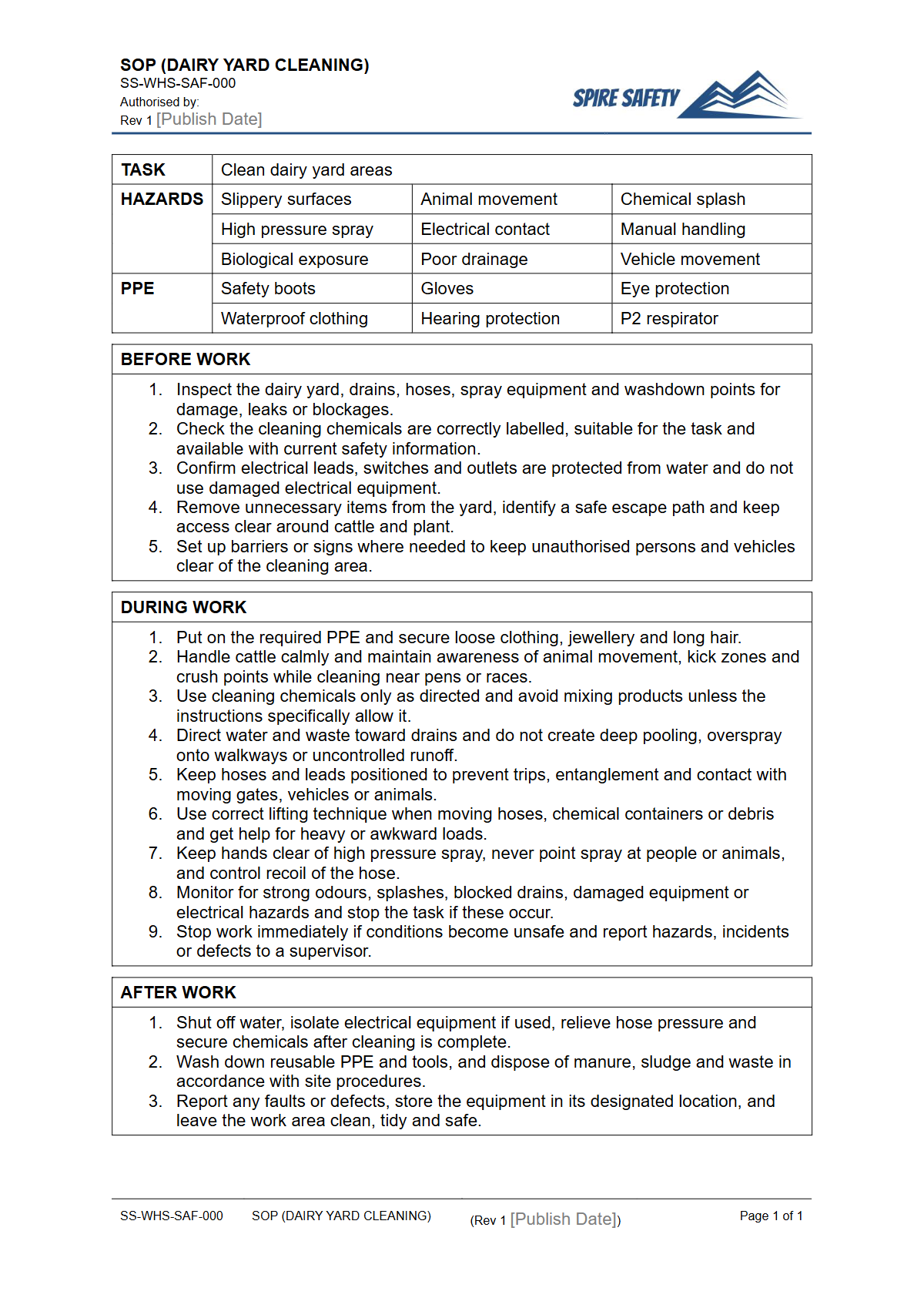
Download our free Safe Operating Procedure (Dairy Yard Cleaning) template to outline clear, step-by-step instructions for this critical farm task.
Free Safe Operating Procedure (Dairy Yard Cleaning) Template
DOCX • 126 KB + PDF
Updated Oct 2026
No signup required
Purpose of the Free Safe Operating Procedure (Dairy Yard Cleaning) Template
Maintaining a clean and hygienic dairy yard is fundamental to animal welfare, milk quality, and the health and safety of farm workers. This free Safe Operating Procedure (Dairy Yard Cleaning) Template provides a structured framework for documenting the required steps, safety controls, and responsibilities associated with this routine but potentially hazardous task.
Using a standardised SOP helps ensure that cleaning is performed consistently and safely every time, reducing risks such as slips on wet surfaces, exposure to biological hazards, and injuries from manual handling or equipment use.
A documented SOP is a key administrative control measure and an essential component of an effective WHS management system. It serves as a vital training tool for new and existing staff, clearly communicating the expected safety standards and work methods. By formally outlining the procedure, you create a clear benchmark for performance, supervision, and incident investigation.
Key Elements of a Dairy Yard Cleaning Safe Operating Procedure
This template guides you through documenting the critical safety aspects of the task, including:
- Hazard Identification: Pinpointing potential risks such as slippery surfaces, animal handling, manual tasks, chemical exposure, and operation of machinery.
- Personal Protective Equipment (PPE): Specifying the required PPE, such as waterproof boots with non-slip soles, gloves, and eye protection.
- Pre-operational Checks: Listing checks for equipment like hoses, nozzles, pumps, and any mobile plant used in the process.
- Step-by-Step Instructions: A logical sequence for completing the cleaning task safely and efficiently, from preparing the area to final wash-down and storage of equipment.
- Emergency Procedures: Outlining actions to be taken in case of a slip, fall, chemical splash, or other incident.
Video walkthrough
How to use the Free Safe Operating Procedure (Dairy Yard Cleaning) Template
This Safe Operating Procedure for Dairy Yard Cleaning is a downloadable and fully editable document, available in both DOCX and PDF formats. Its purpose is to provide a solid foundation for your site-specific procedure.
To use it effectively, you should add details relevant to your workplace, including the specific makes and models of equipment used (e.g., pressure washers, scrapers), the names of cleaning chemicals, and any unique layout features of your yard.
Important: This is a template, not a finished document. We have provided a structured starting point aligned with Australian WHS principles, but you must customise this document to reflect the specific equipment, chemicals, layout, and risks of your own dairy yard.
You must complete it with site-specific details to ensure it is effective for your operations. If you require assistance with this process, our WHS consulting services can provide expert guidance.
When to use it
This SOP should be used as the primary reference document for all personnel involved in cleaning the dairy yard. It is a live document that should be readily accessible in the work area. It should be consulted:
- Before starting any dairy yard cleaning task.
- During the induction and training of new farm workers.
- As part of refresher training for existing workers.
- When planning for non-routine or deep cleaning tasks.
- As a reference during safety audits or incident investigations.
For yards that utilise specific machinery for effluent management, you may also need to develop supplementary procedures. For example, if your process involves mechanised equipment, you will need a separate scraper SOP to cover its unique operational risks.
Who should use it
This Safe Operating Procedure is intended for use by all individuals who have responsibilities related to the dairy yard. This includes:
- Farm Workers/Dairy Hands: The primary users who perform the cleaning tasks and must follow the procedure to ensure their own safety and that of others.
- Supervisors and Farm Managers: To use for training, monitoring work practices, and ensuring that safety controls are implemented and maintained.
- Persons Conducting a Business or Undertaking (PCBUs): To help meet their primary duty of care to provide and maintain a safe system of work.
Many modern farms use versatile equipment for multiple jobs. If a telehandler is used for tasks like moving feed or equipment during the clean-up process, ensure all operators are trained on the relevant telehandler SOP.
This document is just one example of the many resources available to support your farm's safety management. You can browse our complete free WHS resources library for more templates and guides.
Common mistakes
Common mistakes to avoid
- Using high-pressure hoses at extreme pressures, causing splash-back of contaminated water and potential injection injuries.
- Neglecting to wear appropriate PPE, especially waterproof non-slip boots and protective eyewear.
- Failing to manage drainage correctly, leading to pooling water and creating larger slip hazard zones.
- Providing inadequate training on the safe handling and dilution of cleaning chemicals.
Legal references
Legal considerations
The following legal requirements may be relevant to this type of work.
- Work Health and Safety Act (Harmonised) — Provides the primary duties for protecting workers and other people from work health and safety risks.
- Work Health and Safety Regulations (Harmonised) — Sets out requirements supporting the management of workplace hazards and risks.
The following codes may be relevant to this type of work.
- Managing WHS Risks Code of Practice — Provides practical guidance on identifying hazards, assessing risks and applying effective controls.
- Work Health and Safety Consultation, Cooperation and Coordination Code of Practice — Provides practical guidance on consulting workers and coordinating with other duty holders.
- Managing the Work Environment and Facilities Code of Practice — Provides practical guidance on safe work environments, workplace facilities and related controls.
Did you know
Zoonotic Disease Risk
Zoonoses are diseases that can be transmitted from animals to humans. Dairy workers are at risk of infections like Leptospirosis and Q-fever, making good hygiene practices and PPE during cleaning absolutely critical.
Slips, Trips and Falls
Slips, trips, and falls are one of the most common causes of injury on Australian farms. Wet, manure-covered concrete in dairy yards presents a significant and persistent slip hazard that SOPs help manage.
FAQ
Frequently asked questions
01What are the main hazards involved in dairy yard cleaning?
02Why is a written SOP for dairy yard cleaning necessary?
03How often should a dairy yard cleaning SOP be reviewed?
04Can this template be used for other agricultural cleaning tasks?
Share this resource
Free Safe Operating Procedure (Dairy Yard Cleaning) Template
Browse Categories
How To Use It
- 1Download and open in Word or PDF.
- 2Replace the placeholders with your business details.
- 3Get it reviewed by a WHS specialist before rollout.
Need it customised?
Our WHS consultants can adapt this template to your site, run a gap analysis, or audit what you already have in place.
Book a Free Consultation WHS consulting servicesor call 1300 156 382
Related templates
- Free Safe Operating Procedure (Damaged Freight Hold) Template
- Free Safe Operating Procedure (Dance Floor Cleaning) Template
- Free Safe Operating Procedure (Data Logger) Template
- Free Safe Operating Procedure (Davit Arm) Template
- Free Safe Operating Procedure (De-Icing Vehicle) Template
- Free Safe Operating Procedure (Dead Animal Handling) Template