
Free Safe Operating Procedure (Dispatch Load Check) Template
Standardise your dispatch process and manage transport risks with our free Safe Operating Procedure (Dispatch Load Check) Template. Download now to get started.
Free Safe Operating Procedure (Dispatch Load Check) Template
DOCX • 126 KB + PDF
Updated Oct 2026
No signup required
Purpose of the Free Safe Operating Procedure (Dispatch Load Check) Template
Ensuring loads are secure and stable before a vehicle leaves your site is a critical safety control. Improperly loaded or restrained goods can shift during transit, leading to vehicle instability, loss of control, product damage, and serious incidents.
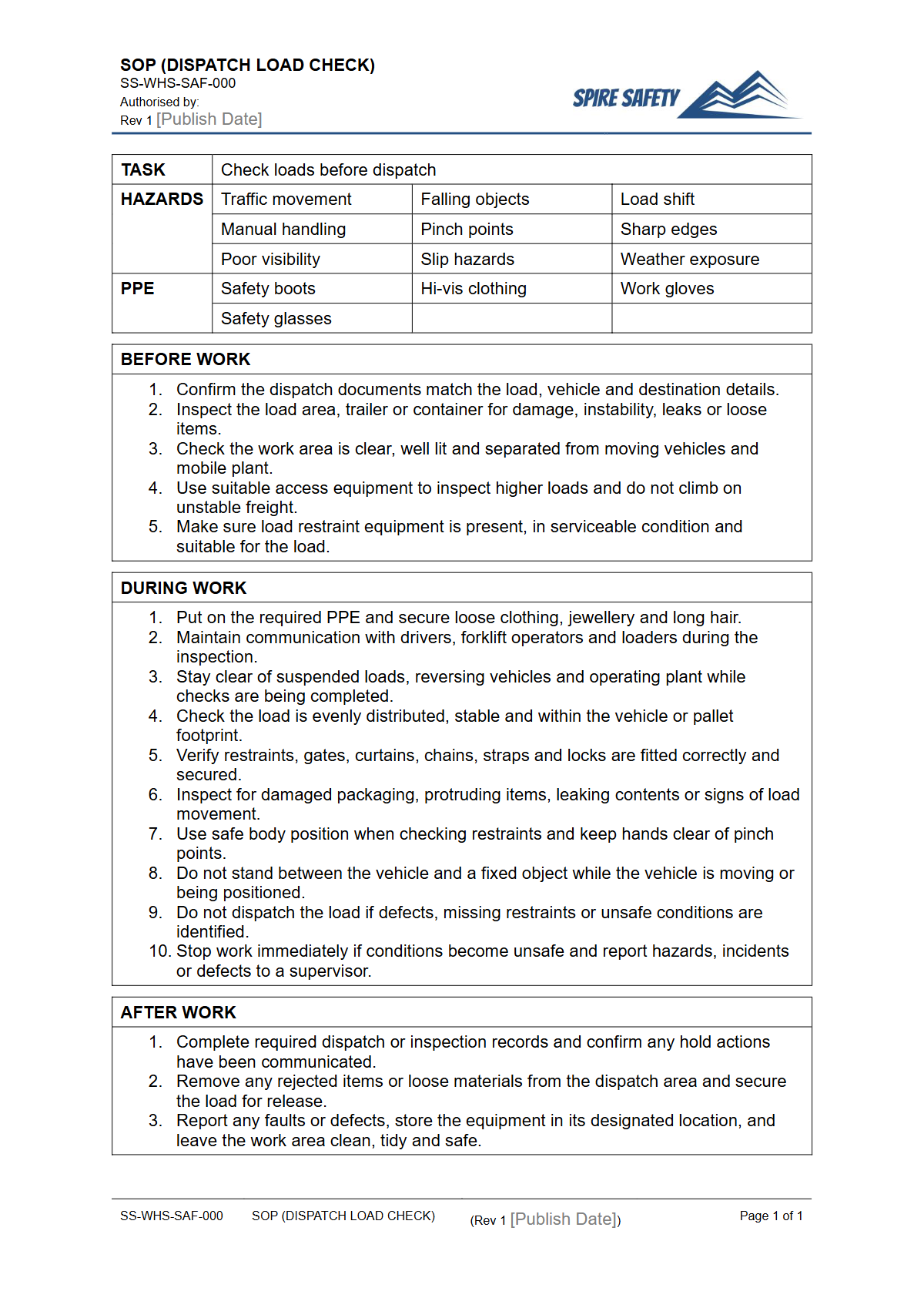
This Free Safe Operating Procedure (Dispatch Load Check) Template provides a structured framework for your workers to follow, promoting a consistent and safe process for every dispatch. It helps standardise actions for loading, checking, and documenting load security, which is a fundamental component of effective transport safety protocols.
A documented SOP is a key element in demonstrating due diligence under Australia's Chain of Responsibility (CoR) laws. By implementing a clear procedure, you establish and record the reasonable steps taken to prevent safety breaches in your supply chain.
This document serves as a practical tool within your broader WHS management systems, helping to formalise risk management, clarify responsibilities, and protect your people and the public.
Video walkthrough
How to use the Free Safe Operating Procedure (Dispatch Load Check) Template
This template is provided in both DOCX and PDF formats. The DOCX version is fully editable, allowing you to tailor it to the unique requirements of your organisation.
To effectively use this resource, you should detail your specific workplace conditions, including the types of vehicles used, the nature of the goods being transported (e.g., pallets, bulk bags, loose items), and the specific loading and restraint equipment available (e.g., forklifts, pallet jacks, tensioners).
It is critical to remember that this is a template. We have designed it as a starting point, but you must customise it with your specific site details, vehicle types, load characteristics, and local procedures to ensure it is effective for your workplace.
Once customised, the SOP should be used as a training tool and a day-to-day reference for all personnel involved in the dispatch process.
What to include when customising:
- Your company name, logo, and document control information.
- Specific roles and responsibilities for loaders, forklift operators, drivers, and supervisors.
- The sequence of operations, from pre-loading checks to final sign-off.
- Personal Protective Equipment (PPE) requirements for the task.
- Details on load restraint methods (e.g., strapping patterns, use of dunnage, friction mats).
- Emergency procedures in case of a spill or load shift during loading.
- A checklist section for workers to sign, confirming the steps have been completed.
The process of loading can involve various types of plant and equipment. If telehandlers are used in your dispatch operations, ensuring operators are competent and follow safe procedures is vital.
You can support this by implementing our free Telehandler SOP Template alongside this dispatch check procedure.
When to use a Dispatch Load Check SOP
This Safe Operating Procedure should be used for every single vehicle dispatch from your site. It is not just for large trucks or unfamiliar loads; consistency is key to building a strong safety culture.
The procedure should be integrated into the daily workflow of the dispatch or warehouse area. It serves as the final quality and safety gateway before a vehicle is permitted to leave.
The SOP is also a valuable resource during worker inductions, toolbox talks, and refresher training sessions. It provides a clear standard against which performance can be measured and is an essential document to have on hand during any internal or external safety review.
Regular reviews of compliance with the SOP can be integrated into your WHS compliance auditing schedule to ensure it is being followed correctly and remains effective.
Who should use this Safe Operating Procedure
This procedure is intended for use by multiple roles within the logistics and transport chain. Key personnel include:
- Loaders and Warehouse Staff: To guide them in physically loading the vehicle and securing the goods according to established standards.
- Forklift and Plant Operators: To ensure they position and place loads safely within the vehicle.
- Truck Drivers: To verify that the load is safe and legally restrained before they accept responsibility for it and commence their journey.
- Supervisors and Dispatch Managers: To train staff, monitor compliance, and ensure records are completed accurately.
- WHS and Compliance Managers: To use as part of the overall safety management system and for incident investigation purposes.
Addressing the complexities of transport safety and Chain of Responsibility can be challenging. For organisations needing support to develop comprehensive risk management strategies, engaging specialist WHS consulting services can provide expert guidance and help ensure all legal obligations are met.
You can also explore our free WHS resources library for a wider range of templates and guides to support your safety initiatives.
Common mistakes
Common mistakes to avoid
- Using the generic template without customising it for your specific vehicles, loads, and site.
- Failing to adequately train all relevant workers, including loaders and drivers, on the finalised SOP.
- Allowing staff to 'pencil-whip' the checklist without physically performing the required checks.
- Not reviewing or updating the SOP after an incident, near miss, or a change in operations.
Legal references
Legal considerations
The following legal requirements may be relevant to this type of work.
- Work Health and Safety Act (Harmonised) — Provides the primary duties for protecting workers and other people from work health and safety risks.
- Work Health and Safety Regulations (Harmonised) — Sets out requirements supporting the management of workplace hazards and risks.
The following codes may be relevant to this type of work.
- Managing WHS Risks Code of Practice — Provides practical guidance on identifying hazards, assessing risks and applying effective controls.
- Work Health and Safety Consultation, Cooperation and Coordination Code of Practice — Provides practical guidance on consulting workers and coordinating with other duty holders.
- Managing the Work Environment and Facilities Code of Practice — Provides practical guidance on safe work environments, workplace facilities and related controls.
Did you know
Load Restraint Failures
According to the National Transport Commission (NTC), inadequate load restraint is a factor in a significant number of heavy vehicle incidents each year. These incidents can lead to road closures, vehicle damage, and serious injuries to drivers and the public.
FAQ
Frequently asked questions
01What is a dispatch load check SOP?
02Is this template suitable for Chain of Responsibility (CoR) compliance?
03Who is responsible for conducting the load check?
04How often should a Safe Operating Procedure be reviewed?
Share this resource
Free Safe Operating Procedure (Dispatch Load Check) Template
Browse Categories
How To Use It
- 1Download and open in Word or PDF.
- 2Replace the placeholders with your business details.
- 3Get it reviewed by a WHS specialist before rollout.
Need it customised?
Our WHS consultants can adapt this template to your site, run a gap analysis, or audit what you already have in place.
Book a Free Consultation WHS consulting servicesor call 1300 156 382
Related templates
- Free Safe Operating Procedure (Display Stand Setup) Template
- Free Safe Operating Procedure (Disposable Apron Use) Template
- Free Safe Operating Procedure (Disposable Gown Use) Template
- Free Safe Operating Procedure (Dissolved Oxygen Meter) Template
- Free Safe Operating Procedure (Dock Crane) Template
- Free Safe Operating Procedure (Dock Fender Inspection) Template