
Free Safe Operating Procedure (Event Floor Cleaning) Template
Manage cleaning hazards at events with our structured Safe Operating Procedure template. Download the customisable DOCX to define safe work methods.
Free Safe Operating Procedure (Event Floor Cleaning) Template
DOCX • 126 KB + PDF
Updated Oct 2026
No signup required
Purpose of the Free Safe Operating Procedure (Event Floor Cleaning) Template
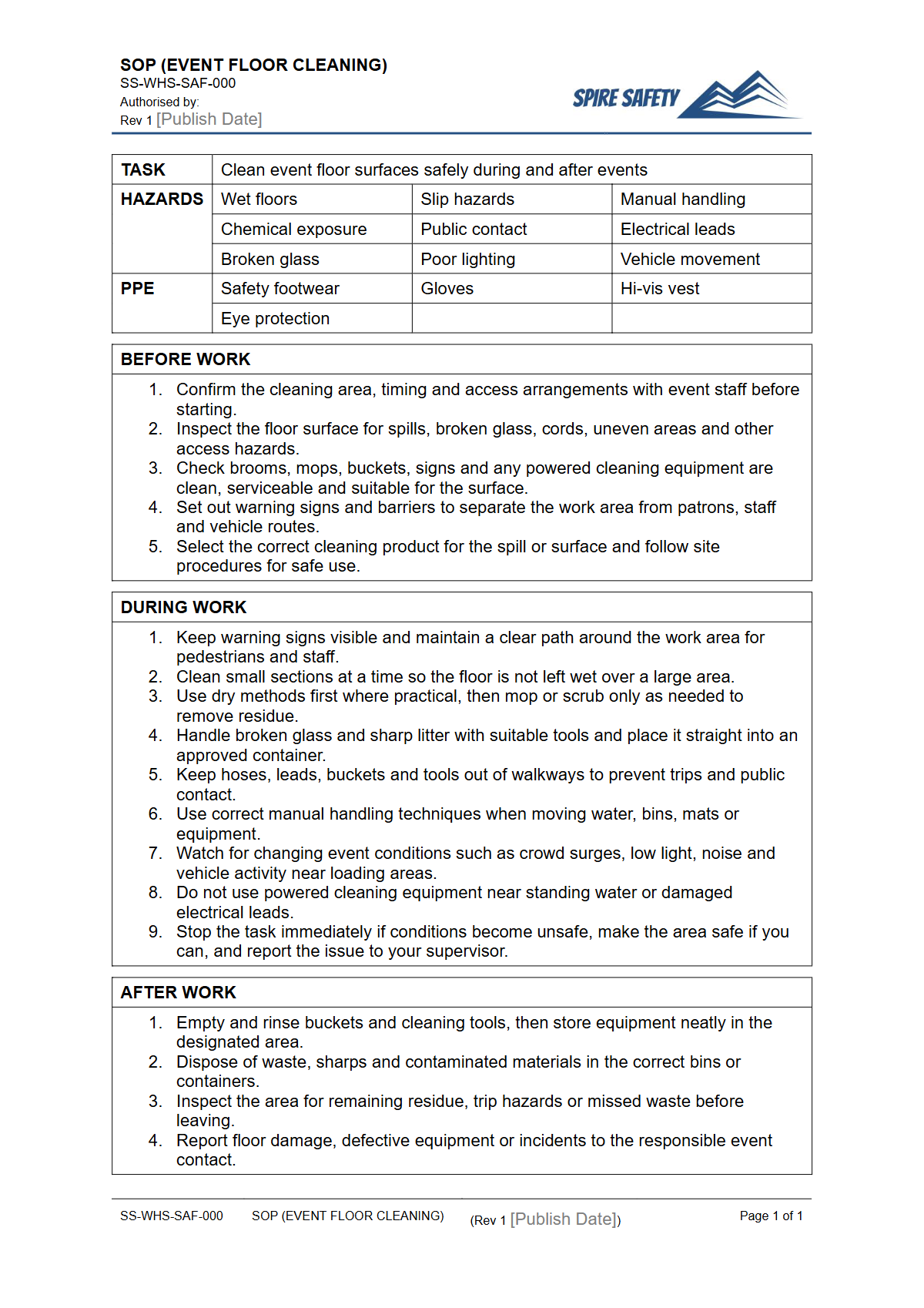
Event spaces are dynamic environments with high foot traffic, creating unique challenges for maintaining floor safety. This Free Safe Operating Procedure (Event Floor Cleaning) Template provides a structured framework for managing the risks associated with cleaning tasks before, during, and after events.
By documenting clear, step-by-step instructions, you can standardise processes for your cleaning teams, significantly reducing the risk of slip, trip, and fall incidents, chemical exposure, and manual handling injuries. Using an SOP ensures that all workers, including temporary event staff, understand the required safety controls and work methods.
A well-defined SOP is a critical component of a proactive safety culture. It demonstrates a commitment to health and safety and serves as a key document within your broader safety framework.
Integrating specific procedures like this one helps to build more robust and effective WHS management systems that protect workers and patrons alike.
Video walkthrough
How to use the Free Safe Operating Procedure (Event Floor Cleaning) Template
This resource is provided as a fully editable DOCX file, with a PDF version also available for easy printing and distribution. To make it effective, you must adapt it to the specific context of your venue and event.
Generic procedures are not sufficient to ensure safety; customisation is essential.
Note: This document is a template and is not a substitute for professional WHS advice. We have drafted it as a starting point, and you must customise it to reflect the specific hazards, equipment, chemicals, and processes used in your workplace.
You are responsible for ensuring it meets your legal obligations.
What to customise
After downloading, review and update the following sections with your site-specific information:
- Personal Protective Equipment (PPE): List the exact PPE required, such as non-slip, chemical-resistant footwear, gloves, and eye protection.
- Equipment and Chemicals: Name the specific models of equipment (e.g., mop and bucket systems, wet-dry vacuums, auto-scrubbers) and the cleaning chemicals used. Always reference the Safety Data Sheet (SDS) for each chemical.
- Procedure Steps: Detail the sequence of tasks, from pre-operational checks and hazard assessment to the cleaning process itself and post-cleaning inspections.
- Emergency Procedures: Outline the steps to take in case of a chemical spill, equipment malfunction, or personal injury.
For tasks involving specialised machinery, this SOP should be used alongside equipment-specific procedures. For example, if your team uses mechanised cleaners, our Free Safe Operating Procedure for Floor Scrubber Operation provides a more detailed guide for that task. You can find many other useful documents in our free WHS resources library.
When to use it
An SOP for event floor cleaning is not just for routine, end-of-day cleaning. It should be implemented and referenced in various scenarios, including scheduled cleaning during event opening hours, rapid response to spills in high-traffic areas, and comprehensive deep cleaning during bump-in and bump-out phases.
The procedure helps ensure consistency and safety, regardless of whether the task is planned or reactive. Documented procedures are invaluable for demonstrating due diligence and are often reviewed during regular WHS compliance auditing.
Who should use it
This Safe Operating Procedure should be used by anyone involved in or responsible for floor cleaning activities at an event. This includes:
- Cleaning staff and contractors
- Team leaders and supervisors
- Event managers and coordinators
- Venue operations managers
- WHS officers and representatives
The document is an essential tool for worker induction, training, and competency assessments. It provides a clear benchmark for expected safe performance.
For complex events or venues with unique hazards, seeking specialist WHS consulting can help ensure your procedures are robust and fit-for-purpose.
Common mistakes
Common mistakes to avoid
- Using incorrect cleaning products for the specific floor type, causing surface damage or new slip hazards.
- Failing to erect 'wet floor' signs or barricade the area effectively, leading to pedestrian accidents.
- Inadequate worker training on safe manual handling techniques for lifting mop buckets or moving heavy equipment.
- Poor ventilation when using strong chemicals in enclosed indoor spaces, leading to respiratory irritation.
Legal references
Legal considerations
The following legal requirements may be relevant to this type of work.
- Work Health and Safety Act (Harmonised) — Provides the primary duties for protecting workers and other people from work health and safety risks.
- Work Health and Safety Regulations (Harmonised) — Sets out requirements supporting the management of workplace hazards and risks.
The following codes may be relevant to this type of work.
- Managing WHS Risks Code of Practice — Provides practical guidance on identifying hazards, assessing risks and applying effective controls.
- Work Health and Safety Consultation, Cooperation and Coordination Code of Practice — Provides practical guidance on consulting workers and coordinating with other duty holders.
- Managing the Work Environment and Facilities Code of Practice — Provides practical guidance on safe work environments, workplace facilities and related controls.
Did you know
Slip, Trip and Fall Statistics
Slips, trips, and falls are a leading cause of workplace injuries in Australia, particularly in the hospitality and events industries. SafeWork Australia data consistently shows these incidents are a major contributor to serious workers' compensation claims.
Chemical Safety Data Sheets
Even common cleaning chemicals can pose significant health risks if handled incorrectly. A Safety Data Sheet (SDS) is mandatory for any hazardous chemical and must be readily accessible to all workers who use it.
FAQ
Frequently asked questions
01What hazards should an SOP for event floor cleaning cover?
02Is this Safe Operating Procedure template suitable for all floor types?
03Who is responsible for implementing the floor cleaning SOP at an event?
04How often should we review our Safe Operating Procedure for event floor cleaning?
Share this resource
Free Safe Operating Procedure (Event Floor Cleaning) Template
Browse Categories
How To Use It
- 1Download and open in Word or PDF.
- 2Replace the placeholders with your business details.
- 3Get it reviewed by a WHS specialist before rollout.
Need it customised?
Our WHS consultants can adapt this template to your site, run a gap analysis, or audit what you already have in place.
Book a Free Consultation WHS consulting servicesor call 1300 156 382
Related templates
- Free Safe Operating Procedure (Event Signage Setup) Template
- Free Safe Operating Procedure (Event Waste Cleanup) Template
- Free Safe Operating Procedure (Excavator Grapple) Template
- Free Safe Operating Procedure (Excavator Ripper) Template
- Free Safe Operating Procedure (Excavator Tilt Bucket) Template
- Free Safe Operating Procedure (Exhaust Grille Cleaning) Template