
Free Safe Operating Procedure (Event Waste Cleanup) Template
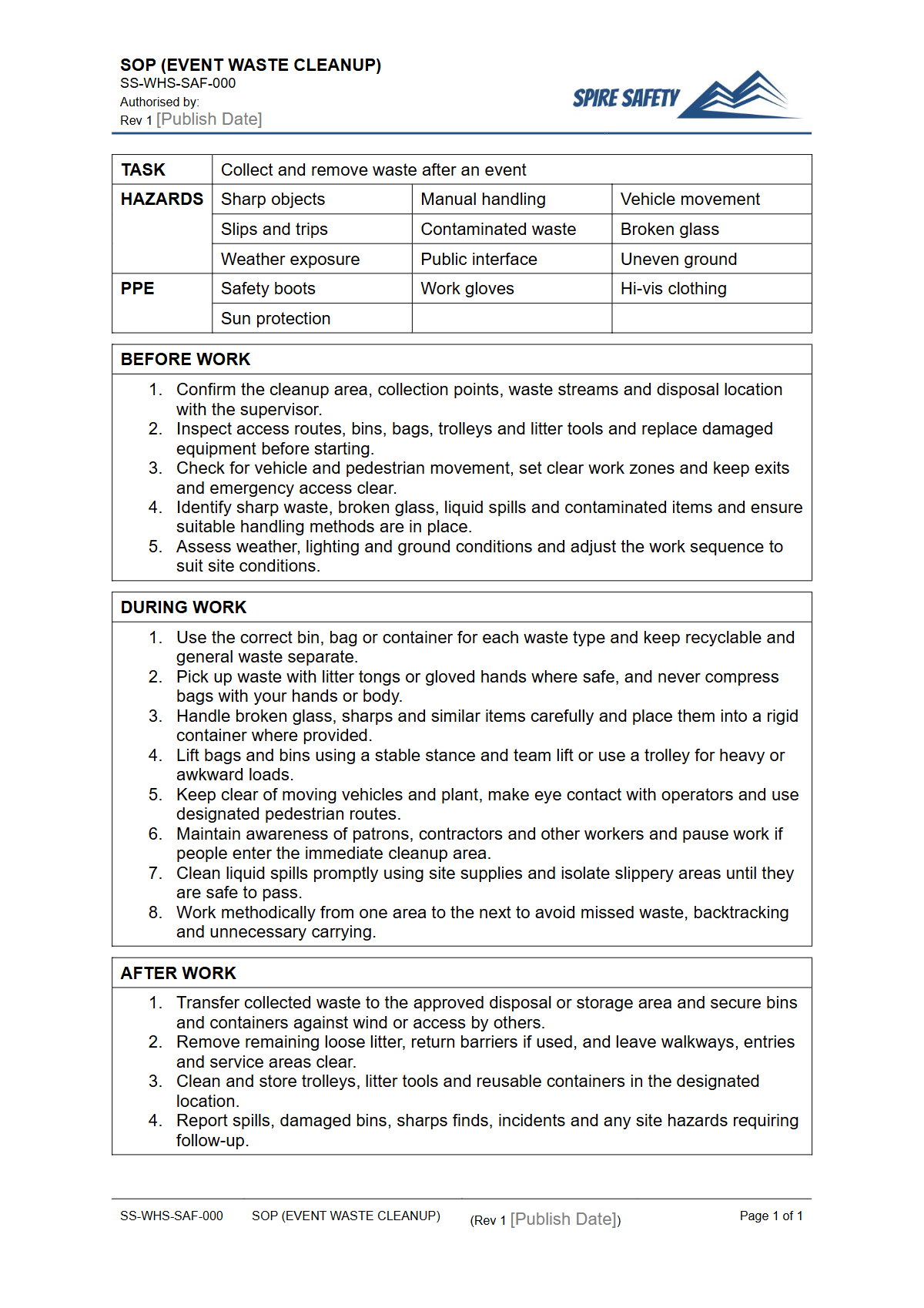
Download our free Safe Operating Procedure (Event Waste Cleanup) template. This customisable DOCX and PDF helps formalise cleanup processes after events.
Free Safe Operating Procedure (Event Waste Cleanup) Template
DOCX • 126 KB + PDF
Updated Oct 2026
No signup required
Purpose of the Free Safe Operating Procedure (Event Waste Cleanup) Template
Managing the aftermath of a successful event requires a systematic approach to safety. Our Free Safe Operating Procedure (Event Waste Cleanup) Template provides a structured framework for controlling the unique hazards associated with post-event cleaning.
This task often involves risks such as manual handling injuries from lifting heavy waste bags, cuts from sharps like broken glass, exposure to biological hazards from food waste, and slips, trips, and falls amidst debris. By implementing a formal SOP, your organisation can ensure all workers follow a clear, consistent, and safe method of work.
A documented procedure is a key component for demonstrating due diligence and forms an essential part of your overall WHS management systems. It helps standardise training, clarify responsibilities, and minimise the likelihood of incidents during the cleanup phase. This template is designed as a robust starting point, aligned with Australian WHS principles, to help you formalise your safety processes.
Video walkthrough
How to use the Free Safe Operating Procedure (Event Waste Cleanup) Template
This Safe Operating Procedure template is provided in both an easily editable DOCX format and a universally accessible PDF. To use it effectively, download the file and integrate your site-specific details.
This involves a thorough risk assessment of your particular event environment and the types of waste generated.
Important: This is a template and must be customised to your specific workplace, equipment, and processes. We recommend a competent person reviews and customises the document to reflect the actual risks and control measures relevant to your operations. Key areas for customisation include:
- Venue-specific information (e.g., access points, location of waste compounds).
- Types of personal protective equipment (PPE) required (e.g., heavy-duty gloves, safety glasses, steel-capped boots).
- Emergency procedures and contact information.
- Details of specific equipment used, such as bin lifters or compactors.
- Waste segregation and disposal requirements.
Once customised, the SOP should be used as a central tool for worker training and induction. Ensure all personnel involved in the cleanup understand the procedures before commencing work. For tasks involving heavy machinery during pack-down, you may also need equipment-specific procedures, such as a FREE Telehandler SOP Template.
When to use this Safe Operating Procedure
This SOP should be prepared and implemented before any event that is expected to generate significant waste requiring a coordinated cleanup effort. It is a critical planning document that ensures safety is considered from the outset, not just after an incident occurs. It is suitable for a wide range of events, including:
- Music festivals and concerts
- Sporting events
- Community fairs and agricultural shows
- Corporate functions and conferences
- Exhibitions and trade shows
Developing a comprehensive event safety plan can be complex. If you require expert assistance in tailoring this document or conducting risk assessments, our WHS consulting services can provide specialist support.
Who should use this Safe Operating Procedure
This procedure is intended for use by all individuals and parties responsible for or involved in post-event cleanup. A clear SOP ensures that everyone, from managers to frontline workers, is aligned on safe work practices. Key users include:
- Event Managers and Organisers: To fulfil their duty of care as a Person Conducting a Business or Undertaking (PCBU).
- Site Supervisors and Team Leaders: For instructing and supervising cleanup crews on the ground.
- Cleaning Contractors: To provide their employees with a clear and safe system of work.
- Employees and Volunteers: As a practical guide to performing their tasks safely.
The consistent application of this procedure helps create a safer work environment for everyone. The effectiveness of its implementation can be reviewed through periodic WHS compliance auditing to identify any gaps or areas for improvement. For specific equipment used in the cleanup, such as industrial blowers for clearing debris, a separate procedure like our Free Air Compressor SOP (Safe Operating Procedure) Template may also be necessary. You can explore more procedural documents in our free WHS resources library to build out your safety system.
Common mistakes
Common mistakes to avoid
- Using the generic template without customising it with site-specific hazards and controls.
- Failing to provide the specific Personal Protective Equipment (PPE) identified in the risk assessment.
- Neglecting to train workers and volunteers on the procedure before they start work.
- Omitting emergency procedures, such as the response to a needle-stick injury or chemical spill.
Legal references
Legal considerations
The following legal requirements may be relevant to this type of work.
- Work Health and Safety Act (Harmonised) — Provides the primary duties for protecting workers and other people from work health and safety risks.
- Work Health and Safety Regulations (Harmonised) — Sets out requirements supporting the management of workplace hazards and risks.
The following codes may be relevant to this type of work.
- Managing WHS Risks Code of Practice — Provides practical guidance on identifying hazards, assessing risks and applying effective controls.
- Work Health and Safety Consultation, Cooperation and Coordination Code of Practice — Provides practical guidance on consulting workers and coordinating with other duty holders.
- Managing the Work Environment and Facilities Code of Practice — Provides practical guidance on safe work environments, workplace facilities and related controls.
Did you know
Manual Tasks are a Major Risk
Hazardous manual tasks, a key risk in waste cleanup, are one of the leading causes of serious workplace injuries in Australia, accounting for a significant portion of workers' compensation claims each year.
Event Waste Regulation
Many Australian states and territories have specific waste management regulations that apply to large public events, influencing how waste must be sorted, stored, and disposed of to promote recycling and environmental protection.
FAQ
Frequently asked questions
01What are the main hazards involved in event waste cleanup?
02Does this event waste cleanup SOP cover hazardous chemical handling?
03Who is responsible for providing the SOP for event cleanup staff?
04How often should a Safe Operating Procedure for event waste cleanup be reviewed?
Share this resource
Free Safe Operating Procedure (Event Waste Cleanup) Template
Browse Categories
How To Use It
- 1Download and open in Word or PDF.
- 2Replace the placeholders with your business details.
- 3Get it reviewed by a WHS specialist before rollout.
Need it customised?
Our WHS consultants can adapt this template to your site, run a gap analysis, or audit what you already have in place.
Book a Free Consultation WHS consulting servicesor call 1300 156 382
Related templates
- Free Safe Operating Procedure (Excavator Grapple) Template
- Free Safe Operating Procedure (Excavator Ripper) Template
- Free Safe Operating Procedure (Excavator Tilt Bucket) Template
- Free Safe Operating Procedure (Exhaust Grille Cleaning) Template
- Free Safe Operating Procedure (Exhaust Removal) Template
- Free Safe Operating Procedure (Exit Sign Test) Template