
Free Safe Operating Procedure (Exit Sign Test) Template
Ensure your workplace meets emergency lighting standards with our free Safe Operating Procedure for exit sign testing.
Free Safe Operating Procedure (Exit Sign Test) Template
DOCX • 126 KB + PDF
Updated Oct 2026
No signup required
Purpose of the Free Safe Operating Procedure (Exit Sign Test) Template
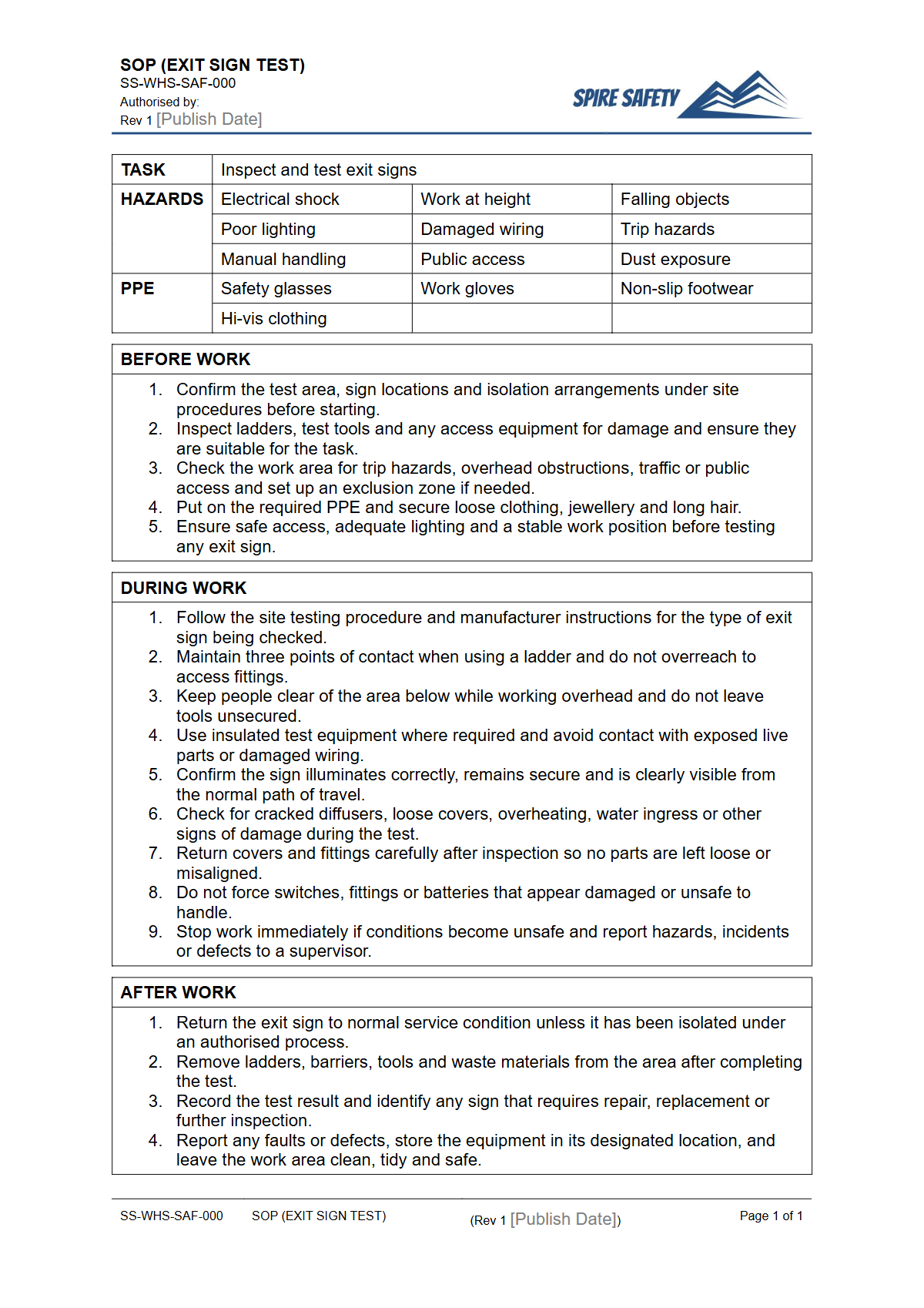
Regularly testing emergency and exit lighting is a critical safety and compliance task in any Australian workplace. This free Safe Operating Procedure (Exit Sign Test) template provides a structured framework for documenting the process, helping to ensure that egress paths are clearly illuminated and visible during an emergency or power failure.
A documented procedure helps standardise the task, assign clear responsibilities, and create auditable records to demonstrate due diligence. Properly maintained exit signs are fundamental to an effective emergency evacuation plan, guiding people to safety when it matters most.
Video walkthrough
How to use the Free Safe Operating Procedure (Exit Sign Test) Template
This template is provided as a starting point in both DOCX and PDF formats. It is designed to be adapted to the specific needs and environment of your organisation.
To use it effectively, download the document and customise it with your company’s name, logo, and relevant site details. It is crucial to review and modify the procedural steps to reflect the specific types of exit signs installed at your facility, the tools used, and the personnel responsible.
An effective SOP is a core component of broader WHS management systems that drive consistent safety outcomes.
Important: This is a template only. You must customise this document to suit the unique hazards and control measures of your specific workplace, equipment, and personnel.
We are not responsible for any incidents or compliance breaches that may arise from the use of this template.
When to perform exit sign tests
The frequency of exit sign testing is mandated by Australian Standards to ensure their reliability in an emergency. The procedure should be conducted at specific intervals:
- Six-monthly tests: Every six months, a duration test must be performed. This involves simulating a power outage to ensure the internal batteries can power the light for the required period, which is typically 90 minutes.
- Annual checks: In addition to the six-monthly test, annual inspections often involve cleaning fittings and reflectors to maintain optimal visibility.
Adhering to this schedule is a key compliance item. Maintaining accurate records of these tests is essential, as they will be scrutinised during any formal WHS compliance auditing process.
This SOP includes sections for recording test dates, results, and any corrective actions taken.
Key Components of an Exit Sign Test
A comprehensive test, as outlined in this SOP, involves more than a simple visual check. The procedure guides the user through several critical steps:
- Pre-operational Checks: Ensuring the area is safe to work in and the technician has the correct tools and personal protective equipment (PPE).
- Visual Inspection: Checking for any physical damage to the sign, ensuring it is clean, and confirming it is clearly visible and unobstructed.
- Functionality Test: Activating the test switch to confirm the light illuminates correctly on battery power.
- Duration Test: Simulating a power failure to verify the battery can sustain the light for the mandated 90-minute period.
- Record Keeping: Documenting the test results, the date, the person who performed the test, and any faults identified.
- Fault Rectification: Outlining the process for reporting and repairing or replacing any faulty units. This may involve tasks covered by other procedures, such as those in our FREE Circular Saw SOP (Safe Operating Procedure) Template used by maintenance teams.
Who should use this SOP?
This Safe Operating Procedure is intended for use by competent personnel tasked with maintaining building safety systems. This typically includes:
- Facilities Managers
- Maintenance Technicians and Officers
- Qualified Electricians
- Work Health and Safety (WHS) Advisors
The individuals performing these tests must be trained and deemed competent to safely carry out the procedure, understand the results, and initiate corrective actions. This is similar to how only trained staff should use other workplace equipment according to a documented process, such as the one detailed in our Free Air Compressor SOP (Safe Operating Procedure) Template.
Maintaining a Safe Egress Path
Functional exit signs are just one part of ensuring a safe means of egress. The effectiveness of emergency lighting relies on a holistic approach to workplace safety.
This includes keeping evacuation routes and the areas around exit doors completely clear of obstructions like boxes, equipment, or rubbish. Regular workplace inspections should verify that these paths are always accessible.
Integrating this SOP with other safety documents, like a Free Safe Operating Procedure (Deep Fryer - Standard Operation) Template for kitchen equipment, helps build a comprehensive safety culture where all tasks have a documented, safe method. By consistently applying standardised procedures, organisations can significantly reduce risk and improve emergency preparedness.
Find more templates in our free WHS resources library to support your safety system.
Common mistakes
Common mistakes to avoid
- Forgetting to maintain a detailed logbook of all tests, faults, and repairs.
- Performing only the push-button test and skipping the required 90-minute duration test.
- Failing to promptly repair or replace faulty batteries, lamps, or entire units.
- Allowing signs to become obstructed by storage, decorations, or other fixtures, reducing their visibility.
Legal references
Legal considerations
The following legal requirements may be relevant to this type of work.
- Work Health and Safety Act (Harmonised) — Provides the primary duties for protecting workers and other people from work health and safety risks.
- Work Health and Safety Regulations (Harmonised) — Sets out requirements supporting the management of workplace hazards and risks.
The following codes may be relevant to this type of work.
- Managing WHS Risks Code of Practice — Provides practical guidance on identifying hazards, assessing risks and applying effective controls.
- Work Health and Safety Consultation, Cooperation and Coordination Code of Practice — Provides practical guidance on consulting workers and coordinating with other duty holders.
- Managing the Work Environment and Facilities Code of Practice — Provides practical guidance on safe work environments, workplace facilities and related controls.
Did you know
The Running Man
The universally recognised 'running man' pictogram used on modern exit signs was designed by Yukio Ota in the 1970s. It was adopted as an international ISO standard because tests showed it was more easily and quickly understood by people of all backgrounds than text-based signs.
FAQ
Frequently asked questions
01What is the Australian Standard for exit sign testing?
02How often do emergency exit lights need to be tested in Australia?
03Can any staff member test an exit sign using this SOP?
04What records need to be kept for exit sign tests?
Share this resource
Free Safe Operating Procedure (Exit Sign Test) Template
Browse Categories
How To Use It
- 1Download and open in Word or PDF.
- 2Replace the placeholders with your business details.
- 3Get it reviewed by a WHS specialist before rollout.
Need it customised?
Our WHS consultants can adapt this template to your site, run a gap analysis, or audit what you already have in place.
Book a Free Consultation WHS consulting servicesor call 1300 156 382
Related templates
- Free Safe Operating Procedure (Extensometer) Template
- Free Safe Operating Procedure (Eye Wash Test) Template
- Free Safe Operating Procedure (Eyelet Press) Template
- Free Safe Operating Procedure (Fabric Cutter) Template
- Free Safe Operating Procedure (Facade Anchor Inspection) Template
- Free Safe Operating Procedure (Facade Glass Cleaning) Template