
Free Safe Operating Procedure (Eyelet Press) Template
Document the safe use of eyelet presses in your workplace with our structured template. Download your free Safe Operating Procedure in DOCX or PDF format.
Free Safe Operating Procedure (Eyelet Press) Template
DOCX • 126 KB + PDF
Updated Oct 2026
No signup required
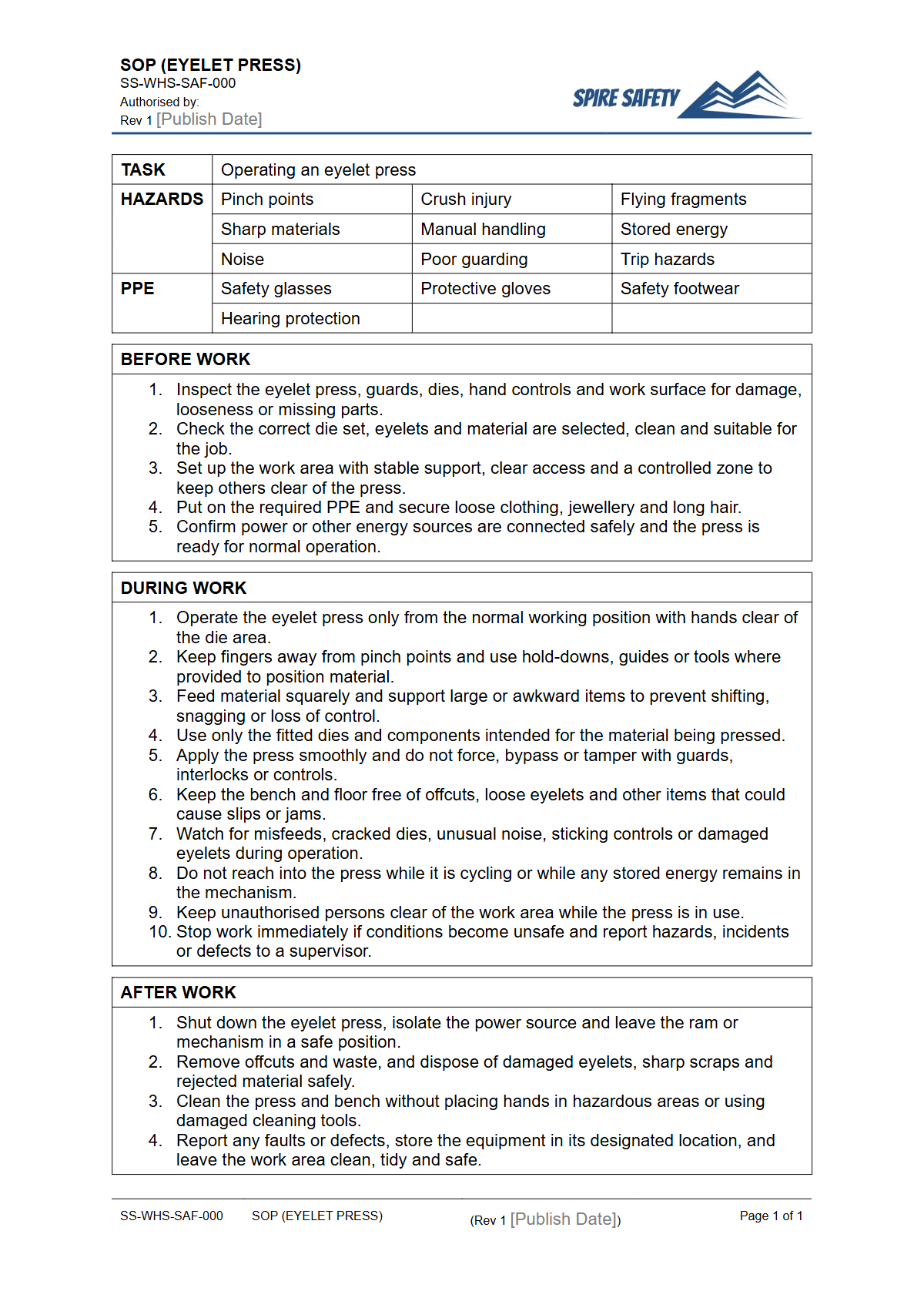
Purpose of the Free Safe Operating Procedure (Eyelet press) Template
An eyelet press, whether manual, pneumatic, or electric, presents significant risks if not operated correctly. This Free Safe Operating Procedure (Eyelet Press) Template provides a structured starting point for documenting the required steps to perform this task safely.
Using an SOP helps formalise safety instructions, ensuring consistency and reducing the likelihood of injuries such as crushing, pinching, or musculoskeletal disorders from repetitive tasks.
A formal SOP is a fundamental tool for any person conducting a business or undertaking (PCBU) to meet their primary duty of care under Australian WHS legislation. It translates the findings of a risk assessment into practical, actionable steps for workers.
This document helps standardise training, provides a clear reference for supervisors, and demonstrates a commitment to a proactive safety culture within your organisation. For presses powered by compressed air, it's also important to have documented procedures for associated equipment, like the process outlined in our free Air Compressor SOP template.
Video walkthrough
How to use the Free Safe Operating Procedure (Eyelet press) Template
This template is available for immediate download in both DOCX and PDF formats. The DOCX file is fully editable, allowing you to tailor it to the specific requirements of your workplace and the machinery in use.
To effectively use this document, you should:
- Download the DOCX version.
- Insert your company name, logo, and other relevant site details.
- Review each section and add specific details about your eyelet press model, including its setup, operation, and shutdown procedures.
- Incorporate the findings from your own plant and task-specific risk assessment, detailing identified hazards and the control measures you have implemented.
- Clearly list the required Personal Protective Equipment (PPE), such as safety glasses or gloves.
- Outline emergency procedures, including shutdown and first aid response.
Important: This template provides a framework based on established safety principles. To be effective and support your WHS obligations, you must customise it to reflect the specific eyelet press models, materials, and processes used in your workplace.
We recommend conducting a thorough risk assessment for the task before finalising the document. An SOP is a critical component of robust WHS management systems that actively manage risk.
When to use it
A Safe Operating Procedure for an eyelet press should be a core document in your safety system, used in several key situations. It must be used as the primary training document for new workers before they are authorised to operate the machine.
It also serves as a valuable refresher for existing staff to reinforce correct and safe work methods.
Supervisors should use the SOP as a benchmark for observing work practices and correcting unsafe behaviour. Furthermore, the document is essential during safety audits and inspections to verify that established procedures are being followed correctly.
In the unfortunate event of an incident or near miss involving an eyelet press, the SOP will be a critical reference for the investigation to determine if procedural gaps contributed to the event. This process of documentation is common for all types of machinery in a production environment, as seen in our Conveyer System SOP.
Who should use it
This Safe Operating Procedure is intended for a range of personnel within an organisation. PCBUs and Managers are responsible for ensuring that safe systems of work are developed, implemented, and maintained, making this template a key tool for fulfilling that duty.
WHS and Safety Managers will use the completed SOP as a cornerstone of the safety management system, integrating it into risk registers, training plans, and audit schedules. Regular reviews of such documents can be verified during a WHS compliance auditing process to ensure ongoing effectiveness.
Supervisors and Team Leaders must use the SOP to train their teams, monitor daily work, and enforce safe practices on the floor. Most importantly, Workers and Operators are the end-users of the SOP.
They must be trained on its contents and follow it diligently to protect their own health and safety and that of their colleagues. The same principle applies to other tool-specific procedures, like those detailed in our Circular Saw SOP template.
If you need assistance developing or implementing SOPs, Spire Safety offers expert WHS consulting services tailored to your business needs. You can also explore hundreds of other resources in our free WHS resources library to support your safety goals.
Common mistakes
Common mistakes to avoid
- Failing to customise the template for the specific make, model, and energy source of the press.
- Neglecting to train workers on the completed SOP before they use the equipment.
- Not including specific details on pre-start checks and lockout/tagout procedures for cleaning and maintenance.
- Overlooking ergonomic hazards associated with repetitive manual operation or awkward postures.
Legal references
Legal considerations
The following legal requirements may be relevant to this type of work.
- Work Health and Safety Act (Harmonised) — Provides the primary duties for protecting workers and other people from work health and safety risks.
- Work Health and Safety Regulations (Harmonised) — Sets out requirements supporting the management of workplace hazards and risks.
The following codes may be relevant to this type of work.
- Managing WHS Risks Code of Practice — Provides practical guidance on identifying hazards, assessing risks and applying effective controls.
- Work Health and Safety Consultation, Cooperation and Coordination Code of Practice — Provides practical guidance on consulting workers and coordinating with other duty holders.
- Managing the Work Environment and Facilities Code of Practice — Provides practical guidance on safe work environments, workplace facilities and related controls.
Did you know
Guarding is Key
Many eyelet press injuries are caused by inadequate or bypassed machine guarding. Ensure all guards, such as two-hand controls or light curtains, are in place and functional before every use.
Ergonomic Risk
Repetitive use of manual eyelet presses can lead to musculoskeletal disorders like carpal tunnel syndrome. Consider ergonomic tool design, adjustable workstations, and job rotation to manage this risk.
FAQ
Frequently asked questions
01What are the main hazards of using an eyelet press?
02Is a Safe Operating Procedure a legal requirement in Australia for an eyelet press?
03How often should an eyelet press SOP be reviewed?
04Can I use this template for a grommet press or snap press?
Share this resource
Free Safe Operating Procedure (Eyelet Press) Template
Browse Categories
How To Use It
- 1Download and open in Word or PDF.
- 2Replace the placeholders with your business details.
- 3Get it reviewed by a WHS specialist before rollout.
Need it customised?
Our WHS consultants can adapt this template to your site, run a gap analysis, or audit what you already have in place.
Book a Free Consultation WHS consulting servicesor call 1300 156 382
Related templates
- Free Safe Operating Procedure (Fabric Cutter) Template
- Free Safe Operating Procedure (Facade Anchor Inspection) Template
- Free Safe Operating Procedure (Facade Glass Cleaning) Template
- Free Safe Operating Procedure (Facade Washdown) Template
- Free Safe Operating Procedure (Fall Arrest Harness) Template
- Free Safe Operating Procedure (Falls Mat Cleaning) Template