
Free Safe Operating Procedure (Falls Mat Cleaning) Template
Maintain hygiene and safety in healthcare or aged care with our Falls Mat Cleaning SOP. Download this customisable template to standardise your cleaning processes.
Free Safe Operating Procedure (Falls Mat Cleaning) Template
DOCX • 126 KB + PDF
Updated Oct 2026
No signup required
Purpose of the Free Safe Operating Procedure (Falls Mat Cleaning) Template
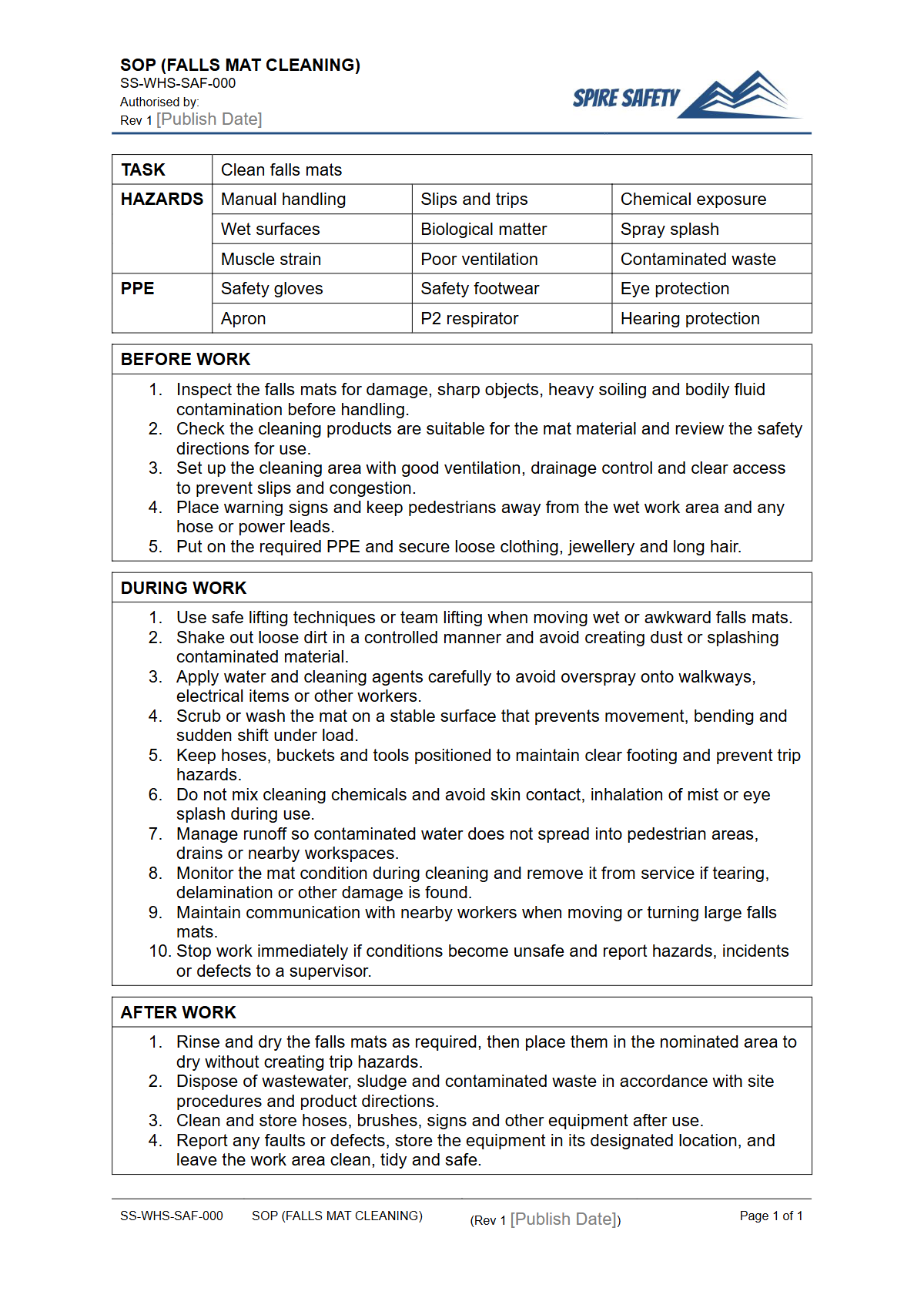
This Free Safe Operating Procedure (Falls Mat Cleaning) Template provides a structured framework for ensuring falls mats are cleaned, disinfected, and maintained correctly. In environments like hospitals and aged care facilities, falls mats are critical for patient and resident safety, but they can also become a vector for infection if not properly managed.
A documented procedure standardises the process, reduces the risk of cross-contamination, supports your compliance efforts with infection control protocols, and protects workers from exposure to cleaning chemicals and biological hazards. Implementing a clear SOP is a fundamental component of robust WHS management systems, demonstrating a commitment to the health of both care recipients and staff.
Video walkthrough
How to use the Free Safe Operating Procedure (Falls Mat Cleaning) Template
To get started, download the template in your preferred format (DOCX or PDF). The DOCX version is fully editable, allowing you to tailor the content to the specific equipment, cleaning agents, and protocols used in your workplace.
A Safe Operating Procedure is not a one-size-fits-all document; it requires customisation to be effective and relevant.
Customisation is Essential
You must adapt this template to reflect your unique operational context. This includes:
- Listing the specific brand and type of cleaning and disinfectant solutions approved for use.
- Detailing the location of cleaning stations, personal protective equipment (PPE), and waste disposal bins.
- Incorporating manufacturer’s instructions for the specific type of falls mats you use.
- Consulting with your workers during the drafting process to ensure the procedure is practical and clear.
If you require expert assistance in tailoring this document or developing other safety procedures, our WHS consulting team can provide specialised support.
When to Use a Falls Mat Cleaning SOP
This procedure should be followed consistently to maintain a safe and hygienic environment. It should be triggered:
- After any known contamination: Immediately clean and disinfect the mat after it has been exposed to bodily fluids or a spill.
- As part of a regular cleaning schedule: Integrate mat cleaning into daily or weekly cleaning routines, depending on frequency of use and risk level.
- Between users: In high-turnover settings, mats should be cleaned and disinfected before being allocated to a new patient or resident.
- Before and after storage: Ensure mats are clean before being stored and are ready for immediate use when retrieved.
Documenting these schedules and triggers within the SOP removes ambiguity and ensures a consistent standard of care. This approach to procedural safety is applicable across many different tasks, just as our Free Safe Operating Procedure (Deep Fryer - Standard Operation) Template helps standardise cleaning and maintenance in a commercial kitchen.
Who Should Use This SOP
This Safe Operating Procedure is designed for all personnel involved in the handling, cleaning, and maintenance of falls mats. This typically includes:
- Care Staff and Nurses: Often the first to respond to a fall or identify a soiled mat.
- Cleaning and Environmental Services Staff: Responsible for scheduled and ad-hoc cleaning tasks.
- Facility and Maintenance Managers: Oversee the implementation of cleaning protocols and equipment maintenance.
- WHS Officers and Infection Control Coordinators: Responsible for developing, reviewing, and auditing safety and hygiene procedures.
Regular reviews of SOPs are crucial for maintaining their relevance and effectiveness, a process which can be validated through periodic WHS compliance auditing. For more templates and safety documents, browse our complete free WHS resources library.
Common mistakes
Common mistakes to avoid
- Using unapproved or incorrect cleaning chemicals that damage the mat.
- Not allowing the mat to dry completely before storage, leading to mould or mildew growth.
- Failing to inspect the mat for tears or damage during the cleaning process.
- Storing mats folded or with heavy objects on top, which can permanently compress the foam.
Legal references
Legal considerations
The following legal requirements may be relevant to this type of work.
- Work Health and Safety Act (Harmonised) — Provides the primary duties for protecting workers and other people from work health and safety risks.
- Work Health and Safety Regulations (Harmonised) — Sets out requirements supporting the management of workplace hazards and risks.
The following codes may be relevant to this type of work.
- Managing WHS Risks Code of Practice — Provides practical guidance on identifying hazards, assessing risks and applying effective controls.
- Work Health and Safety Consultation, Cooperation and Coordination Code of Practice — Provides practical guidance on consulting workers and coordinating with other duty holders.
- Managing the Work Environment and Facilities Code of Practice — Provides practical guidance on safe work environments, workplace facilities and related controls.
Did you know
Infection Control
In Australia, healthcare-associated infections (HAIs) affect thousands of patients each year. Properly cleaned and disinfected surfaces, including equipment like falls mats, are a critical line of defence in preventing their spread.
Material Integrity
Many falls mats have a non-slip base and a specific density foam core. Using harsh or abrasive cleaning agents can degrade these materials, reducing the mat's effectiveness and lifespan.
FAQ
Frequently asked questions
01Why is a specific SOP needed for cleaning falls mats?
02How often should falls mats be cleaned?
03Can I use any disinfectant on a falls mat?
04What PPE is required for cleaning falls mats?
Share this resource
Free Safe Operating Procedure (Falls Mat Cleaning) Template
Browse Categories
How To Use It
- 1Download and open in Word or PDF.
- 2Replace the placeholders with your business details.
- 3Get it reviewed by a WHS specialist before rollout.
Need it customised?
Our WHS consultants can adapt this template to your site, run a gap analysis, or audit what you already have in place.
Book a Free Consultation WHS consulting servicesor call 1300 156 382
Related templates
- Free Safe Operating Procedure (Falls Mat Placement) Template
- Free Safe Operating Procedure (Fan Coil Unit Cleaning) Template
- Free Safe Operating Procedure (Feed Mill) Template
- Free Safe Operating Procedure (Feed Mixer) Template
- Free Safe Operating Procedure (Feeder Breaker) Template
- Free Safe Operating Procedure (Fence Cleaning) Template