
Free Safe Operating Procedure (Fire Blanket Use) Template
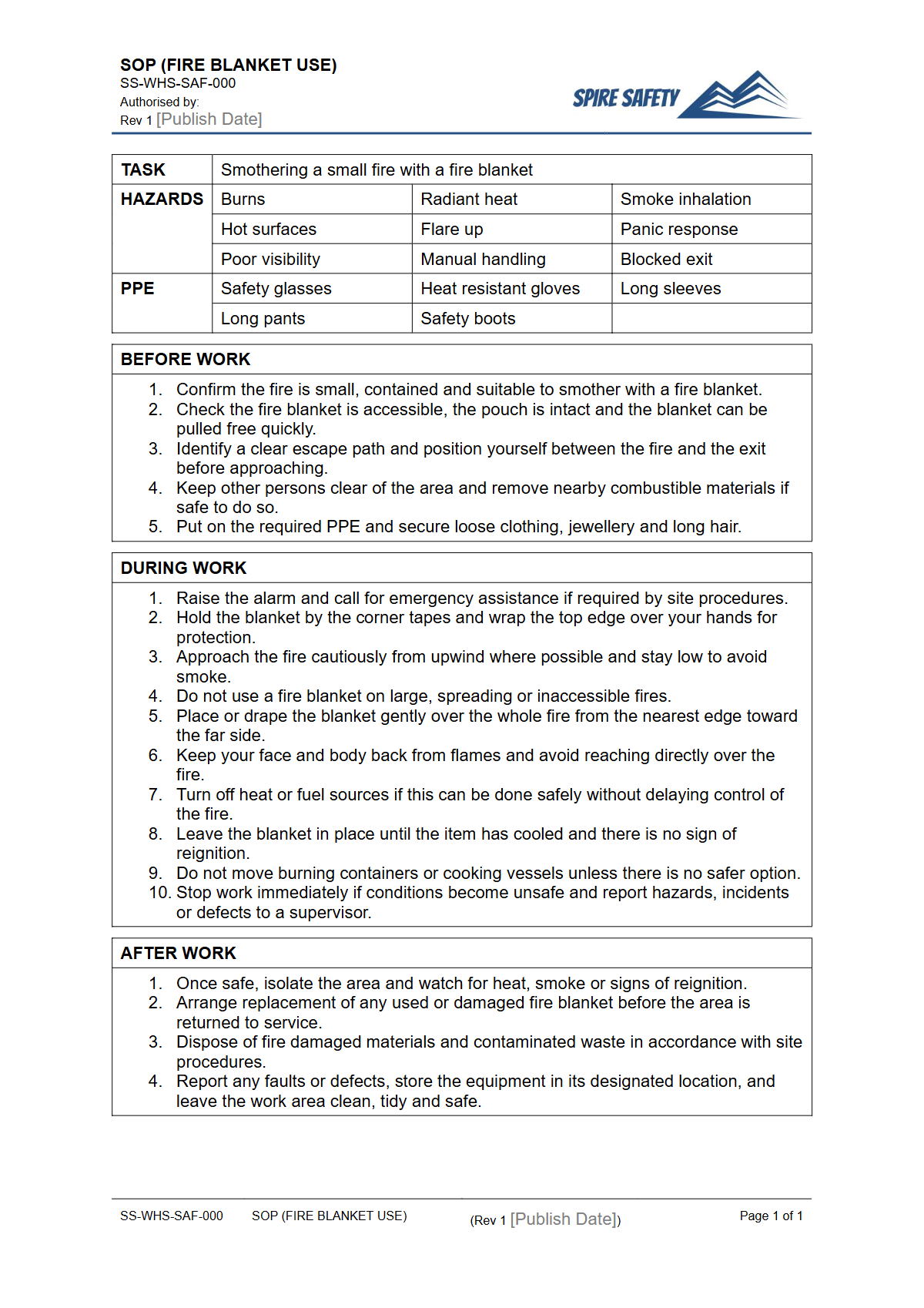
Download our free Safe Operating Procedure (Fire Blanket Use) template to formalise emergency response protocols.
Free Safe Operating Procedure (Fire Blanket Use) Template
DOCX • 126 KB + PDF
Updated Oct 2026
No signup required
Purpose of the Free Safe Operating Procedure (Fire Blanket Use) Template
Effectively managing fire risks requires clear, pre-defined steps for emergency response. Our Free Safe Operating Procedure (Fire Blanket Use) Template provides a framework for documenting the correct method for tackling small, containable fires before they escalate.
A documented SOP is a critical component of any workplace fire safety plan, ensuring that team members can act decisively, correctly, and safely to minimise the risk of injury and property damage.
This procedure template outlines the essential steps, from assessing the fire to deploying the blanket and post-incident reporting. Formalising this process helps standardise your emergency response, provides a consistent basis for worker training, and demonstrates a commitment to proactive risk management.
Integrating specific procedures like this into broader WHS management systems is fundamental to creating a robust safety culture within your organisation.
Video walkthrough
How to use the Free Safe Operating Procedure (Fire Blanket Use) Template
To implement this Safe Operating Procedure, simply download the DOCX file and customise it for your specific operational environment. While the template is based on established Australian WHS practice, it must be adapted to be effective.
Key Customisation Steps:
- Site-Specific Information: Clearly mark the locations of all fire blankets on your site plans and list them within the document.
- Emergency Details: Add your workplace’s specific emergency contact numbers, assembly points, and the names or roles of fire wardens.
- Risk Context: Identify the particular fire hazards present in your work areas (e.g., cooking oils in a kitchen, flammable liquids in a workshop) and tailor the instructions accordingly.
- Responsibilities: Assign and document clear roles and responsibilities for personnel during a fire emergency.
Please note: This template is a starting point. We have drafted it to be broadly applicable, but you must customise it to reflect the specific hazards, equipment, and procedures of your workplace.
If you need assistance tailoring this or other documents to ensure they are fit-for-purpose, our WHS consulting services can provide expert guidance.
When is a Fire Blanket the Right Choice?
A fire blanket is an effective first-response tool for specific types of small, contained fires. It works by smothering the fire and cutting off its oxygen supply. This SOP is designed for situations involving:
- Cooking Oil & Fat Fires (Class F): Ideal for fires in kitchens or canteens where cooking oils have ignited. Attempting to use water on these fires can cause a dangerous explosive reaction, making a fire blanket the correct and safe choice. The instructions here complement a detailed Safe Operating Procedure for deep fryer use.
- Clothing Fires: If a person's clothing catches fire, a fire blanket can be used to wrap them tightly and extinguish the flames quickly.
- Small Contained Fires (Class A): Effective for smothering small fires in items like a wastepaper bin or other contained objects.
It is equally important to know when not to use a fire blanket. This procedure is not suitable for large, uncontained, or rapidly spreading fires.
In these scenarios, the priority must always be to evacuate the area and contact emergency services immediately.
Who Needs This Safe Operating Procedure?
This Safe Operating Procedure is a vital resource for a range of personnel within any organisation that has fire blankets installed. Its users and audience include:
- WHS Managers and Supervisors: Responsible for implementing, training workers on, and ensuring compliance with all fire safety protocols.
- Workers: Especially those working in high-risk areas such as kitchens, laboratories, and workshops where hot work is performed. All employees should receive training on how to recognise a suitable situation and use a fire blanket safely.
- Emergency Wardens and First Aid Officers: As a key document supporting their roles in managing workplace incidents and emergencies.
The effectiveness of this SOP should be regularly verified through practical drills and included as a checklist item in regular WHS compliance audits. For more procedural documents to support your safety system, you can browse our entire free WHS resources library.
Common mistakes
Common mistakes to avoid
- Throwing the blanket onto the fire instead of placing it gently, which can fan the flames.
- Failing to fold the top edge of the blanket over your hands for protection when approaching the fire.
- Removing the blanket too soon after the flames have disappeared, allowing the fire to re-ignite.
- Attempting to use a blanket on a fire that is too large for it to cover completely.
Legal references
Legal considerations
The following legal requirements may be relevant to this type of work.
- Work Health and Safety Act (Harmonised) — Provides the primary duties for protecting workers and other people from work health and safety risks.
- Work Health and Safety Regulations (Harmonised) — Sets out requirements supporting the management of workplace hazards and risks.
The following codes may be relevant to this type of work.
- Managing WHS Risks Code of Practice — Provides practical guidance on identifying hazards, assessing risks and applying effective controls.
- Work Health and Safety Consultation, Cooperation and Coordination Code of Practice — Provides practical guidance on consulting workers and coordinating with other duty holders.
- Managing the Work Environment and Facilities Code of Practice — Provides practical guidance on safe work environments, workplace facilities and related controls.
Did you know
Specialised Weave
Modern fire blankets are typically made from a woven fibreglass material. This material is fire-resistant and woven in a way that prevents oxygen from passing through to the fire.
Not Just for Fires
While their primary purpose is extinguishing fires, fire blankets can also be wrapped around a person as a protective shield during an evacuation through a fire-affected area.
FAQ
Frequently asked questions
01Is a fire blanket suitable for all types of fires?
02How often should we inspect fire blankets?
03Can a fire blanket be reused after putting out a fire?
04What training is required to use a fire blanket?
Share this resource
Free Safe Operating Procedure (Fire Blanket Use) Template
Browse Categories
How To Use It
- 1Download and open in Word or PDF.
- 2Replace the placeholders with your business details.
- 3Get it reviewed by a WHS specialist before rollout.
Need it customised?
Our WHS consultants can adapt this template to your site, run a gap analysis, or audit what you already have in place.
Book a Free Consultation WHS consulting servicesor call 1300 156 382
Related templates
- Free Safe Operating Procedure (Fire Damper Test) Template
- Free Safe Operating Procedure (Fire Door Adjustment) Template
- Free Safe Operating Procedure (Fire Extinguisher Use) Template
- Free Safe Operating Procedure (Fire Hose Reel) Template
- Free Safe Operating Procedure (Fire Hose Testing) Template
- Free Safe Operating Procedure (Fire Panel Isolation) Template