
Free Safe Operating Procedure (Floor Buffing) Template
Develop a clear process for floor polishing with our structured template. This customisable SOP helps you document hazards and controls for buffer operation.
Free Safe Operating Procedure (Floor Buffing) Template
DOCX • 126 KB + PDF
Updated Oct 2026
No signup required
Purpose of the Free Safe Operating Procedure (Floor Buffing) Template
Using a floor buffer, or polisher, is essential for maintaining a clean and professional appearance in many facilities. However, the task comes with significant risks, including electrical hazards, ergonomic strain, exposure to chemicals, and the creation of slip, trip, and fall hazards.
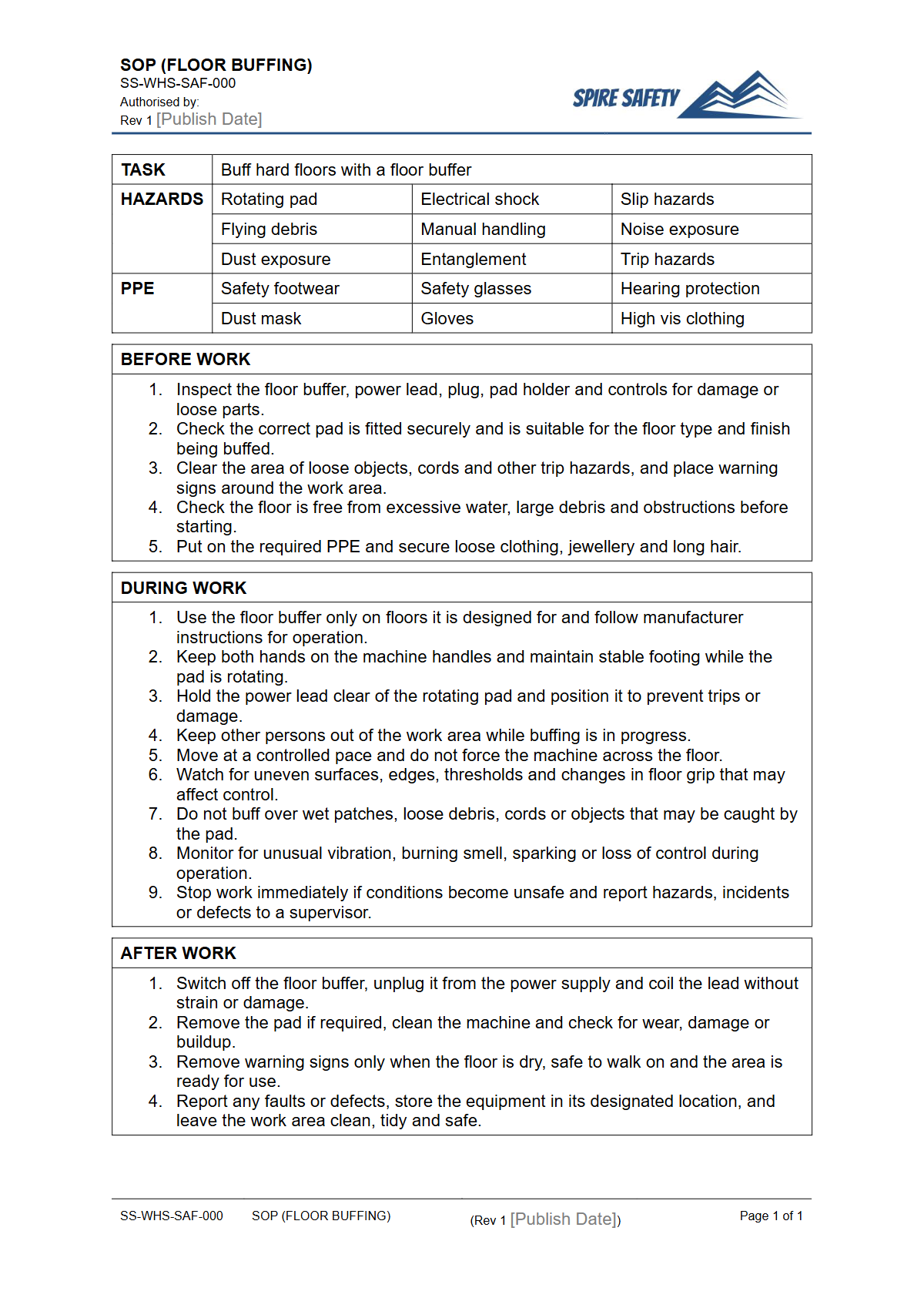
This Free Safe Operating Procedure (Floor Buffing) Template provides a structured starting point for documenting the required steps to perform this task safely. By formally outlining the process, you can ensure workers are aware of the hazards and the control measures needed to mitigate them.
A well-defined SOP is a critical component of a proactive safety culture. It standardises training, provides a clear reference for workers, and demonstrates a commitment to managing workplace risks.
Implementing specific procedures for all high-risk equipment is best practice. For related floor cleaning tasks, you may also find our Free Safe Operating Procedure (Floor Scrubber Operation) Template a useful resource.
Video walkthrough
How to use the Free Safe Operating Procedure (Floor Buffing) Template
This template is available for download in both DOCX and PDF formats. The DOCX version is fully editable, allowing you to tailor it to the unique environment of your workplace.
It is crucial that you customise this document to reflect your specific equipment, chemical products, floor surfaces, and company policies.
Important: This is a template, not a finished document. To make it effective, we recommend you review and add site-specific details, including:
- The exact make and model of the floor buffer(s) in use.
- The specific names of cleaning and polishing chemicals, referencing their Safety Data Sheets (SDS).
- Clear instructions on the types of pads to be used on different floor surfaces.
- Your workplace's specific emergency procedures, including contacts for first aid and incident reporting.
- A schedule for equipment inspection and maintenance.
Integrating this SOP is a key activity within your overall safety framework. Properly documented procedures form the foundation of effective WHS management systems, helping to ensure that safety processes are consistent and verifiable.
What is a Safe Operating Procedure?
A Safe Operating Procedure (SOP), sometimes called a Safe Work Method Statement (SWMS) for high-risk construction work, is a written document that provides step-by-step instructions on how to perform a task safely. It identifies potential hazards at each step and outlines the control measures required to eliminate or minimise the risk of injury or illness.
An SOP is not just a compliance document; it is a vital training and operational tool used by workers on the job.
When to use this SOP
This Safe Operating Procedure should be used as a primary reference document whenever floor buffing or polishing is performed. It should be an integral part of your safety system, implemented during:
- Worker Induction and Training: All new employees or workers assigned to floor buffing tasks must be trained on the contents of this SOP before they begin work.
- Pre-start Checks: Workers should refer to the SOP to ensure they complete all required pre-operational inspections of the equipment and work area.
- Refresher Training: The SOP should be used during periodic refresher training sessions to reinforce safe work habits.
- Incident Investigations: Following any incident or near miss, the SOP should be reviewed to determine if the procedure was followed and if it needs to be updated.
Regularly reviewing your procedures is essential for maintaining safety standards. Formal processes like WHS compliance auditing can help identify gaps in your SOPs and their implementation, ensuring they remain effective and relevant.
Who should use this SOP
This document is intended for use by several key roles within an organisation:
- Workers/Operators: The primary users are the individuals who operate the floor buffing equipment. They should have easy access to the SOP and be thoroughly familiar with its contents.
- Supervisors and Managers: Responsible for ensuring workers are trained on the SOP and follow it correctly. They use it to guide supervision, conduct informal observations, and enforce safe work practices.
- WHS/HSE Personnel: Safety professionals use the SOP as a tool for risk assessment, training development, and auditing workplace safety compliance.
Developing SOPs for various pieces of equipment ensures consistency. For example, a maintenance department might also need a Free Air Compressor SOP (Safe Operating Procedure) Template to cover other common tasks. You can find many other ready-to-customise documents in our free WHS resources library.
Common mistakes
Common mistakes to avoid
- Failing to display adequate 'wet floor' and 'cleaning in progress' signage, creating a hazard for others.
- Operating equipment with a frayed or damaged power cord, posing a serious electric shock risk.
- Using the wrong type of pad for the floor surface, which can damage the floor or fail to produce the desired result.
- Neglecting to clean the machine and pads after use, leading to chemical buildup, poor performance, and equipment damage.
Legal references
Legal considerations
The following legal requirements may be relevant to this type of work.
- Work Health and Safety Act (Harmonised) — Provides the primary duties for protecting workers and other people from work health and safety risks.
- Work Health and Safety Regulations (Harmonised) — Sets out requirements supporting the management of workplace hazards and risks.
The following codes may be relevant to this type of work.
- Managing WHS Risks Code of Practice — Provides practical guidance on identifying hazards, assessing risks and applying effective controls.
- Work Health and Safety Consultation, Cooperation and Coordination Code of Practice — Provides practical guidance on consulting workers and coordinating with other duty holders.
- Managing the Work Environment and Facilities Code of Practice — Provides practical guidance on safe work environments, workplace facilities and related controls.
Did you know
A Major Hazard
Slips, trips, and falls are a leading cause of serious workplace injuries in Australia, accounting for thousands of workers' compensation claims each year. Using 'wet floor' signs is a simple but critical control.
Machine Speed Matters
Floor buffers operate at different speeds, measured in RPM (revolutions per minute). Low-speed machines (175-300 RPM) are for stripping and scrubbing, while high-speed burnishers (1500-2500+ RPM) are for polishing, generating high-gloss finishes through friction heat.
FAQ
Frequently asked questions
01What PPE is required for floor buffing?
02How often should a floor buffer SOP be reviewed?
03What are the main hazards of using a floor buffer?
04Who is responsible for training workers on the floor buffing SOP?
Share this resource
Free Safe Operating Procedure (Floor Buffing) Template
Browse Categories
How To Use It
- 1Download and open in Word or PDF.
- 2Replace the placeholders with your business details.
- 3Get it reviewed by a WHS specialist before rollout.
Need it customised?
Our WHS consultants can adapt this template to your site, run a gap analysis, or audit what you already have in place.
Book a Free Consultation WHS consulting servicesor call 1300 156 382
Related templates
- Free Safe Operating Procedure (Floor Burnishing) Template
- Free Safe Operating Procedure (Floor Coating) Template
- Free Safe Operating Procedure (Floor Grinder) Template
- Free Safe Operating Procedure (Floor Machine Setup) Template
- Free Safe Operating Procedure (Floor Polisher) Template
- Free Safe Operating Procedure (Floor Polishing Prep) Template