
Free Safe Operating Procedure (Food Waste Bin Cleaning) Template
Download our free Safe Operating Procedure (Food Waste Bin Cleaning) template. This customisable DOCX & PDF helps you outline safe work steps for cleaning bins.
Free Safe Operating Procedure (Food Waste Bin Cleaning) Template
DOCX • 126 KB + PDF
Updated Oct 2026
No signup required
Purpose of the Free Safe Operating Procedure (Food Waste Bin Cleaning) Template
Cleaning food waste bins, particularly in commercial settings like restaurants, cafes, and food processing facilities, presents a range of work health and safety risks. This free Safe Operating Procedure (Food Waste Bin Cleaning) template provides a structured framework for documenting a clear, step-by-step process to perform this task safely.
The goal of an SOP is to minimise risks to workers, including manual handling injuries from moving heavy bins, slips and falls on wet surfaces, exposure to hazardous cleaning chemicals, and contact with biological hazards like bacteria and mould.
By formalising the procedure, you ensure every worker follows a consistent and safe method, reducing the likelihood of incidents and injuries. A documented SOP is also a critical component for training new staff and serves as a key document within your overall WHS management systems. It demonstrates a commitment to proactively managing workplace hazards and fulfilling your duty of care obligations under Australian WHS legislation.
Video walkthrough
How to use the Free Safe Operating Procedure (Food Waste Bin Cleaning) Template
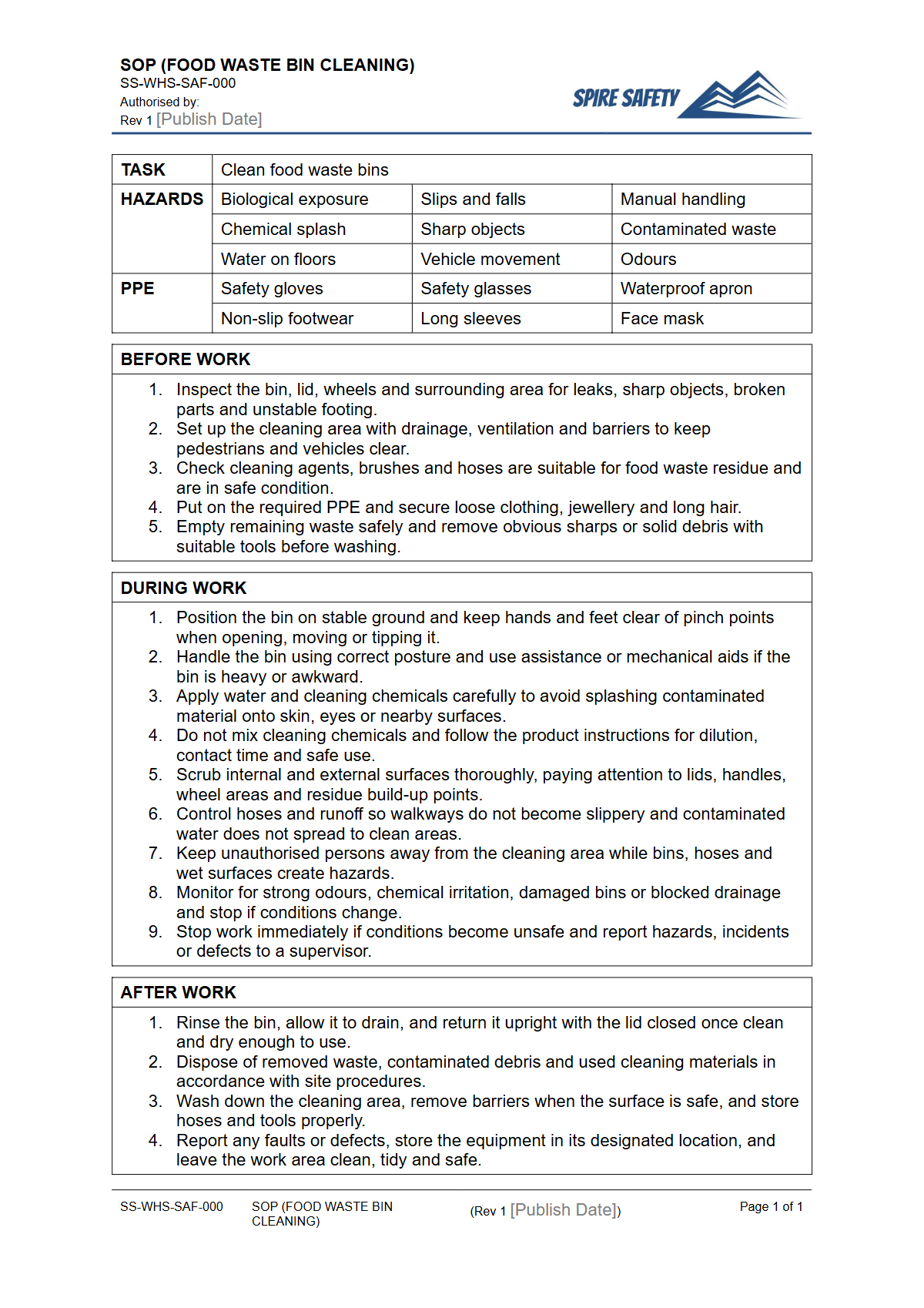
This Safe Operating Procedure for food waste bin cleaning is designed for ease of use. Simply download the template in your preferred format—DOCX for easy editing or PDF for straightforward printing and distribution.
The document is logically structured, covering sections for hazard identification, required Personal Protective Equipment (PPE), pre-operational checks, the cleaning process itself, and post-cleaning tasks.
It is crucial to understand that this is a template, not a finished, universally applicable document. You must adapt the content to the specific circumstances of your workplace.
We have included prompts to guide you in customising details such as the types of bins used, the specific cleaning chemicals approved for your site, the equipment available (e.g., pressure washers, brushes), and your emergency procedures. Like our free Step Ladder SOP, this resource must be reviewed and tailored to be effective.
When to use it
This SOP should be implemented as the standard process for all food waste bin cleaning activities. It is not a document to be filed away; it should be readily accessible to all workers responsible for the task.
The procedure should be followed every time a bin is cleaned, whether on a daily, weekly, or other scheduled basis. Regular cleaning is essential to maintain hygiene standards, control odours, and deter pests.
The frequency of cleaning should be determined by a risk assessment based on factors like the volume of waste, ambient temperature, and the type of food being discarded.
The SOP should also be used as a primary training tool for new employees and for refresher training for existing staff. Regular review of the SOP, perhaps annually or after any incident, ensures it remains relevant and effective.
The implementation and consistent use of such procedures are often checked during a WHS compliance audit, making it a vital part of your operational compliance framework.
Who should use it
This Safe Operating Procedure is intended for use by any person required to clean food waste bins. This includes kitchen hands, hospitality staff, commercial cleaners, and maintenance personnel.
Each worker performing the task must be trained on the specific steps outlined in your customised version of the document and demonstrate their understanding before working unsupervised.
Supervisors and managers also have a key role. They are responsible for ensuring the SOP is implemented correctly, that workers are equipped with the specified PPE, and that training records are maintained.
They should also lead the review and update process. If your organisation lacks the internal expertise to conduct the necessary risk assessments or customise technical safety documents, engaging external WHS consulting services can provide the specialist support needed to ensure your procedures are robust and practical.
For complex cleaning tasks that involve specific machinery, such as high-pressure washers, you may need to develop additional procedures. Some equipment, like pressure washers, may be powered by machinery that requires its own safe work method, such as those detailed in our Air Compressor SOP. Integrating these documents creates a more comprehensive safety system.
This template is one of many documents available to help you build a safer workplace. You can explore a wide range of similar documents in our free WHS resources library to support your other operational tasks.
Common mistakes
Common mistakes to avoid
- Using incorrect or poorly diluted cleaning chemicals, leading to ineffective sanitation or surface damage.
- Failing to wear appropriate Personal Protective Equipment (PPE), especially eye protection and gloves.
- Neglecting to allow the bin to air dry completely after washing, which can promote mould and mildew growth.
- Performing the cleaning task in a poorly ventilated area, increasing the risk of inhaling chemical fumes.
Legal references
Legal considerations
The following legal requirements may be relevant to this type of work.
- Work Health and Safety Act (Harmonised) — Provides the primary duties for protecting workers and other people from work health and safety risks.
- Work Health and Safety Regulations (Harmonised) — Sets out requirements supporting the management of workplace hazards and risks.
The following codes may be relevant to this type of work.
- Managing WHS Risks Code of Practice — Provides practical guidance on identifying hazards, assessing risks and applying effective controls.
- Work Health and Safety Consultation, Cooperation and Coordination Code of Practice — Provides practical guidance on consulting workers and coordinating with other duty holders.
- Managing the Work Environment and Facilities Code of Practice — Provides practical guidance on safe work environments, workplace facilities and related controls.
Did you know
Bacterial Growth
In warm conditions, common foodborne bacteria like E. coli and Salmonella found in food waste bins can double their population every 20 minutes, highlighting the need for regular and thorough cleaning.
FAQ
Frequently asked questions
01What PPE is required for cleaning food waste bins?
02How often should commercial food waste bins be professionally cleaned?
03What are the main hazards associated with cleaning food waste bins?
04Can I use this SOP template for general waste or recycling bins?
Share this resource
Free Safe Operating Procedure (Food Waste Bin Cleaning) Template
Browse Categories
How To Use It
- 1Download and open in Word or PDF.
- 2Replace the placeholders with your business details.
- 3Get it reviewed by a WHS specialist before rollout.
Need it customised?
Our WHS consultants can adapt this template to your site, run a gap analysis, or audit what you already have in place.
Book a Free Consultation WHS consulting servicesor call 1300 156 382
Related templates
- Free Safe Operating Procedure (Footpath Cleaning) Template
- Free Safe Operating Procedure (Footstool Cleaning) Template
- Free Safe Operating Procedure (Forestry Harvester) Template
- Free Safe Operating Procedure (Forklift - Battery LPG Changeover) Template
- Free Safe Operating Procedure (Forwarder) Template
- Free Safe Operating Procedure (Freezer Stocking) Template